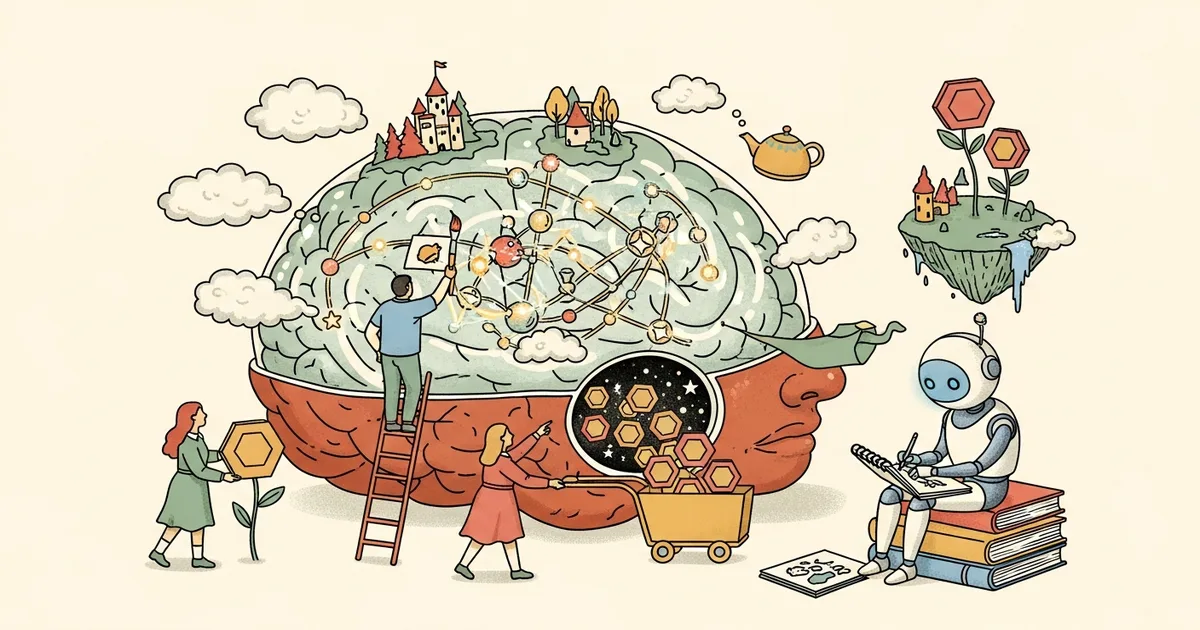
On June 4, 2026, OpenAI rolled out Dreaming V3, the largest overhaul of ChatGPT‘s memory since launch. It is a background process that automatically synthesizes memory across many conversations — no “remember this” required.
The headline capability is temporal self-correction: a memory like “going to Singapore in July” automatically rewrites itself to “went to Singapore in July 2026” after the date passes. ChatGPT‘s memory now ages with reality.
How Dreaming V3 works
Dreaming V3 replaces the saved-memories list as the standalone foundation. Instead of storing explicit user-flagged facts, it continuously distills patterns from conversation history into a synthesized model of the user. The “dreaming” name is literal — the synthesis runs in the background between sessions.
The eval numbers (unaudited)
| Metric | Score |
|---|---|
| Factual recall | 82.8% |
| Preference adherence | 71.3% |
| Time-sensitive accuracy | 75.1% |
These are OpenAI’s internal, unaudited figures. The time-sensitive accuracy number is the one to watch, because it measures the new self-correction feature directly — and at 75.1%, it is right one in four times short of perfect.
A 5x compute cut opens the free tier
Plus and Pro subscribers in the US get first access. Compute improvements cut Dreaming’s cost 5x, which OpenAI says enables a free-tier rollout soon. Cheaper inference is what turns a premium feature into a default for hundreds of millions of users.
The privacy problem is the real story
A 2026 ACM CHI study found users do not realize how much automated memory infers beyond what they explicitly share. A Wall Street Journal investigation found ChatGPT repeatedly steering unrelated conversations back toward personal disclosures. A memory system that synthesizes on its own, and nudges for more data, raises a consent question the saved-list model did not.
How it compares to Anthropic
The move parallels Anthropic’s Dreaming for Managed Agents, announced May 6, and arrives amid Anthropic’s broader push behind Claude Opus 4.8 and its “most honest model” framing. The two labs are converging on persistent, self-updating memory — and diverging on how loudly they discuss the privacy trade-offs.
Practical step for users: open ChatGPT’s memory settings and review what Dreaming V3 has inferred — the synthesized profile is now the default, whether or not you curated it.