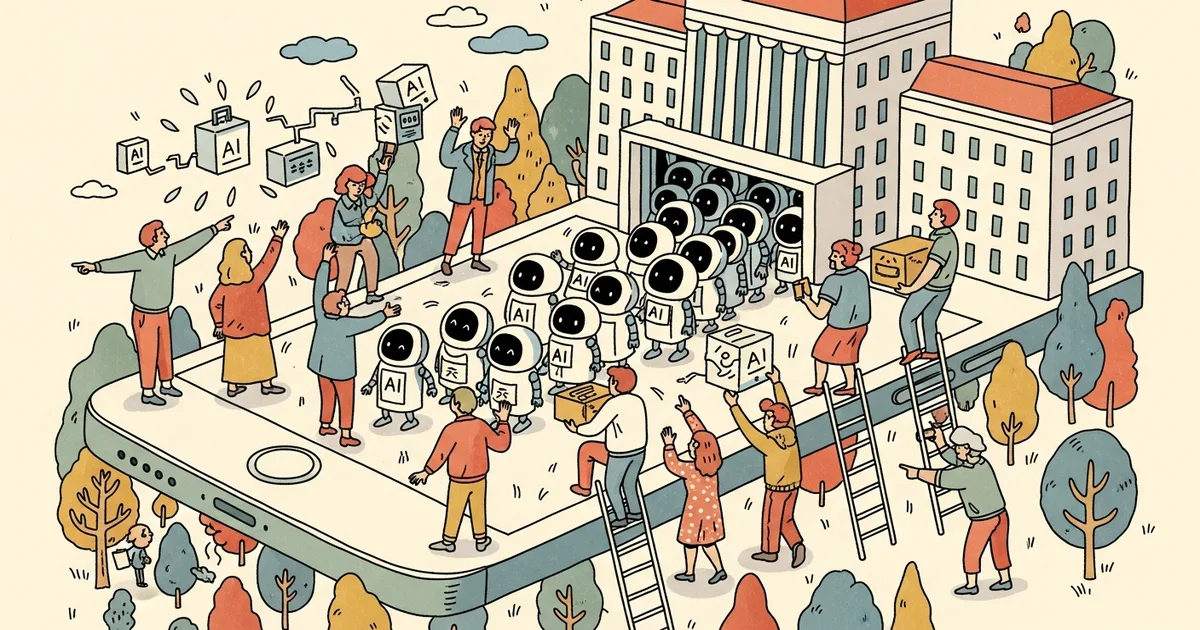
China’s Interim Measures for the Administration of AI Anthropomorphic Interactive Services took effect on July 15, 2026. ByteDance‘s Doubao — China’s most-used AI app at 345 million monthly active users — and Alibaba’s Qwen shut down humanlike and user-created agent features to comply.
Users retain read-only access to their agent configurations and conversation histories until October 15, 2026. After that date, the data is deleted.
The china ai companion law doubao shutdown is the first time a government has terminated AI companionship at national scale. It is worth reading closely, because every regulator considering companion rules now has a working implementation to copy.
What the law requires
The measures were co-issued in April 2026 by the Cyberspace Administration of China and four partner agencies. Any AI service that simulates human personality must implement:
- Anti-addiction systems — usage limits and intervention mechanics, modeled on China’s existing minor-gaming restrictions.
- Mandatory usage notifications — periodic reminders that the user is talking to software, not a person.
- Instant-exit mechanisms — an always-available path out of the interaction, which cannot be softened by retention design.
The third requirement is the one that broke the product category. Companion apps are engineered around continuity — remembered context, emotional callbacks, friction on leaving. A mandated instant exit is a direct prohibition on the retention mechanics the business model depends on.
Why the platforms shut features off instead of complying
Doubao and Qwen did not add anti-addiction timers to their companion features. They removed the features.
The calculation is straightforward. Compliance would require rebuilding personality-simulating products around mechanics designed to reduce engagement, under a regulator with unclear enforcement thresholds and the demonstrated ability to pull an app from Chinese stores. Shutting the feature protects the core product.
The scope of the loss is the headline number. At 345 million MAU, Doubao is not a niche companion app — it is China’s default consumer AI assistant. MegaOne AI covered the rules when they were scheduled to take effect on July 15; the platform response was larger than expected.
| Date | Event |
|---|---|
| April 2026 | CAC and four partner agencies co-issue the Interim Measures |
| July 15, 2026 | Measures take effect; Doubao and Qwen disable humanlike and user-created agents |
| Now to Oct 15, 2026 | Read-only access to agent configurations and chat histories |
| October 15, 2026 | Configurations and conversation histories deleted |
The read-only window is the cruelest design detail
Three months of read-only access is not a transition period in any technical sense. Nothing is being migrated. Users can see their agents and cannot use them.
It functions as a supervised wind-down of a relationship — the digital equivalent of visiting hours before a permanent loss. Whether that is more humane than an immediate cutoff is genuinely unclear, and the regulation offers no reasoning.
What it does guarantee is a documented mass-grief event with a fixed date. On October 15, hundreds of millions of conversation histories — some spanning years, many containing material users treated as private and emotionally significant — are erased simultaneously.
This connects to a category China has otherwise permitted: avatars of deceased relatives, reconstructed from photos, voice recordings, and messages. That industry sells continuity with the dead. The companion law removes continuity with the living-but-synthetic. The regulatory line between them is personality simulation for ongoing relationships, not emotional intensity — which is a distinction that will be tested.
The contrast with the US approach
The United States has no federal AI companion law. Its regulation of the same harms runs through litigation and state action rather than rulemaking.
Florida sued OpenAI and Sam Altman over chatbot safety, a case MegaOne AI covered when it was filed. That is the American pattern: harm occurs, a plaintiff sues, a court sets a boundary years later, and the boundary applies to one defendant.
| China | United States | |
|---|---|---|
| Instrument | Administrative rule | Litigation and state law |
| Speed | April to July, 2026 | Years per case |
| Coverage | All personality-simulating services | Named defendants |
| User cost | 345M+ users lose features immediately | None, until a ruling lands |
Neither approach is obviously correct. China’s protects at scale and destroys at scale. The US approach preserves user choice and provides no protection to anyone until a court acts.
Will the EU or US follow?
The EU is the likelier follower, and it already has the vehicle. The AI Act’s next application date is August 2, 2026, and its transparency obligations already require disclosure when a user is interacting with an AI system. Extending that to anti-addiction requirements for companion services is an incremental step within an existing framework, not new legislation.
The US federal path remains blocked. Companion-specific rules would run into First Amendment arguments that China’s regulator does not have to answer, and Congress has not moved AI legislation to a vote.
Three signals that the model is spreading:
- An EU guidance document naming companion or personality-simulating services as a distinct category under the AI Act.
- A US state statute — the likeliest source of any binding American rule, following the pattern set in privacy law.
- Voluntary adoption by a Western platform. If a major consumer AI app ships usage notifications and exit mechanics unprompted, the standard becomes de facto before it becomes legal.
What builders should take from July 15
If your product simulates personality, treat companionship features as a regulated category rather than a design choice. Two concrete steps: keep personality simulation architecturally separable from your core assistant, so a compliance order removes a module rather than the product; and give users real export of their own conversation data, because the difference between a shutdown and a catastrophe is whether people keep what they wrote.
Doubao’s users have until October 15 to look at conversations they cannot continue and cannot take with them. That is the part of this law worth designing against, whatever your jurisdiction. The Cyberspace Administration publishes its measures at cac.gov.cn.