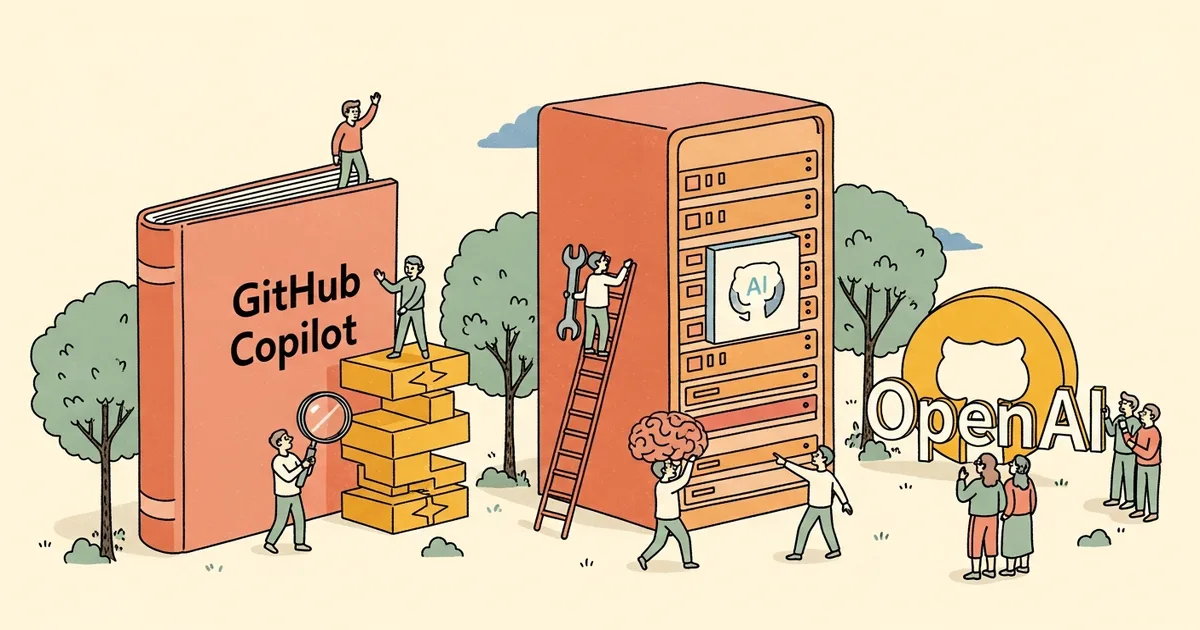
Microsoft CEO Satya Nadella unveiled Project Polaris at Build 2026 (June 2-3) — a homegrown AI coding model that will replace GPT-4 Turbo as the default for all GitHub Copilot subscribers starting August 2026. Polaris runs on Microsoft’s custom Maia 200 accelerators inside Azure, bypassing OpenAI entirely.
The move is the clearest signal yet that Microsoft is building post-OpenAI infrastructure, even as the two companies remain commercial partners.
What Project Polaris replaces, and when
Polaris becomes the Copilot default in August 2026, with automatic migration and a three-month fallback period for users who want to stay on the prior model. The default-swap matters: most Copilot users never change model settings, so the default is the product.
| Element | Before | After (Aug 2026) |
|---|---|---|
| Copilot default model | GPT-4 Turbo (OpenAI) | Project Polaris (Microsoft) |
| Inference hardware | OpenAI/Azure stack | Maia 200 accelerators |
| Dependency on OpenAI | Core | Bypassed for Copilot |
The Maia 200 chip angle
Polaris runs on Microsoft’s Maia 200 custom AI accelerators. By owning both the model and the silicon, Microsoft removes two external dependencies at once — the model vendor and, partially, the merchant-GPU supply chain. Vertical integration is the strategy every hyperscaler is now pursuing.
MAI-Thinking-1 targets the reasoning tier
Microsoft also announced MAI-Thinking-1, its flagship reasoning model, which the company says “matches leading models on key software engineering benchmarks and reaches human preference parity with Sonnet 4.6.” Claiming parity with Anthropic’s Sonnet line is a direct shot at a specific competitor, not a vague benchmark boast.
The pricing pressure is mounting from multiple directions — Anthropic just shipped a 3x-cheaper Fast Mode in Claude Opus 4.8, and Microsoft’s AI chief has argued that rival frontier models are too expensive.
A .69 billion DoD contract
Microsoft also disclosed a $9.69 billion Department of Defense contract — its largest government deal ever — covering Microsoft 365, Azure, and Copilot for 2.1 million service members. Embedding Copilot across the DoD gives Polaris an immediate, captive deployment at national scale.
Why this is the divorce signal
Microsoft and OpenAI still have a deep partnership, but Polaris changes the dependency math. When the largest distributor of OpenAI’s technology builds an in-house replacement for its flagship developer product, it is hedging against the day the partnership terms change.
For developers, the practical question arrives in August: test Polaris against your current Copilot workflows during the three-month fallback, because the default will switch whether or not you opt in.