- YouTube is introducing custom feeds that users define by describing what they want in their own words.
- Gemini interprets the request and builds a personalized feed around it.
- It is the most direct user control YouTube has offered over its recommendation algorithm.
- The feature reframes recommendations from opaque inference to explicit instruction.
What Happened
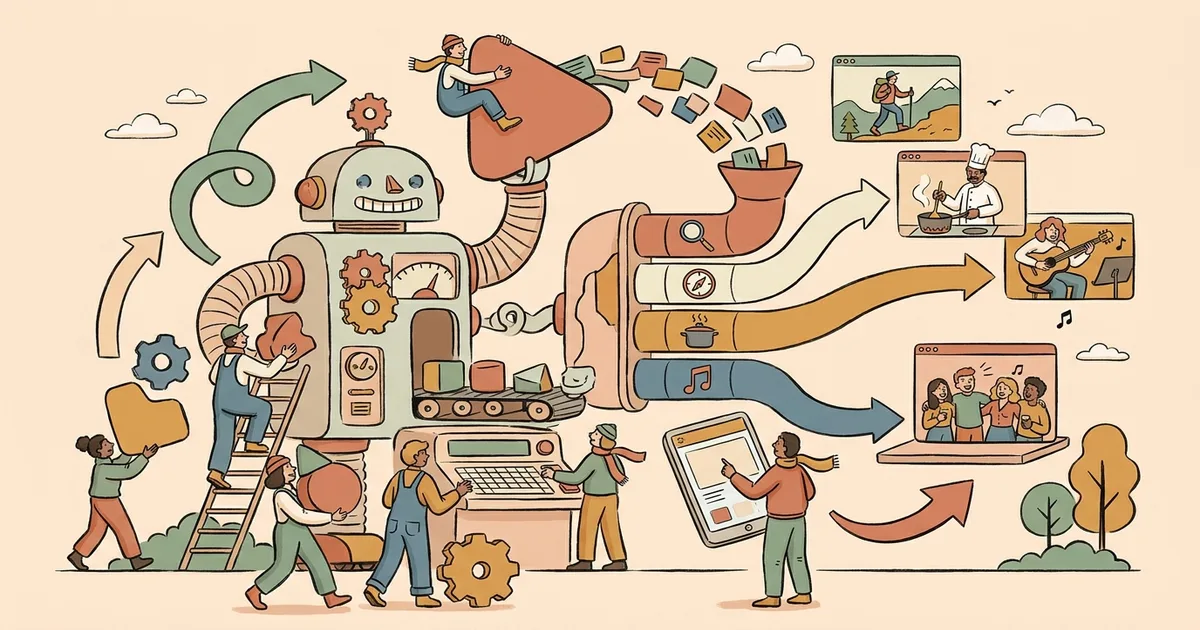
YouTube will let users build their own algorithm: new custom feeds let people describe the videos they want to see in their own words, then use Gemini to construct a personalized feed around the request, TechCrunch reported on September 23, 2026.
Why It Matters
YouTube’s recommendation system has long been the most consequential black box in consumer media — inferring interest from watch behavior, and criticized for rabbit holes and filter bubbles. Letting viewers state their intent in natural language flips that model: the feed becomes something you instruct rather than something that studies you. It is also a distribution-scale showcase for Gemini inside Google’s most-used product.
Technical Details
The mechanism is a natural-language description — for example, a topic, mood, or format — that Gemini translates into a persistent feed definition, distinct from the default home recommendations. That makes the model an interpreter between user intent and the ranking system rather than a generator of content. The open questions are how faithfully long-tail requests are honored and whether custom feeds coexist with, or quietly inherit from, engagement-optimized ranking.
Who’s Affected
Viewers gain a lever against algorithmic drift. Creators face a new discovery surface where being findable by description matters as much as click-through on thumbnails. Competing platforms — TikTok, Instagram Reels — now have a mainstream precedent for user-authored feeds to answer.
What’s Next
Rollout scope and whether custom feeds reach all users were not fully detailed at announcement. The signal to watch is whether user-defined feeds meaningfully shift watch time away from the default algorithm — the first large-scale test of whether people actually want to steer their own recommendations.
Related Reading
- The EU Just Forced Google to Open Android to Rival AI Assistants — 2 Billion Phones Are Suddenly Up for Grabs
- Image AI Models Drive 6.5x More App Downloads Than Chatbot Updates, Appfigures Finds
- Google Gemini App Redesign Surfaces in iOS Limited Rollout, Heavily Leverages Liquid Glass
- Google Gemini Adds Native Document Generation Across 12 File Formats Including Word, Excel, and PDF
- Epoch AI Survey: 80% of Claude’s US Weekly Users Earn Over $100K