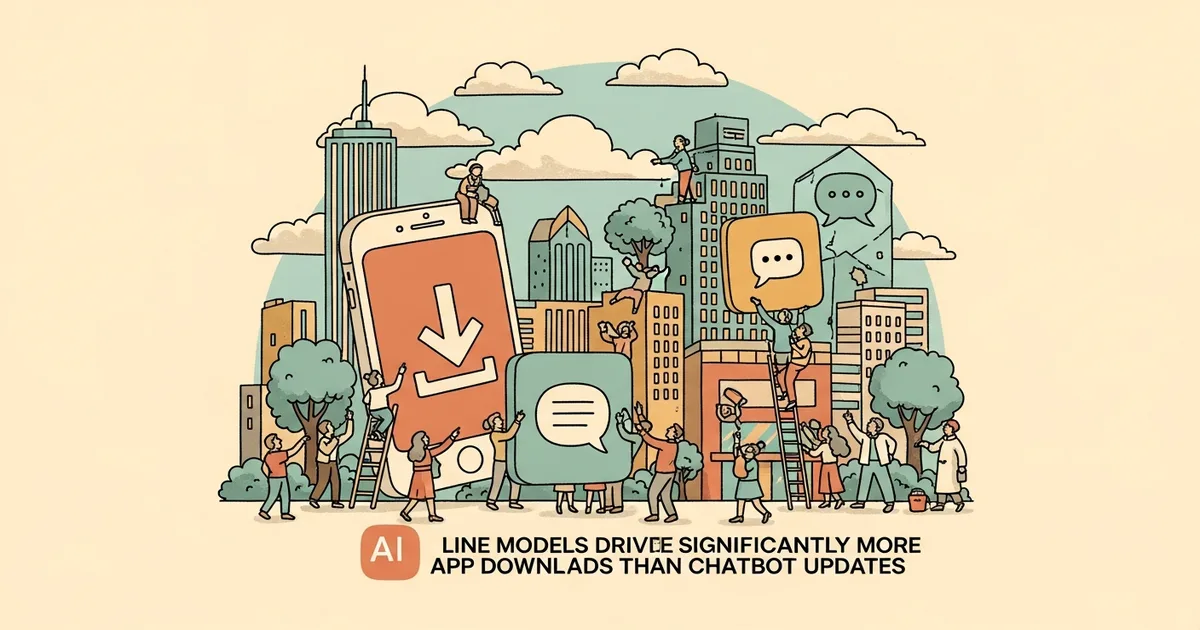
- Appfigures reported on May 4, 2026 that AI image-model releases drive 6.5x more app downloads than traditional chatbot model updates.
- Gemini’s Nano Banana image model drove 22+ million downloads in the 28 days after launch — more than 4x Gemini’s typical chatbot-update lift.
- ChatGPT‘s GPT-4o image model added 12+ million incremental installs in 28 days — roughly 4.5x more than its GPT-4o, GPT-4.5, and GPT-5 model releases combined.
- Revenue conversion is uneven: ChatGPT‘s GPT-4o image generated $70 million in gross consumer spending in 28 days; Gemini’s Nano Banana generated only $181,000 despite the larger download spike.
What Happened
App-intelligence provider Appfigures published a report on May 4, 2026 showing that AI image-model releases drive substantially more app downloads than traditional chatbot model updates — 6.5x more on average. The report frames this as a shift from earlier patterns in 2023-2024, when conversational-experience updates and voice features were the primary download drivers.
Why It Matters
Mobile app distribution has been one of the most concrete competitive measurements for AI products. Earlier model updates from OpenAI, Google, and others typically produced modest app-download lifts; image-model releases have changed that pattern in 2025-2026. The implication for AI product strategy is direct: image-generation features drive top-of-funnel acquisition more efficiently than chatbot upgrades. The conversion-to-revenue gap between ChatGPT and Gemini ($70M vs $181K from comparably-sized download lifts) is the more consequential finding — download spikes alone do not produce monetization, and the difference appears to depend on subscription packaging and the relationship between free image-generation use and paid feature triggers.
Technical Details
Appfigures measured 28-day download windows after major model launches. Specific data points:
- Gemini Nano Banana (Gemini 2.5 Flash image, launched August 2025): 22+ million additional downloads in 28 days — more than 4x Gemini’s baseline chatbot-update lift.
- ChatGPT GPT-4o image (March 2025): 12+ million incremental installs in 28 days — roughly 4.5x more than the GPT-4o, GPT-4.5, and GPT-5 model releases combined.
- Meta AI Vibes (AI video feed, September 2025): 2.6 million incremental downloads in 28 days. Technically a video model, but Appfigures notes this is ultimately about visual content.
Revenue conversion data:
- OpenAI’s GPT-4o image generated approximately $70 million in gross consumer spending in 28 days versus baseline.
- Gemini’s Nano Banana generated only $181,000 in estimated gross consumer spending in 28 days — despite producing a larger download spike than GPT-4o image.
- Meta AI’s Vibes launch produced incremental downloads but no meaningful revenue.
Outlier data point: DeepSeek R1’s 28 million downloads after its January 2025 release was not a typical model-comparison event — that was DeepSeek’s breakout moment when the lab went from relatively unknown to global attention as the tech industry learned about the cost-efficient training techniques. Appfigures notes this case demonstrates how curiosity drives downloads independently of the specific feature category.
Who’s Affected
OpenAI’s monetization model for image generation — paywalled image-creation tied to ChatGPT Plus subscriptions and pay-per-image options — clearly converts users to revenue at a rate Google and Meta have not matched. Google Gemini’s monetization gap on image generation is now an explicit competitive disadvantage that the Appfigures data quantifies. Meta AI’s lack of revenue conversion despite download lifts suggests its current free-tier-with-ads strategy does not capture image-generation value. Mobile-app product teams across AI companies — including newer entrants like Anthropic’s Claude app, Perplexity’s mobile experience, and the Chinese AI app cohort — gain a clear data point on which feature category drives the most efficient acquisition.
What’s Next
Watch for whether Google adjusts Gemini’s image-generation monetization model in light of the explicit revenue gap. Apple’s expected fall 2026 image-AI features in iOS and macOS will be a useful test case for whether Apple’s distribution scale changes the conversion dynamics measured here. The next image-model releases from major labs — particularly OpenAI’s expected next-generation image model and any Anthropic image launch — will be the cleanest external test of whether the 6.5x download-multiplier pattern holds.