- IEEE Spectrum published a “12 Graphs That Explain the State of AI in 2026” analysis surfaced via Google News on May 2, 2026.
- The piece is part of IEEE Spectrum’s recurring annual format summarizing the AI industry across measurable metrics.
- The Google News redirect URL returned a 503 service-unavailable during research, so detailed graph-by-graph content should be read directly from IEEE Spectrum’s site.
- Annual IEEE Spectrum graph round-ups have historically covered metrics including compute spending, model parameter scaling, benchmark progress, deployment adoption, and labor-market signals.
What Happened
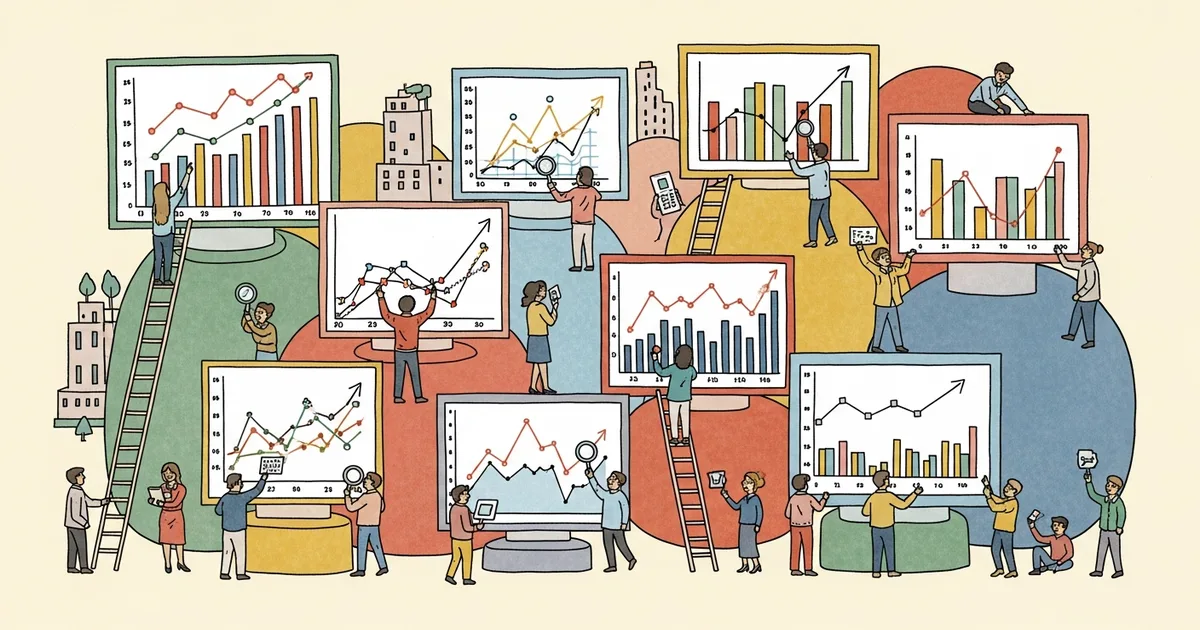
IEEE Spectrum published an analysis titled “12 Graphs That Explain the State of AI in 2026” covering the AI industry’s measurable trends across capability, deployment, and economics. The piece surfaced via Google News on May 2, 2026. During research, the Google News redirect URL returned a 503 service-unavailable, so the specific 12 metrics presented are best read directly from IEEE Spectrum.
Why It Matters
IEEE Spectrum has published similar annual graph summaries in prior years, and the format has become a standard reference for journalists, policymakers, and researchers tracking AI industry shape. The 2026 edition lands at a moment of unusually rapid change — combined Big Tech AI capex projections at $725 billion (per Financial Times reporting), multiple frontier model releases in the prior quarter, and active labor-market debate covered in the same news cycle. The graph format is particularly useful because it lets readers compare 2026 figures against historical baselines IEEE Spectrum has tracked over multiple years.
Technical Details
The 12-graph format and the specific metrics IEEE Spectrum chose for the 2026 edition were not retrievable from the source URL during research due to the Google News redirect 503. Historically, IEEE Spectrum’s annual graph round-ups have covered a mix of:
- Frontier-model parameter counts and training compute over time
- Benchmark performance trends (MMLU, SWE-bench, ARC, vision benchmarks)
- Capital spending by major AI infrastructure operators
- Adoption metrics — paid users, enterprise deployments, API usage
- Labor-market signals including AI-related job postings and salary distributions
- Energy and water consumption per inference / per training run
- Public-sentiment surveys on AI deployment
The 2026 edition’s specific selection of metrics will be available directly on the IEEE Spectrum site once the redirect resolves or by visiting spectrum.ieee.org directly.
Who’s Affected
Industry analysts and policy researchers use IEEE Spectrum’s annual format as a reference for citations and comparative analysis. AI-industry executives use the graphs in board decks and investor materials. The format itself is widely imitated, so the 2026 selection of metrics will influence what other publications track in their own year-end roundups. For independent publishers — including this one — the IEEE Spectrum collection is a useful pointer to authoritative source data behind each chart.
What’s Next
Read the full analysis on IEEE Spectrum at spectrum.ieee.org. We will follow up with a deeper analysis of any individual graph that materially changes the picture for AI-industry coverage. Watch for follow-on commentary from Stanford HAI’s annual AI Index report (typically released in March-April) and Stanford’s CRFM, both of which traditionally publish similar comprehensive round-ups that complement IEEE Spectrum’s graph format.