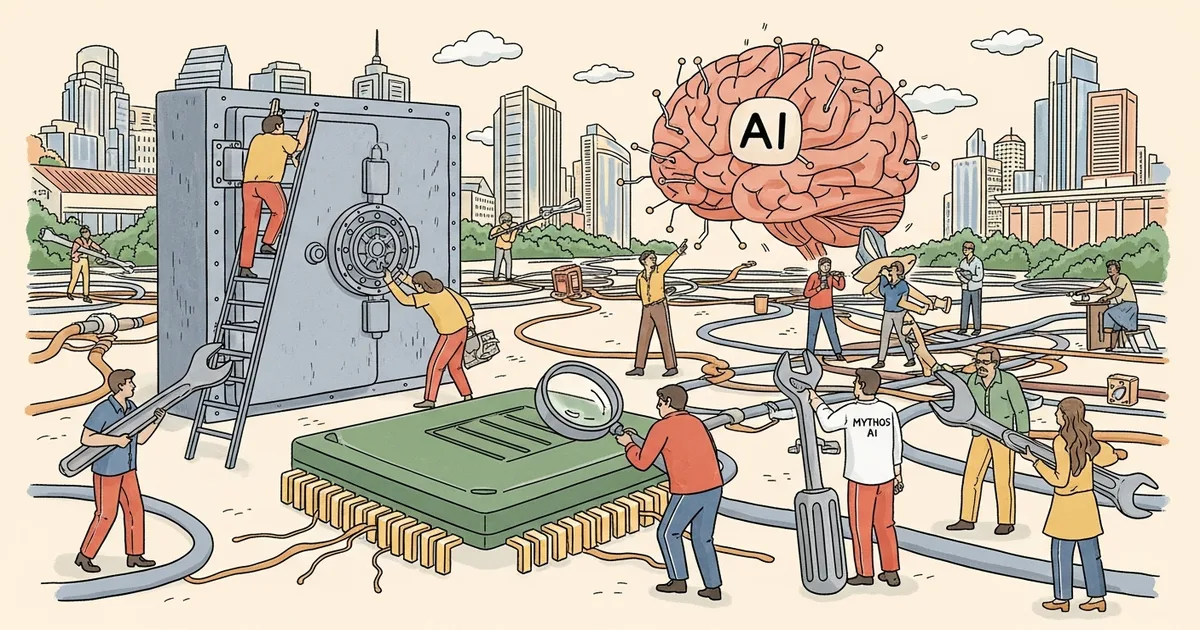
- Singapore’s Monetary Authority of Singapore directed all licensed banks to remediate cybersecurity vulnerabilities on April 20, 2026.
- The directive was issued as concerns about Anthropic PBC’s Mythos AI model — the company’s latest system — spread into Asia-Pacific financial markets.
- MAS oversees more than 200 banks in Singapore, including regional headquarters for major global institutions.
- No compliance deadline was specified in publicly available regulatory communications as of the date of Bloomberg’s report.
What Happened
Singapore’s Monetary Authority of Singapore (MAS) directed banks in the city-state to identify and remediate existing cybersecurity gaps, Bloomberg reported on April 20, 2026. The directive was issued as concerns over Anthropic PBC’s Mythos AI model — identified in the report as Anthropic’s latest system — spread from Western markets into Asia. MAS functions as both Singapore’s central bank and its primary financial services regulator, with binding supervisory authority over all licensed financial institutions operating in the country.
Why It Matters
Singapore serves as a regional financial hub for Asia-Pacific, with MAS licensing and supervising more than 200 banks including local institutions and branches of global firms. The regulator last updated its Technology Risk Management Guidelines in January 2021, requiring financial institutions to implement continuous vulnerability management programs and maintain documented incident response capabilities. The explicit framing of a specific AI model — Anthropic’s Mythos — as context for a banking cybersecurity directive represents a documented instance of an Asian financial regulator treating advanced AI capabilities as a distinct driver of operational and threat risk, rather than a general technology concern.
Technical Details
Bloomberg’s April 20, 2026 report does not detail the specific vulnerability classes MAS identified or the precise technical characteristics of Mythos that prompted the regulatory response. Anthropic, the San Francisco-based AI safety company founded in 2021, has developed Mythos as its current-generation model. The available reporting indicates that the concerns reaching Asian regulators are tied specifically to Mythos’s capabilities rather than to a disclosed exploit or breach — suggesting the threat model involves potential misuse of the model to probe or attack financial system infrastructure, though no specific attack vector was named in the material available to Bloomberg.
Who’s Affected
All banks holding MAS licenses fall within the directive’s scope, including DBS Group, OCBC Bank, United Overseas Bank, HSBC, Citigroup, Standard Chartered, and dozens of other institutions with Singapore operations. Payment service providers and licensed fintech firms under MAS supervision may face parallel remediation requirements depending on the directive’s scope. Regulators in Hong Kong, Japan, and South Korea, which closely monitor MAS’s supervisory posture as a regional benchmark, may issue comparable guidance if Mythos-related concerns continue to circulate among Asia-Pacific financial authorities.
What’s Next
MAS typically follows supervisory communications with formal circulars specifying technical requirements, audit expectations, and compliance deadlines; no such circular had been published in available material as of April 20, 2026. Anthropic had not issued a public statement in response to Bloomberg’s report at time of publication. Whether MAS or other Asian regulators will engage directly with Anthropic — as EU regulators have done with AI developers under the AI Act framework — had not been reported.