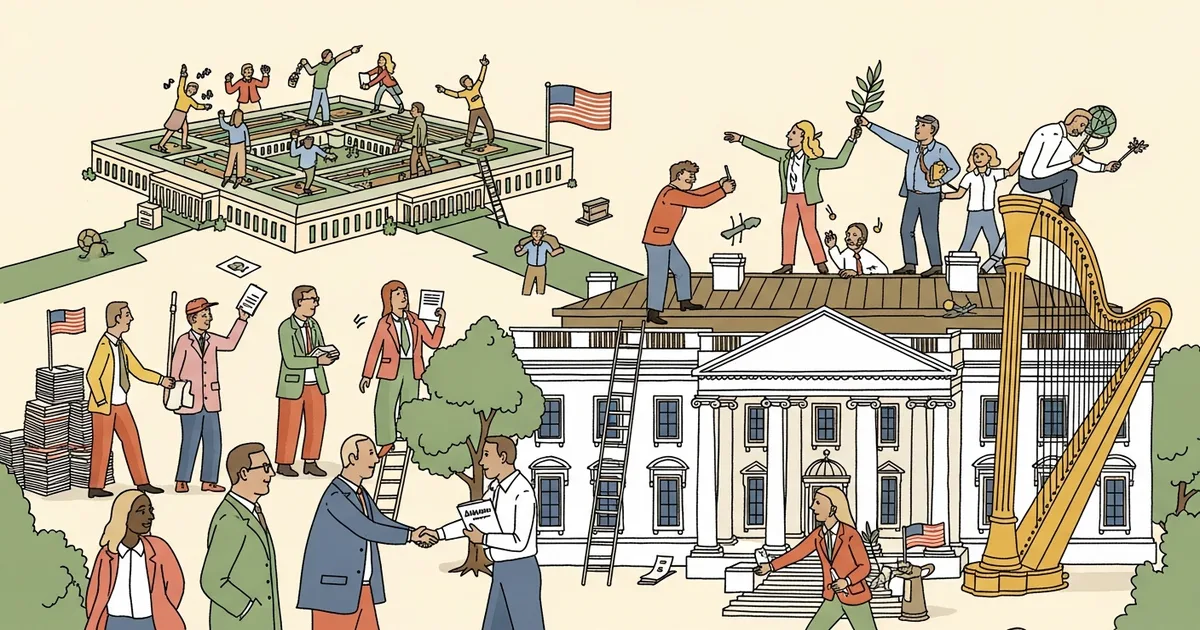
- Anthropic CEO Dario Amodei met with Treasury Secretary Scott Bessent and White House Chief of Staff Susie Wiles on April 18, 2026, in what both sides described as a productive introductory discussion.
- The meeting occurred despite the Pentagon’s recent designation of Anthropic as a supply-chain risk — a label typically reserved for foreign adversaries — following failed negotiations over military AI use.
- Anthropic co-founder Jack Clark described the Pentagon dispute as a “narrow contracting dispute” that would not prevent the company from briefing the government on its latest models.
- An administration source told Axios that every federal agency except the Department of Defense wants to use Anthropic’s technology.
What Happened
Anthropic CEO Dario Amodei met on Friday with Treasury Secretary Scott Bessent and White House Chief of Staff Susie Wiles, according to reporting by TechCrunch published April 18, 2026, which cited an earlier Axios report. The White House characterized it as an “introductory meeting” that was “productive and constructive.” Anthropic confirmed the meeting, stating Amodei held “a productive discussion on how Anthropic and the U.S. government can work together on key shared priorities such as cybersecurity, America’s lead in the AI race, and AI safety.”
Why It Matters
The meeting comes at a moment of formal tension between Anthropic and one arm of the federal government. The Pentagon previously designated Anthropic a supply-chain risk — a classification ordinarily applied to foreign adversaries — a move that could substantially restrict the company’s ability to secure government contracts. Anthropic is currently challenging that designation in court. The White House meeting suggests the Pentagon’s position is not shared across the administration: an administration source told Axios that “every agency” except the Department of Defense wants to use Anthropic’s technology.
The dispute has also affected competitive dynamics in the AI industry. After Anthropic’s failed Pentagon negotiations, OpenAI moved quickly to announce its own military contract — a decision that prompted consumer backlash against OpenAI at the time.
Technical Details
The original breakdown between Anthropic and the Pentagon stemmed from disagreements over acceptable use cases for Anthropic’s models in military applications. Anthropic sought to maintain contractual safeguards that would restrict deployment for fully autonomous weapons systems and mass domestic surveillance programs. The Pentagon declined those terms and subsequently issued the supply-chain risk designation.
The White House meeting, per Anthropic’s statement, covered three specific areas: cybersecurity collaboration, U.S. competitiveness in AI development, and AI safety protocols associated with scaling large language models. Separately, earlier indications of a more receptive posture elsewhere in the administration had emerged through reports that Bessent and Federal Reserve Chair Jerome Powell had encouraged major bank executives to test Anthropic’s Mythos model — a recently released product distinct from the company’s Claude line.
Who’s Affected
Anthropic faces an effectively split relationship with the federal government: potential exclusion from Defense contracts while other agencies reportedly seek expanded access. The outcome of Anthropic’s court challenge to the supply-chain risk designation will determine whether that split becomes permanent or narrows. Anthropic co-founder Jack Clark stated publicly that the legal contest is a “narrow contracting dispute” and would not prevent the company from continuing to brief government officials on its AI models.
For enterprise and government customers evaluating which frontier AI providers to contract with, the ambiguity over Anthropic’s federal standing introduces procurement uncertainty that competitors — particularly OpenAI and Google DeepMind, both of which have active government contracts — do not currently face.
What’s Next
Anthropic said it is “looking forward to continuing these discussions” following the Amodei meeting, though neither side disclosed a timeline or agenda for follow-on conversations. The company’s legal challenge to the Pentagon’s supply-chain risk designation remains active, with no resolution date publicly announced. Whether the White House-level engagement translates into formal policy changes — or accelerates a settlement of the Pentagon dispute — has not been confirmed by either party.
Related Reading
- Schematik Raises $4.6M to Bring AI-Guided Hardware Design to Non-Engineers as Anthropic Launches Bluetooth API
- ChatGPT vs Claude 2026: Which AI Chatbot Actually Wins [Complete Comparison]
- 4chan Discovered Chain-of-Thought AI Reasoning Before Google Did — In a Video Game
- Anthropic’s CPO Just Quit Figma’s Board — The Same Week Anthropic Launched a Tool That Competes With Figma