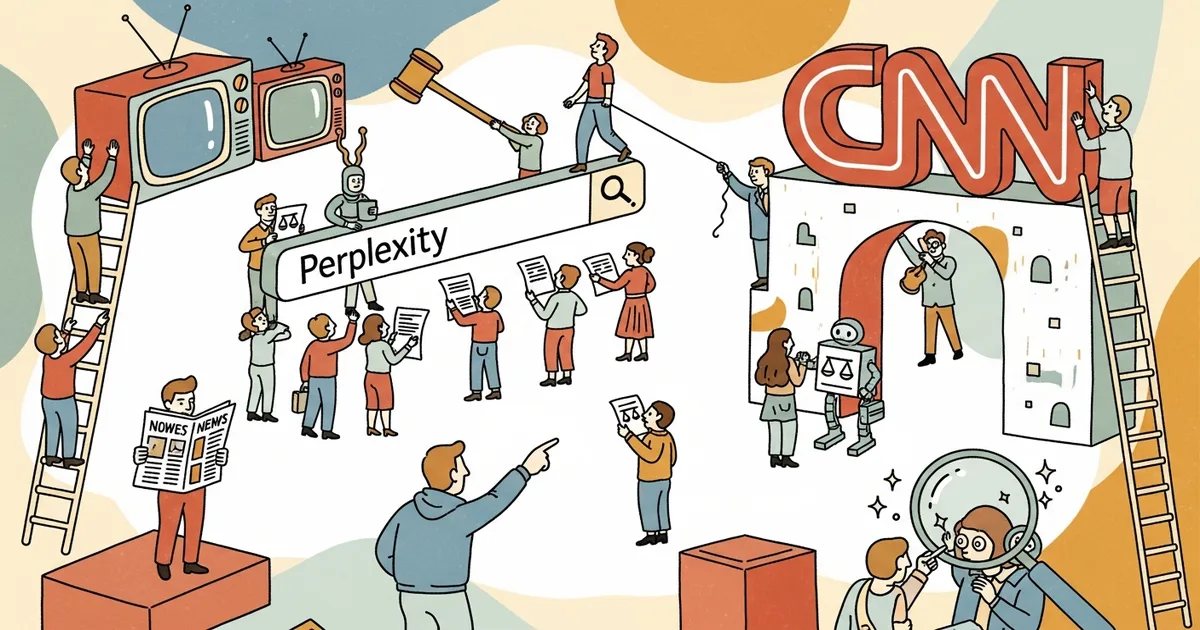
CNN filed a copyright and trademark lawsuit against Perplexity AI in the Southern District of New York on May 29, 2026, alleging the AI search company unlawfully scraped and redistributed more than 17,000 news stories, photos, and videos. CNN is the first television network to sue an AI company for copyright infringement.
The filing pushes the count of organizations with active suits against Perplexity to nine — a legal pile-up that could determine whether AI search products can operate on news content at all.
What CNN alleges
CNN’s complaint centers on scale: more than 17,000 pieces of copyrighted content allegedly scraped and redistributed through Perplexity‘s answer engine. As a broadcaster, CNN extends the litigation frontier beyond print and digital publishers into video and television journalism.
The nine plaintiffs lined up against Perplexity
Perplexity now faces active suits from:
- CNN
- The New York Times
- News Corp / Dow Jones
- New York Post
- Chicago Tribune
- Encyclopedia Britannica
- Merriam-Webster
- Japan’s Yomiuri Shimbun
That is nine plaintiffs spanning newspapers, reference publishers, a social platform, and now a TV network — a coalition broad enough to make this a category-defining fight.
License or litigate: the industry splits
Not every publisher chose court. Time, Gannett, Le Monde, and Der Spiegel signed licensing deals with AI firms instead. The result is a clean strategic divide.
| Litigate | License |
|---|---|
| CNN, NYT, News Corp, NY Post | Time, Gannett |
| Chicago Tribune, Britannica | Le Monde, Der Spiegel |
| Merriam-Webster, Reddit, Yomiuri |
Perplexity’s defense: “facts cannot be copyrighted”
Perplexity’s core argument is that “facts cannot be copyrighted.” The defense leans on a real principle of copyright law — facts are not protectable — but the plaintiffs counter that Perplexity reproduces expression, structure, and verbatim passages, not just facts.
Why this case could decide whether AI search exists
If courts side with publishers, AI search engines may be forced into licensing every major news source before answering questions about the day’s events. If Perplexity prevails, the licensing deals already signed start to look optional. The same tension is playing out in the courts more broadly, as we covered in how courts are confronting a flood of AI-generated lawsuits.
For publishers weighing their own response, the calculus is now concrete: a licensing deal is revenue today, while a lawsuit is leverage tomorrow — and nine organizations have decided leverage is worth the wait.