- Elon Musk is seeking up to $134 billion in damages from OpenAI and Microsoft, alleging he was deceived about the company’s commitment to remaining a nonprofit.
- A nine-person jury will deliver a non-binding advisory verdict to guide the judge’s ruling on Musk’s claims against OpenAI CEO Sam Altman and president Greg Brockman.
- Key witnesses include Altman, Brockman, former OpenAI chief scientist Ilya Sutskever, former CTO Mira Murati, and Microsoft CEO Satya Nadella.
- A ruling against OpenAI could disrupt the company’s planned IPO and affect its current valuation of over $850 billion.
What Happened
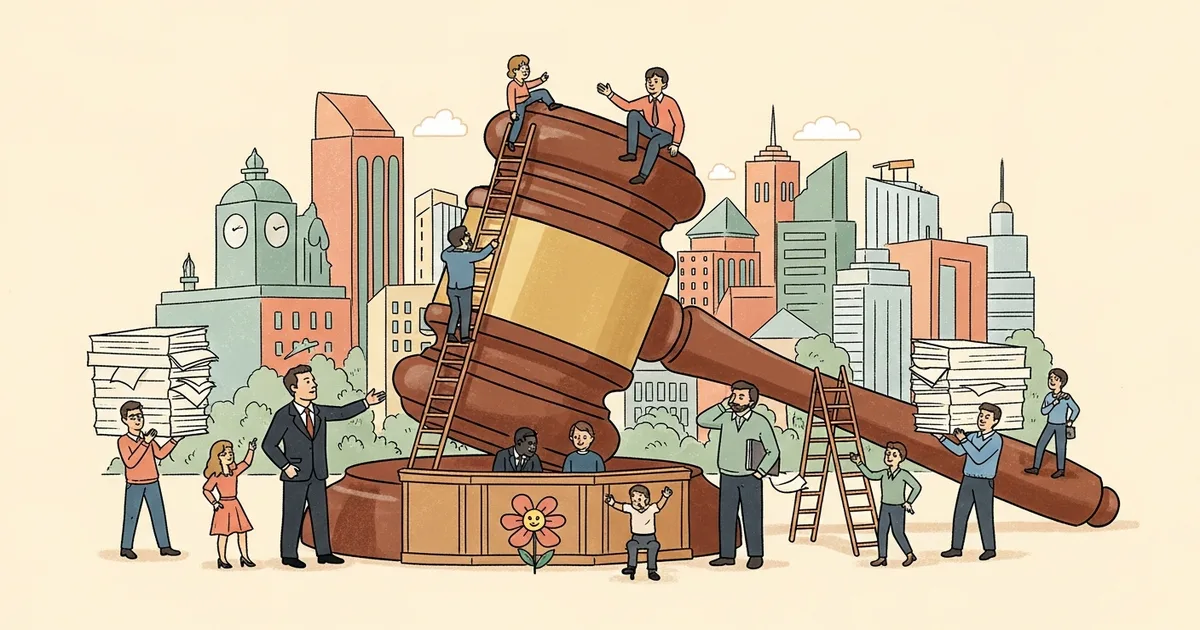
Trial proceedings in Musk v. Altman began the week of April 27, 2026, in a federal court in Northern California, with Elon Musk facing off against OpenAI CEO Sam Altman and president Greg Brockman in a case that could determine whether OpenAI may continue operating as a for-profit enterprise. MIT Technology Review is providing ongoing coverage of the proceedings.
Musk, who cofounded OpenAI with Altman and others in 2015 and departed in 2018, alleges that Altman and Brockman induced him to provide early funding — including a $38 million donation — by promising the organization would remain a nonprofit dedicated to beneficial AI development. He is seeking up to $134 billion in damages from OpenAI and Microsoft and has asked that any awarded damages be directed to OpenAI’s nonprofit entity rather than to himself.
Why It Matters
The trial arrives as OpenAI, currently valued at over $850 billion, is pursuing a public offering it has targeted for sometime in 2026. In October 2025, the attorneys general of California and Delaware approved OpenAI’s new corporate structure under a set of conditions, including requiring a safety and security committee at the nonprofit level to review safety-related decisions made by the for-profit subsidiary.
California’s attorney general has since declined to join Musk’s lawsuit, stating the office did not view his action as serving the public interest. AI safety advocates and civil society groups have separately attempted to block OpenAI’s conversion to a for-profit structure.
Technical Details
The nine-person jury will deliver an advisory verdict — a non-binding recommendation — for the judge to consider when ruling on Musk’s claims. Scheduled witnesses include Musk, Altman, Brockman, former OpenAI chief scientist Ilya Sutskever, former OpenAI CTO Mira Murati, and Microsoft CEO Satya Nadella.
The court has already established as fact that in 2017, Altman and Brockman sought to establish a for-profit arm, while Musk proposed merging OpenAI with Tesla. Musk alleges that Altman and Brockman told him the company remained committed to its nonprofit status even as they pursued a for-profit pivot. OpenAI disputes this account, asserting that Musk agreed a for-profit entity was necessary and sought to become its CEO.
Legal scholars have questioned both Musk’s standing and the body of law being applied. “The idea that Elon Musk can sue because he was a donor or used to be on the board is pretty puzzling,” said Jill Horwitz, a professor of nonprofit law at Northwestern University. “Typically, it’s up to the attorneys general to bring such a claim to enforce the charitable purposes.” Rose Chan Loui, director of the UCLA School of Law’s philanthropy and nonprofit program, raised a separate issue: “OpenAI is not a trust. OpenAI is a corporation. And so really they should be looking at … the law of charitable nonprofit organizations.”
Who’s Affected
OpenAI has disclosed in its own filings that Musk’s litigation constitutes a material risk to its business. If the court removes Altman and Brockman — as Musk has requested — or orders the company to revert to a nonprofit structure, OpenAI’s IPO timeline and its capacity to raise additional capital would face direct disruption.
Musk’s AI venture xAI, which develops the Grok chatbot and is expected to go public as part of SpaceX as early as June 2026, stands to benefit competitively from any outcome that weakens OpenAI. xAI, combined with SpaceX, currently carries a valuation of approximately $1.25 trillion.
What’s Next
The trial is expected to surface internal communications, private texts, and diary entries related to OpenAI’s founding and early growth — material that has not previously been disclosed publicly. Musk, Altman, Brockman, Sutskever, Murati, and Nadella are all expected to take the stand.
An OpenAI spokesperson, in a statement referenced by MIT Technology Review, described the lawsuit as “a baseless and jealous bid to derail a competitor.” MIT Technology Review has stated it will continue reporting on proceedings as they unfold.