- Menlo Ventures partner Deedy Das described San Francisco as ‘pretty frenetic right now,’ with ‘the divide in outcomes is the worst I’ve ever seen’.
- Das estimated roughly 10,000 founders and employees at OpenAI, Anthropic, and Nvidia have crossed $20M in personal wealth.
- Layoffs are ‘in full swing’ and many software engineers feel their skills are no longer useful, per Das.
- The post drew pushback on X, with some calling the sentiment ‘incredibly fortunate’ or ‘nasty.’
What Happened
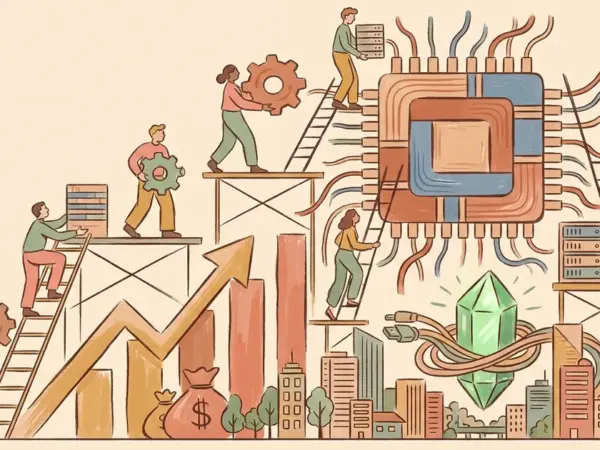
Menlo Ventures partner Deedy Das described the current AI boom in San Francisco as bifurcated and tense in a widely-shared social media post, TechCrunch reported on Friday. Das said San Francisco is “pretty frenetic right now,” describing “the divide in outcomes is the worst I’ve ever seen.”
Why It Matters
Das’s framing crystallises a structural feature of the current AI cycle that earlier tech booms did not have: the same technology is simultaneously creating extreme winners and displacing the workforce that historically participated. In Web 1.0 and Web 2.0 cycles, new companies created winners without immediately threatening the careers of existing workers. The current cycle, per Das, has both vectors operating at once.
The post resonated because it came from inside the industry — a Menlo Ventures partner is not a typical critic of Silicon Valley wealth concentration. Menlo Ventures has backed Anthropic, Roam, Eve Legal, and Wispr AI; the firm has direct exposure to both the winners and the broader market dynamics.
Technical Details
Das’s “back of the envelope AI calculation” projected approximately 10,000 founders and employees at companies like OpenAI, Anthropic, and Nvidia have hit “retirement wealth of well above $20M.” Recent disclosures support the order of magnitude: Greg Brockman’s OpenAI shares are worth approximately $30 billion; Ilya Sutskever’s stake is approximately $7 billion; OpenAI’s October 2025 secondary share sale produced roughly 75 employees who each cashed out the $30 million maximum cap (totalling $6.6 billion across 600+ participants).
Das wrote that “layoffs are in full swing” and “many software engineers feel that their life’s skill is no longer useful,” producing “a deep malaise about work (and its future).” Specific 2026 corporate restructurings cited as evidence include General Motors cutting 600 IT workers on May 11, GitLab announcing AI-focused cuts the same day, and Cisco’s AI-focused job cuts announced May 14.
Who’s Affected
The 10,000-person cohort Das identifies — concentrated at OpenAI, Anthropic, and Nvidia, plus extended cohorts at Anysphere, Cursor, Together AI, Groq, Cerebras, and similar — represent the immediate beneficiaries of the cycle. The much larger group of mid-career software engineers and adjacent technical workers — historically the participating class of tech booms — faces a structural disruption in their career trajectories. Some pushback on the post argued the framing was “incredibly fortunate” or “nasty”; entrepreneur Deva Hazarika argued people in the described cohort “can simply make a choice to be happy.”
What’s Next
Das did not propose specific policy responses. The bifurcation he describes is likely to feature in ongoing AI labour-market research from organisations including the U.S. Bureau of Labor Statistics, McKinsey Global Institute, and OECD. Subsequent posts and op-eds from inside the industry — particularly from VC partners and lab leaders — are anticipated as the dynamic continues.