- Parallel CEO argued in a Bloomberg interview that creators — writers, artists, musicians — are largely excluded from the AI agentic economy.
- The structural issue is the absence of infrastructure for creators to participate in agent-mediated commerce.
- The framing complements Deedy Das’s recent observation about the AI gold rush’s bifurcation between 10,000 wealth-creators and everyone else.
- Specific solutions discussed include rights infrastructure, agent-aware micropayment rails, and on-platform creator compensation models.
What Happened
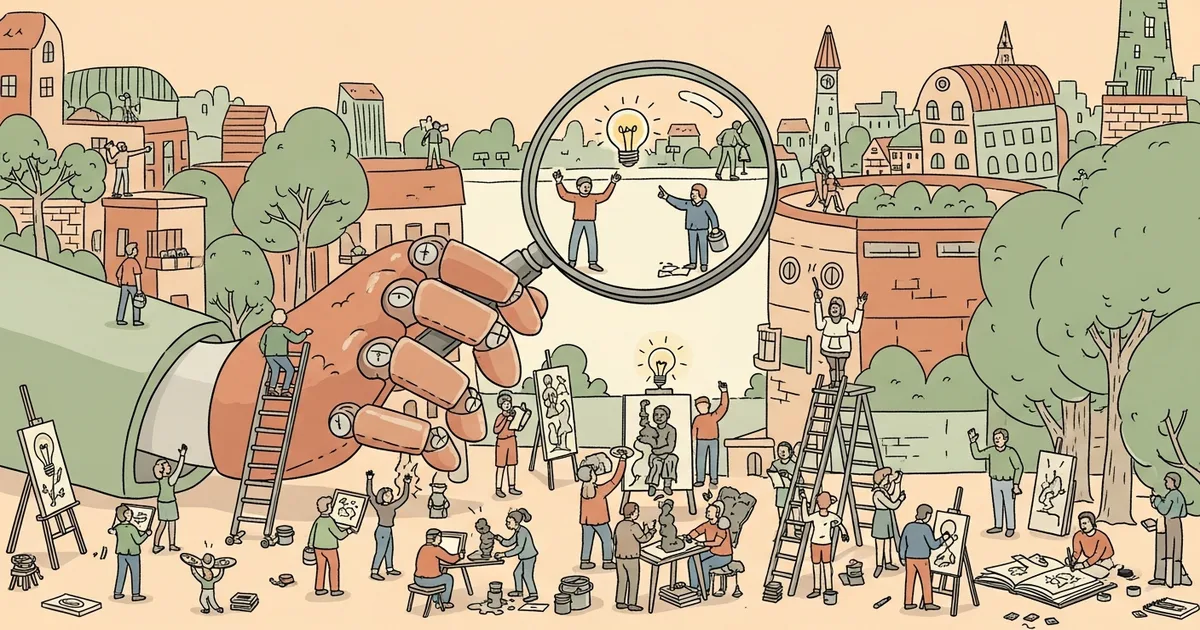
Parallel’s CEO argued in a Bloomberg Tech interview that creators — writers, artists, musicians — are being left out of the value flowing through the emerging AI agentic economy, Bloomberg reported in a Monday segment. The framing argues that as AI agents increasingly mediate commerce, content discovery, and information flow, the existing rights and compensation infrastructure for creators is breaking down faster than replacement structures are being built.
Why It Matters
The argument lands at a pivotal moment in the agentic-AI commercial cycle. Greg Brockman’s recent OpenAI product consolidation, Sundar Pichai’s I/O 2026 “agentic Gemini era” framing, and the broader industry alignment around agent platforms all assume that agents are intermediating an increasing share of digital commerce and content access. The question of how creators get compensated when an agent reads their work and acts on it — without serving them an ad, sending them traffic, or paying them a licence fee — remains structurally unresolved.
The framing complements Deedy Das’s recent observation about the AI gold rush’s bifurcation. Where Das focused on the wealth concentration among AI-startup founders and employees, Parallel’s CEO focuses on the structural displacement of creators upstream of the AI value chain. Both point at the same underlying dynamic from different vantage points.
Technical Details
Specific infrastructure proposals discussed in the Bloomberg segment fall into three categories: rights infrastructure (machine-readable indications of what an agent is allowed to read, reproduce, or quote from), agent-aware micropayment rails (small per-action payments to creators when an agent surfaces their content), and on-platform creator compensation models built directly into agent platforms. None of these has emerged as a dominant industry standard through mid-2026.
The C2PA content-provenance framework that OpenAI extended Monday is a structural cousin: provenance metadata is foundational to any rights-and-compensation infrastructure. Cloudflare’s robots.txt experiments with AI-crawler blocking, Reddit’s licensing deals with OpenAI and Google, and the Stripe-style payment infrastructure that AI agents are starting to require for autonomous purchases all sit in adjacent territory.
Who’s Affected
Working creators — journalists, illustrators, musicians, writers, video creators — face direct displacement of their traditional compensation channels. Agent-platform vendors (OpenAI, Anthropic, Google, Microsoft, xAI) face mounting political pressure to address the compensation gap. Established licensing intermediaries (Getty Images, Shutterstock, Reuters, AP, ASCAP/BMI) face both opportunity (they are the natural counter-party for creator rights at scale) and risk (their existing business models may not survive a shift to agent-mediated commerce). Regulators in the EU and US continue to develop AI-and-copyright frameworks that will shape the eventual infrastructure.
What’s Next
The Bloomberg segment did not specify when Parallel will ship the specific infrastructure it described. Expect continued industry commentary from creator-side advocates and continued regulatory development. The 2026 NewsGuild contract negotiations and similar labour-side disputes are anticipated to feature AI-displacement compensation as a primary issue.