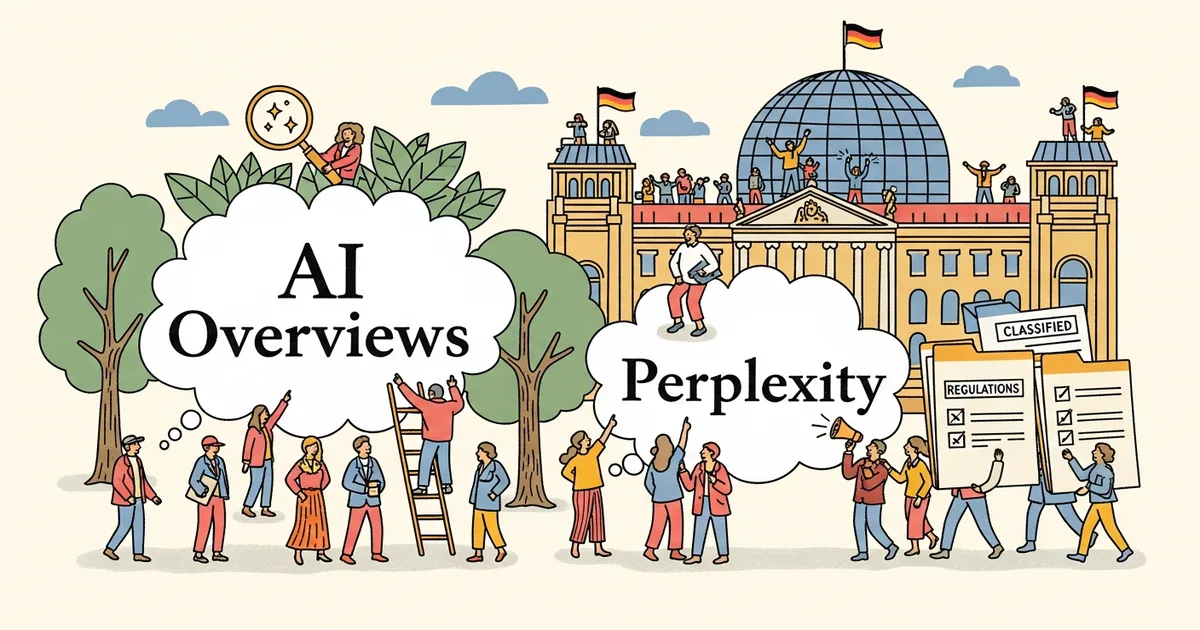
- Germany’s Commission for Licensing and Supervision (ZAK) classified AI search engines and chatbots as content providers — the first application of the State Media Treaty to them.
- The rulings target Google’s AI Overviews and Perplexity, finding both violated Section 109; they are immediately enforceable with a one-month appeal window.
- Regulators say the Digital Services Act liability shield doesn’t apply because AI-generated answers count as the providers’ own content, not redistributed third-party material.
- Google is accused of burying journalistic links beneath its AI summaries, which regulators call prohibited discrimination; Google says it will appeal.
What Happened
Germany’s Commission for Licensing and Supervision (ZAK) issued its first rulings against AI services from Google and Perplexity, classifying AI search engines and chatbots as content providers under the country’s State Media Treaty, according to a July 16, 2026 report from The Decoder. “AI search engines and chatbots are content providers, and we are now consistently applying German media law to them,” said ZAK Chairman Dr. Thorsten Schmiege.
Why It Matters
The rulings pierce a core legal protection: regulators say the Digital Services Act liability shield, which covers platforms distributing third-party content, doesn’t apply to AI-generated responses because they are the providers’ own content. A Munich court recently reached a similar conclusion, treating AI-generated text as independent content containing “independent, new, and substantive statements,” and held Google liable for false claims. That combination puts Google under media law on top of civil liability.
Technical Details
The rulings formally find that Google and Perplexity violated Section 109 of the State Media Treaty and are immediately enforceable, with one month to appeal. Google is accused of failing transparency rules and of discrimination, because its AI summaries take prime placement above traditional search results and push journalistic links down — which regulators say is prohibited since the AI responses are Google’s own content, not neutral results. Perplexity has so far been flagged only for lacking a designated representative in Germany and for missing transparency disclosures. A legal opinion by Professors Jan Oster and Christoph Busch backs the regulators and recommends creating a separate media-law category for AI search engines to protect media diversity.
Who’s Affected
The decision most directly affects Google and Perplexity in Germany, and the journalistic outlets whose traffic and funding regulators say are at risk when a single prose answer replaces a list of links. Regulators note that studies show users rarely click source links once they feel a question is answered — so moving links higher is unlikely to change behavior. Google disputes the studies but has not released contrary data. The ruling is being watched as a template other European regulators could adopt.
What’s Next
Both companies have one month to appeal, and Google has said it will. Google points to its “Preferred Sources” feature as evidence users can choose which sources appear, though The Decoder characterizes it as a “fig leaf” few users will maintain. The larger question is whether Germany’s move to treat AI answers as media content — and the proposed separate regulatory category — spreads across the EU as AI search reshapes how people find information.