- US courts are seeing a surge of AI-generated legal filings, often from self-represented litigants who can’t afford a lawyer, per MIT Technology Review.
- Federal magistrate judge Maritza Braswell in Colorado is among those sifting stacks of chatbot-assisted documents from people without counsel.
- Judges are grappling with novel questions: what rights and duties should attach when a chatbot effectively stands in for a lawyer.
- The trend cuts both ways — expanding access to justice while flooding courts with error-prone, sometimes fabricated filings.
What Happened
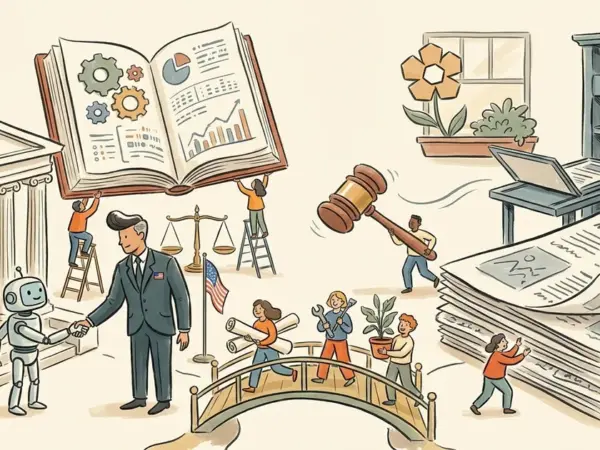
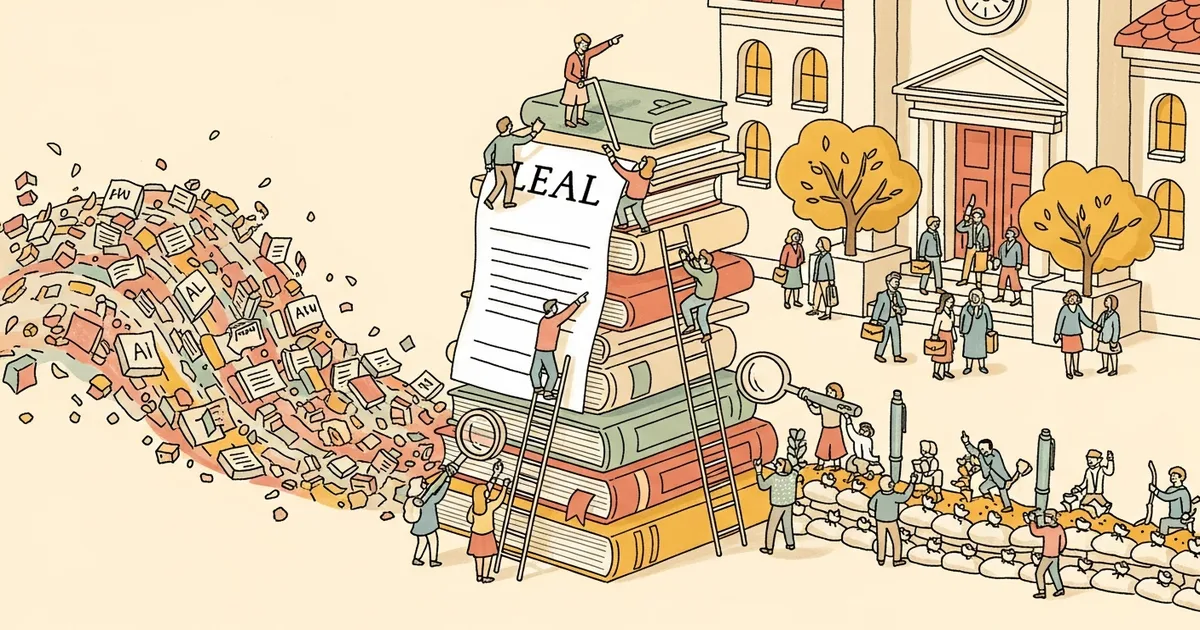
US courts are coping with a flood of AI-generated lawsuits, MIT Technology Review reported. The piece centers on Judge Maritza Braswell, a federal magistrate judge in Colorado, who most days sifts through stacks of documents written by people without a lawyer — many who can’t afford one, others whose cases are unconventional. Increasingly, those filings are drafted with AI chatbots, and judges are now wondering what rights and duties chatbots should have as they stand in for lawyers.
Why It Matters
This is AI colliding with one of society’s core institutions — the courts — and the collision is genuinely double-edged. On one hand, AI is a powerful access-to-justice tool: people who could never afford a lawyer can now draft coherent legal documents. On the other, chatbots routinely fabricate case citations (the now-infamous “hallucinated precedent” problem), and a surge of AI-drafted, often-flawed filings strains court resources and risks injecting errors into the legal record.
It also forces an unsettled question: when a litigant’s arguments are effectively authored by a chatbot, who is accountable for accuracy? Courts have already sanctioned lawyers for citing AI-hallucinated cases; the harder problem is self-represented litigants who don’t know the tool invented a precedent. This is the on-the-ground reality behind the abstract AI-regulation debate we track across our AI regulation coverage, and it sits alongside mounting legal pressure on AI companies themselves.
Technical Details
The core failure mode is hallucination: LLMs generate fluent, authoritative-sounding text that can include nonexistent cases, misquoted statutes, or invented citations. In a legal filing, that’s not a harmless error — it can mislead a court. Judges and clerks now spend time verifying citations that previously could be assumed to be genuine. Some courts have begun issuing standing orders requiring disclosure of AI use in filings, and the MIT TR piece surfaces the deeper governance question of what procedural duties (accuracy, disclosure, verification) should attach to chatbot-assisted litigation.
The specific cases, judicial responses, and any emerging court rules are detailed in the source reporting.
Who’s Affected
Judges and court staff bear the added verification burden. Self-represented litigants gain access but also risk filing fabricated content unknowingly. Practicing lawyers face a shifting standard for AI use and disclosure. AI chatbot makers (OpenAI, Anthropic, Google) face reputational and potentially legal exposure when their tools produce harmful legal errors. And the justice system as a whole confronts how to absorb a tool that simultaneously democratizes and destabilizes legal access.
What’s Next
Expect more courts to adopt AI-disclosure rules and citation-verification requirements, and likely guidance from judicial conferences on handling AI-assisted pro-se filings. The unresolved question — accountability when a chatbot is the de facto author — will drive both court rules and possibly legislation. As AI legal tools improve, the access-to-justice upside grows; whether courts can manage the error rate will determine if the net effect is empowering or corrosive.