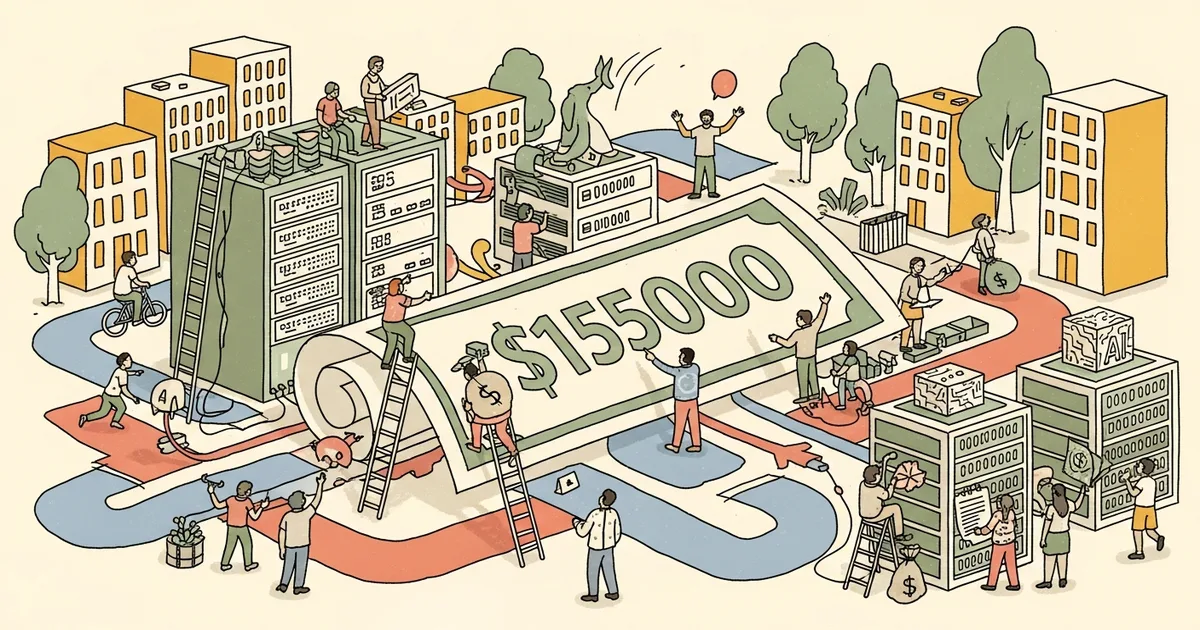
Unsecured bond supply from hyperscalers hit $155 billion year-to-date through May 2026, Bloomberg reported — already more than 45% above total 2025 issuance. Some AI-infrastructure bond sales are 4x oversubscribed.
This is the debt side of the AI build-out, and its pace has no precedent in technology financing.
Who is borrowing, and how much
| Deal | Scale |
|---|---|
| Oracle — Michigan datacenter | $16B |
| Apollo/Blackstone — Anthropic TPUs | $36B |
| CoreWeave — Meta commitment | $35B |
The Apollo/Blackstone deal — financing Google TPUs for Anthropic — is the template, detailed in our coverage of the $36 billion private-credit chip deal.
The capex backdrop
Bank of America estimates total AI capex will reach $800 billion in 2026 and $1 trillion in 2027. Bonds are how that spending gets funded without diluting equity — and 4x oversubscription says credit investors are eager to lend into it.
Rational investment or credit bubble?
The bull view: these are investment-grade borrowers building revenue-generating infrastructure with contracted demand behind it. The bear view: oversubscription this hot, in a single theme, is exactly what late-cycle credit manias look like. The deciding variable is utilization — whether the datacenters being financed run full.
What happens if AI demand plateaus
The risk is concentration. If AI demand flattens, the revenue assumptions under these bonds weaken at the same time across many issuers, because they all financed the same bet. This is the credit twin of the equity-side concentration in the $4 trillion IPO cluster — both stack exposure to one industry’s trajectory.
For anyone tracking the AI trade, $155 billion in YTD issuance is the number to monitor: it is the market’s revealed confidence, and it is the first place stress would show if demand disappoints.