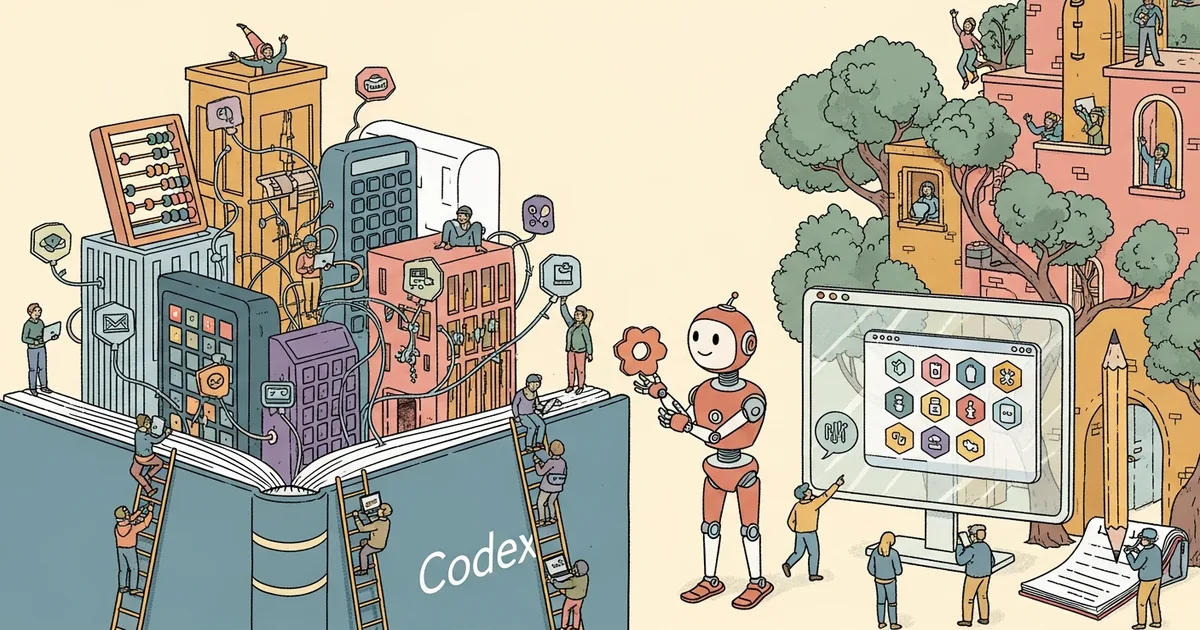
- OpenAI released a major Codex update on April 17, 2026, adding computer use, a built-in browser, gpt-image-1.5 image generation, and two memory features.
- The company simultaneously released 111 new plugins encompassing skill packages, app integrations, and Model Context Protocol (MCP) server connections.
- Thibault Sottiaux, head of Codex, stated the release is explicitly building toward a planned desktop super app combining ChatGPT, Codex, and the Atlas browser.
- Computer use and memory features launch on macOS first; EU and UK users face a delayed rollout with no stated date.
What Happened
OpenAI released a significant update to Codex, its desktop coding agent, on April 17, 2026, adding computer use, a built-in browser with a commenting interface, image generation powered by gpt-image-1.5, and two distinct memory capabilities. The release comes roughly one month after OpenAI confirmed — following reporting by The Wall Street Journal — that it was developing a desktop super app integrating ChatGPT, Codex, and its Atlas browser into a single application. Today’s update does not ship that super app; OpenAI is staging its components incrementally through Codex releases.
“We’re building the super app out in the open,” said Thibault Sottiaux, head of Codex, in a press briefing held by OpenAI. “This release is about developers. In the future, we will broaden it up to a wider audience.”
Why It Matters
AI coding assistants have become a primary competitive front among major model providers. Anthropic’s Claude desktop app offers computer use; Microsoft’s GitHub Copilot has expanded from autocomplete into multi-step agentic workflows; and Google’s Gemini is embedded in Android Studio and Google Workspace. OpenAI’s strategy of unifying a chat interface, a web browser, and a coding agent into a single desktop application represents a structural shift toward integrated AI workspaces designed to reduce context-switching between tools.
Since OpenAI confirmed the super app project last month, the company had offered few technical specifics. Today’s Codex release is the first substantive look at how that integration is being constructed.
Technical Details
The computer use capability allows Codex agents to interact with other applications running on a user’s machine. A user can specify a target application by name or allow Codex to select the most appropriate tool for a task. Sottiaux described a proprietary mechanism — referenced during the briefing as “secret sauce” — that enables a secondary application to run alongside Codex without degrading overall system performance, so the agent and user can work concurrently. The technical implementation of this isolation was not detailed publicly.
Alongside the update, OpenAI released 111 new plugins for Codex covering skill packages, direct application integrations, and Model Context Protocol (MCP) server connections. The built-in browser includes a commenting interface: users can target specific UI elements on a webpage or web app under development and instruct Codex to modify them inline. In a demonstration, a Codex team member used this to correct a y-axis label cutoff on a data visualization by adjusting its margins through a natural-language prompt.
Image generation is handled by gpt-image-1.5, supporting product concept mockups, frontend design assets, and simple game graphics. The model can capture screenshots to verify whether its output matches the user’s stated intent before proceeding. The two memory features are distinct in function: one stores context from completed tasks to improve the speed and quality of future prompts over time; the other generates proactive suggestions — for example, alerting a user at the start of their workday that a collaborator has commented on a shared Google Doc.
Who’s Affected
The updated Codex is rolling out to desktop users signed in with a ChatGPT account. Computer use launches on macOS first; OpenAI has not announced a timeline for Windows availability. Users in the European Union and United Kingdom will not receive access to computer use or memory features at launch, pending a regional rollout with no published date. Developers are the explicitly stated primary audience; OpenAI has not specified when broader consumer access will follow.
What’s Next
OpenAI has not published a timeline for the full super app combining ChatGPT, Codex, and the Atlas browser. Sottiaux indicated the company plans to continue shipping capabilities publicly through Codex updates before consolidating them into the unified application. The nearest disclosed milestones are the EU and UK rollout of computer use and memory features, and an eventual expansion of computer use to Windows users.