- Anthropic has filed documents with the Federal Election Commission to create AnthroPAC, a new political action committee.
- The PAC will make contributions to both parties during the 2026 midterm elections, funded by voluntary employee contributions capped at $5,000.
- AI companies have already contributed $185 million to midterm races, according to The Washington Post.
- Anthropic previously contributed at least $20 million to Public First, a Super PAC supporting specific regulatory positions, as reported by The New York Times.
What Happened
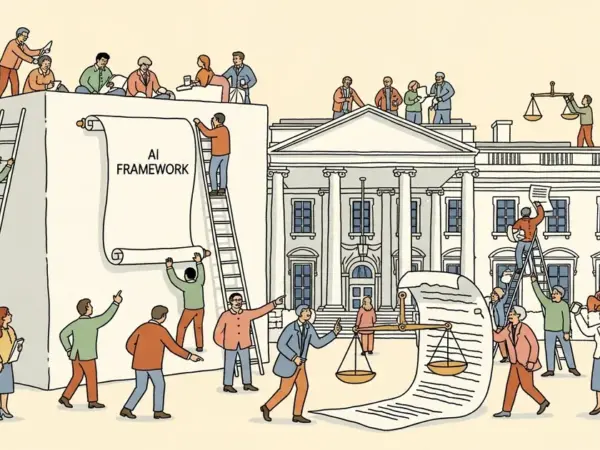
Anthropic has filed a statement of organization with the Federal Election Commission to establish AnthroPAC, a political action committee that will make contributions to candidates from both major political parties during the upcoming 2026 midterm elections. The filing, signed by Anthropic treasurer Allison Rossi, was reported by TechCrunch on April 3, 2026. The PAC will be funded exclusively by voluntary employee contributions capped at $5,000 per person, Bloomberg reports.
AnthroPAC plans to support both current D.C. lawmakers and rising political candidates who align with the company’s policy priorities on AI regulation, development, and deployment. The filing represents a formalization of Anthropic’s political engagement, which has grown substantially in recent months.
Why It Matters
Anthropic’s PAC launch adds another major AI company to the growing list of technology firms directly investing in U.S. political campaigns. The Washington Post reported last month that AI companies had already contributed a combined $185 million to the 2026 midterm races, a figure that underscores how rapidly the AI industry has built political infrastructure. In February, The New York Times reported on Public First, a Super PAC that had received at least $20 million from Anthropic and had financed ad campaigns supporting specific regulatory agendas around AI safety and governance.
The move comes as Anthropic remains embroiled in a legal dispute with the Department of Defense over the government’s use of Anthropic’s AI models and the guidelines governing that usage. The conflict, which erupted earlier this year, has heightened the company’s interest in cultivating congressional allies who can shape legislation affecting defense AI procurement, safety standards, and the boundaries of government AI deployment. Having a dedicated PAC provides Anthropic with a direct mechanism to support lawmakers who share its policy positions on these issues.
Technical Details
AnthroPAC is structured as a traditional PAC rather than a Super PAC, which carries different regulatory implications. As a traditional PAC, it can make direct contributions to individual candidates but faces contribution limits set by federal election law. The $5,000 cap on employee contributions is the standard federal limit for individual donations to a PAC per calendar year. This structure differs from Anthropic’s involvement with Public First, which as a Super PAC can raise and spend unlimited amounts on political advocacy but cannot coordinate directly with candidates or their campaigns.
The bipartisan contribution approach reflects Anthropic’s strategic calculation that AI regulation will require support across the political spectrum. AI policy positions do not currently divide neatly along partisan lines, with both major parties containing factions that favor more aggressive regulation and factions that prefer a lighter regulatory touch. Federal Election Commission filings indicate that AI industry PAC spending has accelerated significantly in the 2026 cycle compared to 2024, when technology companies first began treating AI policy as a dedicated lobbying priority separate from broader tech industry advocacy.
The treasurer named on the filing, Allison Rossi, holds a role that typically involves compliance with FEC reporting requirements, including quarterly disclosure of all contributions received and expenditures made. These filings will provide public transparency into AnthroPAC’s activities.
Who’s Affected
Anthropic’s employees now have the option to contribute to AnthroPAC, adding a political dimension to the company’s internal culture. Congressional candidates in competitive midterm races may receive funding from the PAC, potentially influencing their positions on AI regulation and safety standards. Rival AI companies, including OpenAI and Google DeepMind, face pressure to match Anthropic’s political engagement or risk being outmaneuvered on policy priorities that could directly affect their businesses, particularly around government AI procurement and safety requirements.
What’s Next
AnthroPAC’s first contribution reports will become public through mandatory FEC quarterly filings, which will reveal which specific candidates and committees receive financial support. The 2026 midterm elections in November will serve as the first major test of whether the AI industry’s escalating political spending translates into measurable legislative influence on technology policy. Anthropic’s ongoing legal battle with the Department of Defense will continue to shape the company’s policy priorities and inform which candidates and positions AnthroPAC chooses to support in the months ahead.
Related Reading
- 3 Protocols Are Fighting to Become the HTTP of AI Agents — Only 1 Will Win [MCP vs A2A vs ACP Compared]
- Your Brand Is Invisible on Claude But Mentioned 615x More on Grok — The AI Citation Gap Nobody Tracks
- Google AI Overviews Just Killed 58% of Your Organic Clicks — But the Survivors Convert 5x Better [Data]
- ChatGPT Now Handles 20% of All Search Traffic on Earth — Google’s Monopoly Has a Crack [2026 Data]
- OpenAI Just Raised $122 Billion — That’s More Than the GDP of 130 Countries