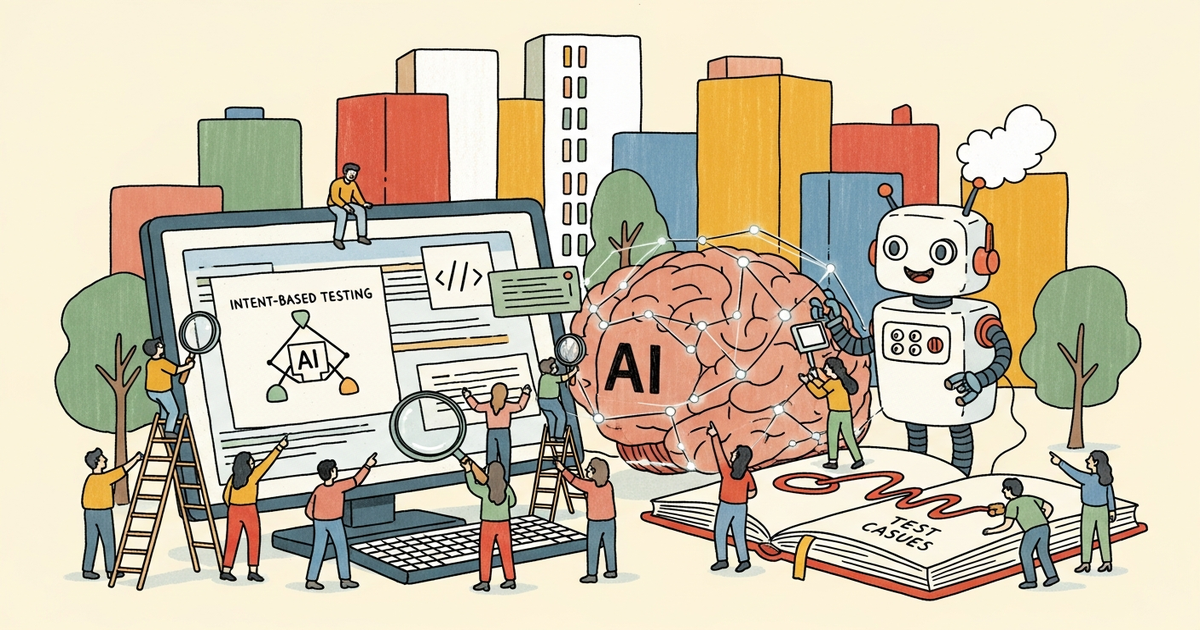
- Sauce Labs launched Sauce AI for Test Authoring, an AI agent that converts natural language descriptions into executable test suites for web, Android, and iOS.
- The tool is trained on 8.7 billion real-world test runs and claims 90 percent faster test creation compared to manual scripting.
- It introduces what Sauce Labs calls “Intent-Driven Testing,” where product managers and engineers describe desired behavior instead of writing per-click test scripts.
- Automated test coverage for complex user journeys typically plateaus below 35 percent; Sauce Labs aims to close that gap.
What Happened
Sauce Labs, a test automation platform provider, announced general availability of Sauce AI for Test Authoring on March 17, 2026. The product is an AI agent that translates business intent into framework-agnostic, executable test suites that run on Sauce Labs’ virtual and real-device cloud infrastructure.
CEO Dr. Prince Kohli said the goal is “improving application quality while reducing post-deployment bugs.” The tool accepts input from multiple sources including natural language descriptions, product manager specifications, and design files from tools like Figma, making it accessible to team members beyond just QA engineers.
Why It Matters
AI-generated code is accelerating software development, but testing has not kept pace. According to Sauce Labs, engineers currently spend more than 30 percent of their time writing and maintaining tests, and teams spend 40 percent of their hours fixing flaky or legacy test scripts. The widening gap between code generation speed and validation capacity creates what the company calls the “Velocity and Quality Gap.”
Automated test coverage for complex user journeys typically plateaus below 35 percent. Most organizations can automate simple unit tests and basic UI checks, but multi-step workflows involving login flows, payment processing, and cross-platform interactions remain difficult to cover systematically. Sauce AI for Test Authoring is designed to push that ceiling higher by generating comprehensive test suites that cover these complex scenarios rather than isolated interactions.
The timing aligns with a broader industry shift. As AI coding assistants like GitHub Copilot, Cursor, and Claude Code generate code faster, the testing bottleneck becomes more acute. Code that ships without adequate validation introduces bugs that are more expensive to fix in production than to catch in development.
Technical Details
The AI agent understands intended application behavior through three input methods: scanning live application workflows to observe existing behavior, interpreting written specifications from product managers that describe desired outcomes, and analyzing design assets from tools such as Figma to infer expected UI states and interactions. It then autonomously generates complete test suites covering web, Android, and iOS platforms.
Sauce Labs trained the underlying model on 8.7 billion real-world test runs accumulated across its testing platform over years of operation. The company claims the agent creates tests 90 percent faster than traditional manual scripting and provides 41 percent faster root-cause analysis compared to general-purpose large language models that lack testing-specific training data.
Generated tests are framework-agnostic, meaning they are not tied to a specific testing library like Selenium, Playwright, or Appium. Tests can execute within the Sauce Labs Test Cloud or run independently of the platform. Results are automatically reported with insights on failure points, flaky test identification, and suggested fixes, reducing the diagnostic burden on engineering teams.
Who’s Affected
QA engineers, developers, and product managers at organizations using continuous integration and deployment pipelines are the primary audience. The tool is particularly relevant for teams where AI coding assistants have accelerated development velocity but test coverage has not scaled to match, leaving a growing validation deficit.
Enterprise teams managing large test suites with high flake rates stand to benefit from the automated maintenance capabilities. Smaller teams without dedicated QA staff could use the natural language interface to generate test coverage without specialized testing expertise, potentially democratizing quality assurance across organizations of all sizes.
What’s Next
Sauce Labs positions this as the beginning of “Intent-Driven Testing” as a new DevOps paradigm. The product is generally available now, though the company has not disclosed pricing publicly. Whether the tool can maintain accuracy across complex enterprise applications with custom UI frameworks, non-standard interaction patterns, and legacy codebases remains to be validated at scale. The 8.7 billion test run training dataset gives Sauce Labs a data moat, but the real test will be how the agent handles edge cases that fall outside its training distribution.