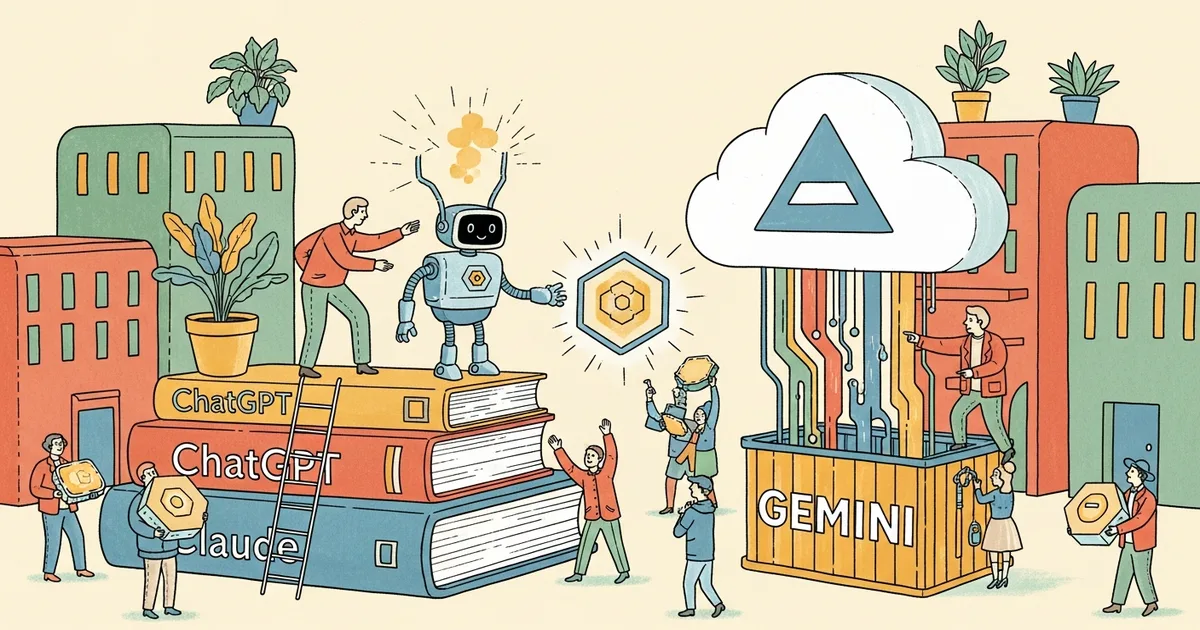
Google added a memory import feature to Gemini that allows users to transfer stored preferences, reminders, and full conversation histories from ChatGPT and Claude into Google’s assistant. The update was reported by Matthias Bastian at The Decoder on March 27, 2026, drawing on a Google Blog announcement. The rollout is gradual, with access expanding incrementally across Gemini users rather than going live for everyone simultaneously.
- Gemini now supports importing stored user memories from ChatGPT and Claude via a prompt-based extraction method that requires no API access or direct data transfer between platforms.
- Users can upload full conversation exports as ZIP files of up to 5 GB and continue those prior conversations inside Gemini.
- Google is renaming its “Past Chats” section to “Memory” as part of the same update.
- Anthropic introduced the same prompt-based migration method earlier, following competitive pressure after OpenAI faced criticism for a military contract Anthropic had declined on ethical grounds.
What Happened
On March 27, 2026, Google announced a Gemini update that lets users import their stored AI context — preferences, reminders, and conversational history — from ChatGPT, Claude, or other AI assistants into Gemini’s own memory system. The announcement was published on the Google Blog and reported by Matthias Bastian at The Decoder. The rollout is staged, meaning the feature is not yet available to all Gemini users at once, and Google has not specified a timeline for full availability.
Why It Matters
AI assistants accumulate substantial user-specific data over time — recurring preferences, project notes, saved reminders, and conversational context that shapes how the assistant responds — and losing that history when switching platforms has been a persistent barrier to migration, one Google is now working to remove.
Anthropic introduced a comparable mechanism for Claude first. According to Bastian’s reporting, Anthropic developed the feature after OpenAI drew public criticism for pursuing a military contract that Anthropic had declined on ethical grounds. With users already questioning their platform choices at the time, Anthropic wanted to give them “an extra reason to make the move.” Google’s adoption of the same technical approach — nearly identical in design — signals that reducing switching costs has become an explicit competitive priority across the AI assistant market.
Technical Details
The import process is a two-step, prompt-based method that operates entirely through each platform’s standard user interface, requiring no API access, no OAuth handshake, and no direct server-to-server data transfer between Google’s systems and those of OpenAI or Anthropic. Gemini provides users with a suggested prompt, which they copy and paste into their existing assistant. That assistant then generates a structured summary of all data it has stored about the user — preferences, reminders, and relevant facts from past conversations — which the user copies and pastes into Gemini, where it is saved as persistent memory context.
Both Google and Anthropic rely on the same core extraction mechanism. Bastian describes it as “a simple prompt that asks the existing AI app to output everything it has stored about the user.” Because the method depends entirely on the source app’s own interface, it requires no formal interoperability agreement or technical coordination between competing companies.
For users who want to import full conversation archives rather than just stored memories, Gemini also accepts ZIP file uploads of up to 5 GB. This accommodates the complete data exports that ChatGPT and Claude make available through their account settings, and allows users to reference or resume those earlier conversations directly inside Gemini.
Alongside the import tools, Google is renaming Gemini’s “Past Chats” section to “Memory” — a terminology change that aligns Gemini’s labeling with the language OpenAI and Anthropic already use for their own persistent context features.
Who’s Affected
The feature primarily targets existing ChatGPT and Claude users who are evaluating a switch to Gemini but do not want to forfeit the preferences, reminders, and conversational context they have accumulated over extended use. This includes individual users with detailed preference profiles as well as professionals who rely on AI assistants to retain prior work across sessions.
The tool is user-facing and requires no technical configuration, lowering the barrier for non-technical users considering a platform change. Google Workspace users who already use Gemini in a limited capacity for productivity tasks could use the feature to consolidate their AI context under a single assistant interface.
What’s Next
The gradual rollout indicates Google is monitoring performance and adoption rates before expanding access universally. No specific timeline for a complete release was included in the Google Blog post or in The Decoder’s coverage of the announcement.
A key limitation of the current design is that the completeness of imported context depends on how accurately the source AI app responds to the extraction prompt. No standardized format governs what that output must include, so summaries generated by ChatGPT and Claude may vary in depth and structure. Google has not disclosed whether users can review, edit, or selectively remove individual items after importing them into Gemini’s memory system.