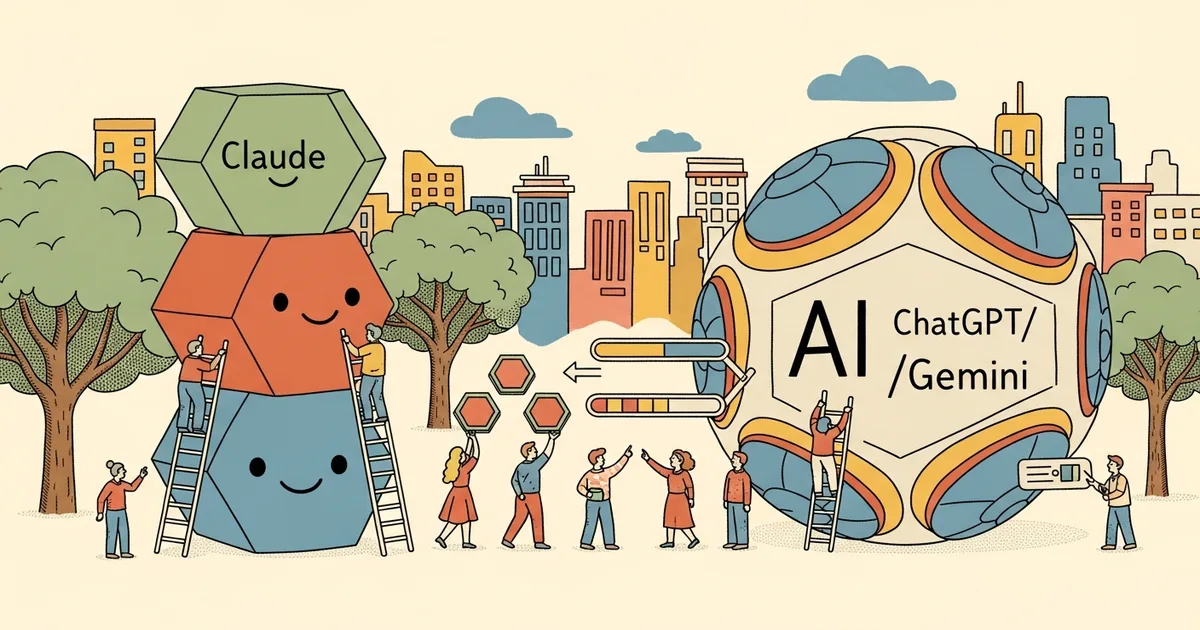
Anthropic has launched a memory import feature for Claude that lets users transfer stored preferences, personal details, and conversation context from competing AI assistants — including ChatGPT, Google Gemini, and Grok — through a three-step process. The feature is available at claude.ai/import-memory and is limited to subscribers on paid plans. It addresses one of the more persistent friction points in AI platform switching: the loss of accumulated personalization data.
- Claude now supports memory import from ChatGPT, Google Gemini, and Grok via a three-step copy-paste process.
- The feature is restricted to paid plans: Pro, Max, Team, and Enterprise.
- Imports transfer communication preferences, personal details, project context, and technical settings — but not conversation history.
- Memory propagation after import can take up to 24 hours to complete across all Claude sessions.
What Happened
Anthropic introduced memory portability to Claude, giving paid subscribers a structured path to migrate personalization data from rival AI platforms. The feature, first reported by ZDNET, covers imports from OpenAI’s ChatGPT, Google Gemini, and xAI’s Grok. Author details for the ZDNET report were not available at time of publication.
The launch follows Google Gemini’s introduction of a comparable memory portability feature earlier in 2026, establishing memory transfer as a competitive feature category rather than a niche utility among major AI platforms.
Why It Matters
Persistent memory has been a core feature of mainstream AI assistants for over a year. Platforms like ChatGPT and Gemini store details including a user’s job title, communication style preferences, preferred programming languages, and ongoing project context — data that accumulates over months of regular use.
Before this feature existed, switching to Claude from another assistant meant losing all of that accumulated context and rebuilding it from scratch. By enabling structured import, Anthropic reduces the switching cost for users who have already invested significant time in personalizing a competing platform. It also creates competitive pressure on other providers to offer comparable export and import capabilities.
Technical Details
The import process works in three steps. Users visit claude.ai/import-memory and copy a standardized export prompt generated by Claude. They paste that prompt into their source assistant — ChatGPT, Gemini, or Grok — and submit it. The source assistant responds with a structured list of everything it has stored about that user.
The exported data spans five categories: communication preferences such as tone and formatting style; personal details including name, job title, and location; project information and recurring topics; and technical context such as preferred programming languages and tools. Users can review and edit this output in a plain text editor before submitting it to Claude’s import interface.
Once submitted, Claude parses the text and creates individual memory entries. Full propagation across all Claude sessions can take up to 24 hours, a delay that suggests the import pipeline processes entries asynchronously. Users can confirm a successful import by opening a new chat and asking Claude what it knows about them.
Critically, the feature does not transfer conversation history — only the distilled preferences and factual data that the source AI stored as discrete memory entries. Users receive continuity of personalization, not an archive of prior exchanges.
Who’s Affected
The feature is available only on Claude’s Pro, Max, Team, and Enterprise plans. Free-tier users are excluded, positioning memory import as a paid-tier benefit rather than a broadly accessible migration tool.
Developers and technical professionals who have built detailed context in ChatGPT — covering preferred languages, toolchains, and project architecture — stand to gain the most immediately, since that category of preference takes the longest to reconstruct manually. Organizations using Claude’s Enterprise plan can also use the feature to align assistant behavior for employees migrating from another platform, reducing onboarding friction at scale.
What’s Next
Anthropic has not announced plans to extend memory import to free-tier accounts or to add support for platforms beyond ChatGPT, Gemini, and Grok. The 24-hour propagation window suggests the current implementation is processing imports in batch rather than in real time, which may change as the feature scales.
The current approach relies on prompting the source AI to produce a structured summary of its stored data — a method that works but depends on each platform’s own memory representation. No standardized memory export schema has been announced by any major AI provider as of April 2026, meaning cross-platform portability remains dependent on prompt-based workarounds rather than a shared data standard.