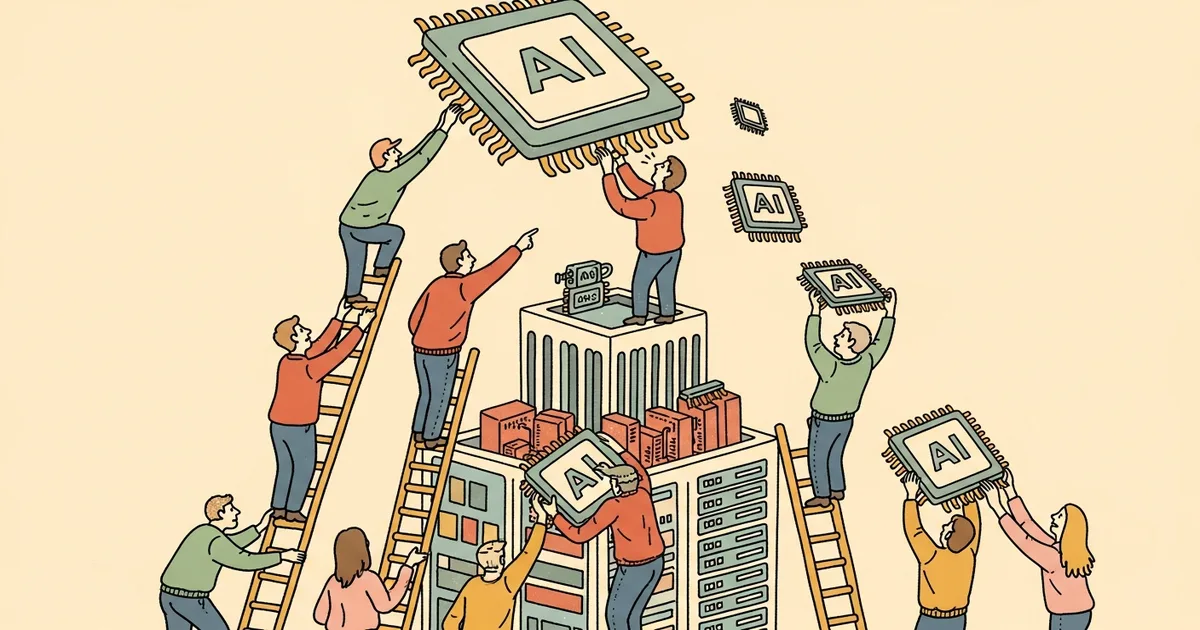
- Tesla disclosed a $2 billion AI hardware acquisition in a recent regulatory filing, offering no further detail in the document itself.
- Business Insider flagged the disclosure, noting it was contained in a single sentence without naming the counterparty or describing the hardware acquired.
- The opacity of the disclosure has drawn scrutiny given Elon Musk’s concurrent leadership of xAI, which operates the Colossus AI supercomputer cluster in Memphis, Tennessee.
- Tesla has been aggressively expanding AI compute capacity to support Full Self-Driving model training and its Optimus humanoid robot program.
What Happened
Tesla disclosed a $2 billion acquisition of AI hardware in its most recent regulatory filing, according to Business Insider, which flagged the disclosure as a single opaque sentence buried within the document. The filing did not identify the seller, describe the specific hardware assets acquired, or explain how the purchase fits into Tesla’s broader capital allocation strategy. Tesla has not issued a standalone press release or investor presentation addressing the transaction.
Why It Matters
The disclosure arrives at a moment of heightened scrutiny over potential conflicts of interest between Tesla and xAI, the separate AI company founded and led by Elon Musk. xAI’s Colossus cluster — which went operational in late 2024 in Memphis and was later expanded — represents one of the largest concentrations of AI training compute outside of the hyperscalers, built largely on NVIDIA H100 and H200 GPUs. Analysts and Tesla shareholders have previously questioned whether capital or resources are flowing between the two Musk-led entities on terms unfavorable to Tesla investors.
Tesla’s board approved a framework in early 2025 to govern related-party transactions involving Musk’s other companies, but that framework’s adequacy has remained a point of contention at annual shareholder meetings.
Technical Details
Tesla’s AI compute demands are substantial and growing. The company’s FSD (Full Self-Driving) neural network training pipeline requires continuous large-scale GPU compute, as does the vision-based system underpinning its Optimus humanoid robot. Tesla has previously disclosed purchasing NVIDIA GPUs in volume and has invested in its proprietary Dojo training supercomputer, which uses Tesla-designed D1 chips arranged in ExaPOD configurations.
A $2 billion hardware acquisition at current GPU market pricing — NVIDIA H100 SXM5 units have traded in the range of $25,000–$35,000 per unit on secondary markets — would represent roughly 57,000 to 80,000 H100-class accelerators, though the actual asset type remains undisclosed. If the hardware is a mix of newer Blackwell-architecture GPUs or custom ASICs, the unit count and configuration would differ substantially.
The single-sentence format of the disclosure is notable: SEC Regulation S-K requires material transactions to be described with sufficient detail for investors to assess their nature and impact. Whether this disclosure meets that standard is a question securities attorneys may need to evaluate.
Who’s Affected
Tesla retail and institutional shareholders are the most directly affected party, as a $2 billion outlay represents a significant capital allocation decision with no accompanying strategic rationale disclosed. Short-sellers and governance-focused institutional investors — including several funds that have publicly challenged Tesla’s board independence — are likely to push for additional disclosure through formal investor relations channels or SEC comment letters.
If the counterparty is ultimately identified as xAI or another Musk-affiliated entity, it would raise questions under Delaware corporate law regarding fiduciary duties and the adequacy of independent board oversight for related-party transactions of this scale.
What’s Next
Tesla’s next investor earnings call would be the most immediate venue for management to address the acquisition directly; analysts covering the company are expected to press for specifics on the counterparty, the hardware specifications, and the intended use case. Separately, the SEC has the authority to issue a comment letter requesting Tesla to expand its disclosure if staff determines the current single-sentence description is insufficient under existing reporting rules.