- Google began rolling out a restaurant reservation search feature inside AI Mode in Japan on November 6, 2026, searchable by party size, date, time, and location.
- The feature cross-searches multiple reservation platforms — Gurunavi, Ikkyu, and ebica — in real time and surfaces only restaurants with genuinely open tables matching the request.
- Google says the rollout is happening gradually “over the next several weeks” rather than switching on for all Japanese users at once.
- This is a separate development from AI Mode’s October 2026 source-link changes and ongoing ad tests — the feature, not a redesign, is what’s driving this week’s search spike.
| Key Facts | |
|---|---|
| Feature | Restaurant reservation search inside Google AI Mode |
| Market | Japan |
| Rollout start | November 6, 2026 |
| Rollout pace | Gradual, over several weeks following the start date |
| Reservation partners | Gurunavi, Ikkyu, ebica |
| Price | Free; part of the existing, no-subscription AI Mode feature |
What’s New: Restaurant Booking Inside AI Mode
On November 6, 2026, Google began rolling out a new capability inside AI Mode for users in Japan: the ability to describe a dining request in plain language — covering party size, preferred date and time, and location — and have AI Mode search for restaurants with real, bookable availability matching that request. Rather than returning a generic list of nearby restaurants the way a standard search might, the feature is built to check live table availability before presenting results, so what shows up should actually be reservable rather than requiring a user to click through several sites to confirm.
Google has said the feature is rolling out gradually to users in Japan “over the next several weeks” rather than activating for everyone simultaneously, which means availability may vary by account in the near term even for people actively looking for it inside AI Mode.
How the Reservation Search Works
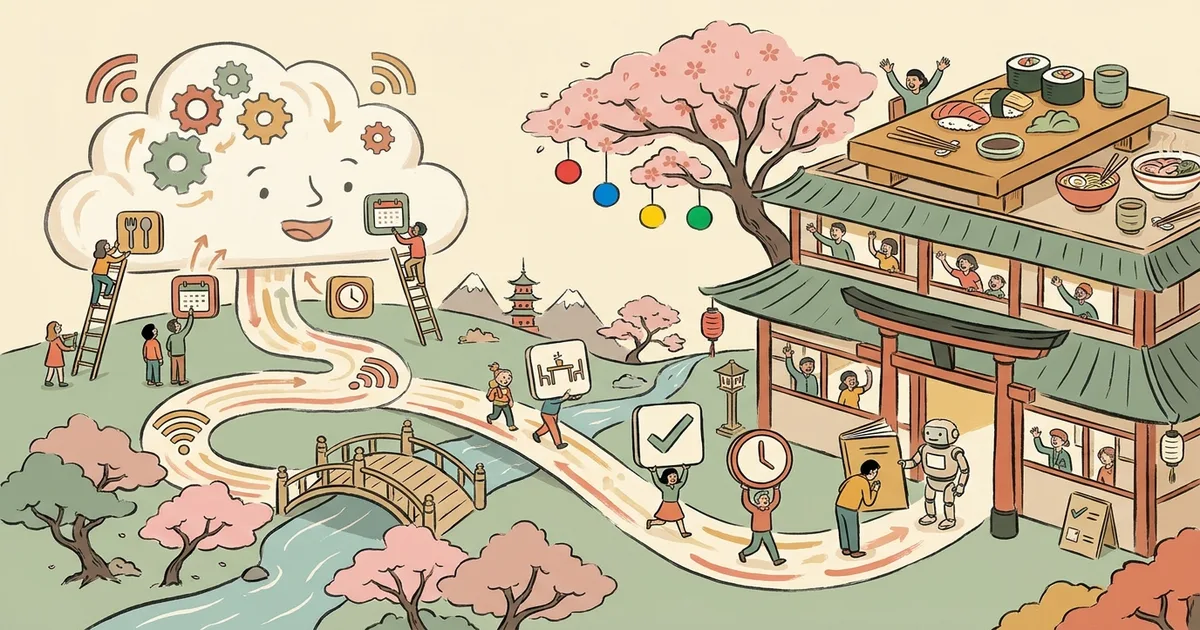
The feature works by searching across multiple reservation platforms at once rather than relying on a single data source. Google has integrated with three major Japanese reservation services for this rollout: Gurunavi, Ikkyu, and ebica, three of the most widely used restaurant-booking platforms in the Japanese market. When a user describes what they’re looking for, AI Mode checks real-time availability across those connected platforms, filters down to restaurants that currently have an open slot matching the stated conditions, and presents a curated shortlist rather than every restaurant that merely exists in the area.
This places the feature closer to a booking agent than a search engine for this specific use case — the emphasis is on confirmed availability rather than general restaurant discovery, which Google’s existing Maps and Search products already handle separately.
How This Differs From AI Mode’s Other Recent Changes
AI Mode in Japan has seen several rounds of changes over the past two months, and it’s worth distinguishing this one from the others. In October 2026, Google altered how AI Mode displays source links — pushing inline citations higher on the page and widening article carousels — a change aimed at publisher visibility rather than at adding a new user-facing capability. Google has also been testing advertising inside AI Mode’s “Personal Intelligence” layer for users who connect their Google apps, a monetization change rather than a feature addition. The November 6 restaurant reservation rollout is different in kind from both: it’s a genuinely new task AI Mode can now perform, not a display tweak or a monetization test, which is the more likely explanation for this week’s renewed search interest in “AI mode” among Japanese users.
Reservation Search vs. AI Mode’s Other October Changes
| Change | What it affects | Rolled out |
|---|---|---|
| Restaurant reservation search | New user-facing capability (live booking search) | Nov 6, 2026 (Japan) |
| Source-link visibility changes | How citations/carousels display to users and publishers | Oct 15, 2026 |
| Personal Intelligence ad testing | Monetization inside the connected-apps personalization layer | Ongoing test, began around Oct 2026 |
How to Try It
For users in Japan, no special setup is required beyond having access to AI Mode itself, which remains free and doesn’t require a Google One subscription. Since the rollout is staged over several weeks rather than switched on universally, the most reliable way to check availability is simply trying a specific, detailed dining request inside AI Mode — including party size, date, and time — and seeing whether the response returns a curated, availability-checked shortlist rather than a generic list of nearby restaurants. If the feature hasn’t reached a given account yet, AI Mode will typically fall back to its standard conversational search behavior instead.
What the Feature Doesn’t Do Yet
The reservation search is scoped narrowly to restaurants connected through Gurunavi, Ikkyu, or ebica, so dining spots that only take bookings by phone or through platforms outside that trio won’t show up in results even if they have open tables. Google also hasn’t extended the feature to other reservation-based categories — salons, clinics, or event venues, for instance — suggesting this is a targeted dining-specific rollout rather than the first piece of a broader booking platform, at least for now. And because the rollout is gradual, feature parity across every AI Mode user in Japan isn’t guaranteed during the initial weeks.
Who This Is For
The feature is aimed squarely at everyday diners trying to book a table on short notice rather than business or research-style AI Mode queries. Someone planning a dinner for a specific group size at a specific time gets the clearest benefit, since the feature’s entire premise is cutting out the back-and-forth of checking multiple reservation sites manually. Restaurants and reservation platforms benefit indirectly: being connected to one of the three integrated services (Gurunavi, Ikkyu, or ebica) is effectively a prerequisite for being surfaced through this AI Mode flow at all, which gives those platforms a new distribution channel they didn’t previously have inside Google Search.
Frequently Asked Questions
Is the restaurant reservation feature available outside Japan? As of November 2026, Google has only announced this rollout for users in Japan, with no confirmed timeline for other markets.
Do I need a subscription to use it? No — like the rest of AI Mode, the reservation search feature is free and doesn’t require a paid plan.
Which reservation platforms does it search? Gurunavi, Ikkyu, and ebica are the three partner platforms confirmed at launch.
Why can’t I see the feature yet even though I’m in Japan? Google is rolling it out gradually over several weeks rather than to all users at once, so a delay doesn’t necessarily mean it isn’t coming to a given account.
Bottom Line
The renewed spike in “AI mode” searches in Japan this week tracks a specific, new capability — live restaurant reservation search across Gurunavi, Ikkyu, and ebica, rolling out gradually from November 6, 2026 — rather than a rehash of October’s source-link changes or the ongoing ad testing inside Personal Intelligence. It’s a genuine feature addition: AI Mode can now check real table availability and hand back a shortlist of restaurants a user can actually book, not just find.