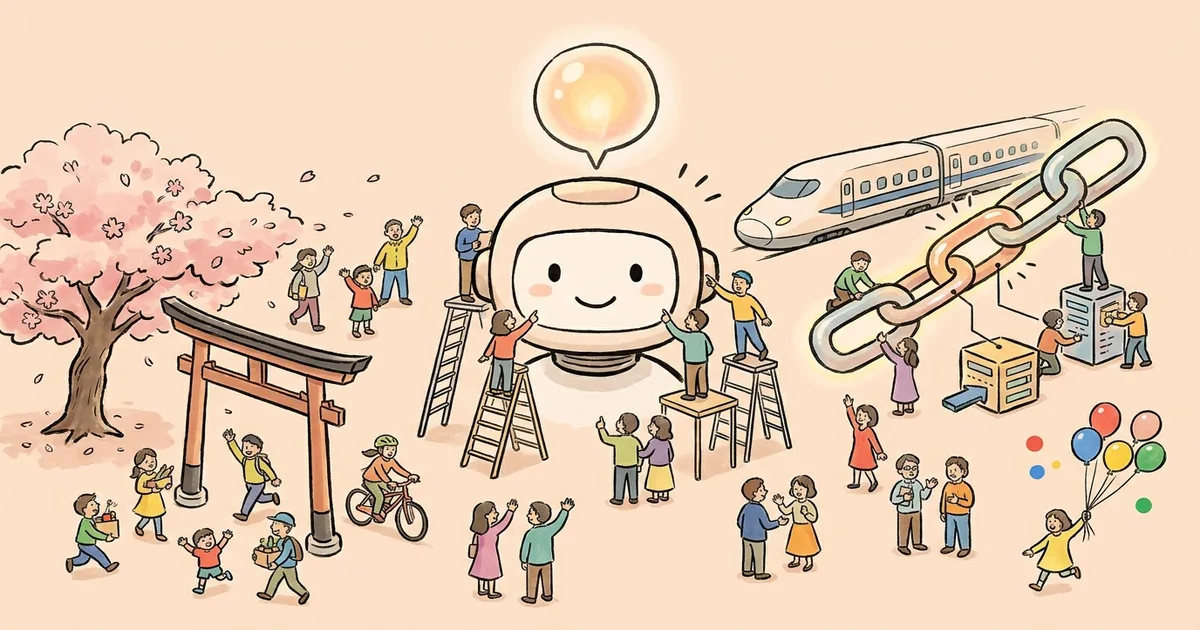
- Google AI Mode is a conversational search experience that answers multi-part questions and lets users ask follow-ups, distinct from the shorter AI Overviews summaries.
- Japan received Japanese-language AI Mode starting September 2025, with the “Personal Intelligence” layer following in May 2026.
- On October 15, 2026, Google rolled out five changes to how AI Mode displays source links, pushing inline links higher and widening article carousels.
- Google has also begun testing advertising inside Personal Intelligence for users who connect their Google apps, ending its previously ad-free run.
| Key Facts | |
|---|---|
| Product | Google AI Mode (search feature) |
| Japan language rollout | Began September 2025 |
| Personal Intelligence in Japan | Began rolling out around May 8, 2026 |
| October 2026 update | Five link-visibility changes announced Oct 15, 2026 |
| Preferred Sources adoption | Grown more than 7x since start of 2026, per Google |
| Price | Free; no subscription required for basic AI Mode |
What Is Google AI Mode?
AI Mode is a dedicated tab inside Google Search that replaces the traditional list of blue links with a conversational answer, built to handle longer, multi-part questions and follow-up queries in the same thread. It differs from AI Overviews — the shorter AI-generated summaries that sometimes appear above regular search results — in that AI Mode is a full search mode users opt into, geared toward research-style queries rather than quick lookups.
Google began expanding AI Mode internationally through 2025 and 2026, eventually reaching more than 40 countries and territories. Japan’s rollout followed that broader expansion: Japanese-language support for AI Mode began rolling out around September 8–9, 2025, available on desktop browsers as well as iOS and Android apps, with no paid subscription required to try the basic functionality.
AI Mode vs. AI Overviews: What’s the Difference?
| Aspect | AI Overviews | AI Mode |
|---|---|---|
| Access | Shown automatically above normal results | A mode users actively select |
| Purpose | Fast summary of a simple query | Depth and exploration for complex questions |
| Follow-up questions | Not supported | Users can refine intent and ask follow-ups |
| Interface | Sits above the blue links; rest of the results page stays intact | Blue links are replaced by a conversational response with citation chips |
| Underlying model | Gemini, grounded in Search index | Gemini, grounded in Search index |
Both surfaces run on Gemini and draw on Google’s Search index, meaning ranking well in traditional search remains a precondition for appearing in either one — AI Mode and AI Overviews aren’t a separate ranking system so much as a different presentation layer on top of the same underlying index.
How Japan’s Rollout Added “Personal Intelligence”
A more advanced layer called Personal Intelligence — which lets AI Mode draw on a user’s connected Google apps (such as Gmail or Calendar) to personalize answers — launched first in the US in late January 2026. Japan received its own Personal Intelligence rollout starting around May 8, 2026, a roughly three-and-a-half-month gap behind the US launch. As with the base AI Mode feature, Japanese users can access Personal Intelligence without a paid plan, though it requires explicitly connecting Google account data for the personalization to work.
What Changed in October 2026
On October 15, 2026, Google published five changes to how AI Mode and AI Overviews surface links to outside websites. According to Google’s own announcement, inline links now appear higher up in responses more frequently, and the links shown at the end of some AI responses have been redesigned to be more prominent and clickable. Google is also testing a dedicated section for official sites at the top of certain answers, alongside a wider rollout of article carousels with image thumbnails and clickable creator profiles on AI Mode videos.
Google framed the changes around a specific metric: the company said use of its Preferred Sources feature — which lets publishers and users influence which sites AI Mode favors for certain topics — has grown more than sevenfold since the start of 2026. The stated goal of the October changes is to send more traffic to the websites AI Mode draws from, a response to ongoing criticism from publishers that AI-generated answers reduce the clicks sites receive from search.
Separately, Google has started testing advertising inside Personal Intelligence for users who opt into connecting their Google apps — a shift from the feature’s initial ad-free launch window. Google has not published a timeline for when or whether these ads will roll out broadly, including in Japan.
Why This Matters for Publishers and Everyday Searchers
For publishers, the October link changes are directly tied to a long-running concern: AI-generated search answers can satisfy a user’s question without the user ever clicking through to the source site, cutting referral traffic. Google’s move to push inline links higher and widen carousels is a direct, if partial, response to that pressure, and the sevenfold growth in Preferred Sources usage suggests publishers are actively trying to influence how they’re represented in AI Mode results.
For everyday searchers in Japan, the practical change is that AI Mode answers should now more frequently show clickable source links and image-backed article previews rather than a single, unsourced block of generated text — though the core conversational search experience itself has not changed.
Frequently Asked Questions
Do I need a Google One subscription to use AI Mode in Japan? No — the base AI Mode feature and Personal Intelligence are both available without a paid plan, though Personal Intelligence requires connecting Google apps.
Will ads appear in AI Mode answers? Google has begun testing ads specifically inside Personal Intelligence for users who connect their apps; it hasn’t confirmed a broader ad rollout timeline or whether standard AI Mode answers will carry ads.
How can publishers influence what AI Mode cites? Through Google’s Preferred Sources feature, which the company says has seen usage grow more than sevenfold since the start of 2026.
Bottom Line
Google AI Mode’s Japan rollout is now over a year old, having moved from a basic Japanese-language launch in September 2025 through a Personal Intelligence expansion in May 2026 to this month’s link-visibility overhaul. The October 15 changes are less a new feature than a course correction aimed at publisher complaints, while the quiet start of Personal Intelligence advertising signals that the feature’s free, ad-free phase is ending. Readers searching “AI mode” in Japan this week are most likely reacting to that October update rather than an entirely new product.