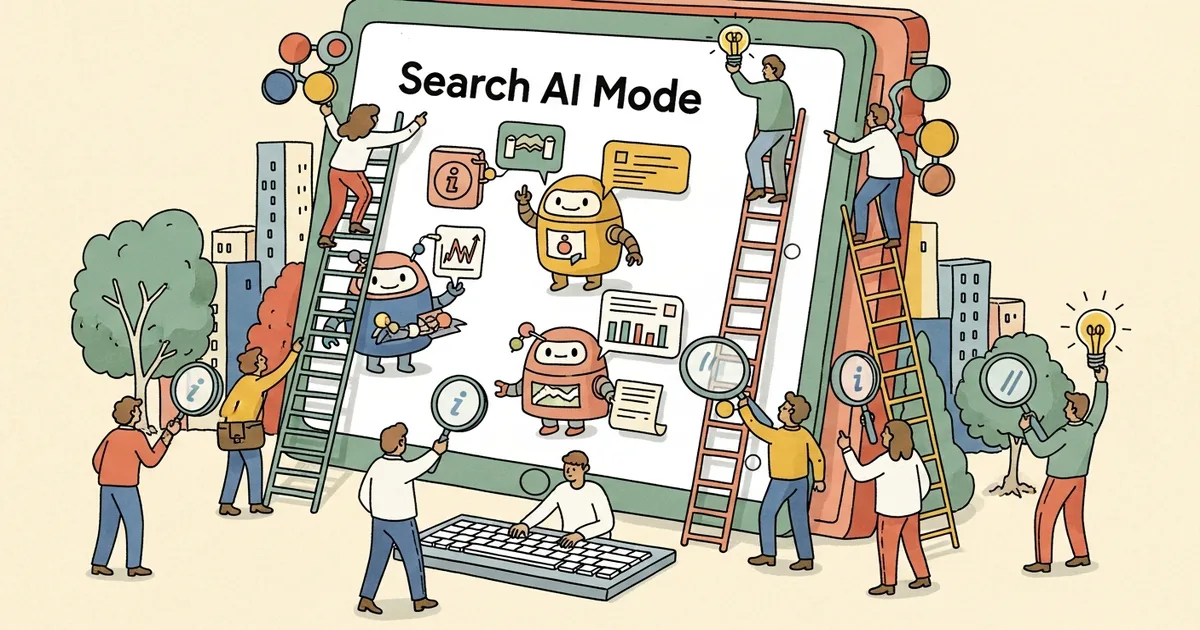
- Google introduced new agentic capabilities in Search at I/O 2026: users can create, customize, and manage AI agents that operate continuously in the background.
- The agents synthesize information from multiple sources, explain why something matters, compare perspectives, and provide actionable insights — going beyond traditional search results.
- Use cases include tracking stock prices and economic trends, flight prices, sports teams, breaking news, housing markets, and weather.
- Information agents will be available this summer to Google AI Pro and Ultra subscribers in the U.S., then to additional markets.
What Happened
Google introduced new agentic capabilities in Search at the I/O 2026 keynote, TechCrunch reported. Users can create, customize, and manage multiple AI agents to stay updated on topics of interest. The announcement is part of Google’s larger push toward agentic AI systems that take initiative and assist with ongoing tasks instead of answering one question at a time.
Why It Matters
The information-agent design represents the most consumer-facing surface yet of Google’s broader agentic Gemini strategy. Sundar Pichai’s I/O 2026 keynote declared this “the agentic Gemini era” and disclosed that Google now processes 3.2 quadrillion tokens per month across its surfaces — up 7x year-over-year. Information agents inside Search are how that token volume reaches the everyday consumer surface.
The framing — moving from one-shot query-response to continuous monitoring — represents a structural shift in how search works for users with persistent informational needs. Google Alerts (launched in 2003) covered some of this territory; information agents extend it with synthesis, perspective comparison, and actionable insights.
Technical Details
Unlike traditional search tools that respond only when prompted, Google’s information agents operate continuously in the background, 24/7, helping users stay informed without repeatedly searching for the same information. Instead of delivering a list of links, the agents synthesize information from multiple sources, explain why something matters, compare perspectives, and provide actionable insights.
To use the feature, users open AI Mode in Search and enter a prompt — for example: “Keep me updated on nearby movie tickets for ‘The Mandalorian and Grogu.'” When something relevant appears, the Google app sends a push notification. Active tracked topics appear in AI Mode history, where users can manage, refine, or turn off alerts. Use cases described by Google include: stock market and economic trends, breaking news, flight price tracking, sports team and live event coverage, housing or job market trends, and weather/traffic monitoring.
Who’s Affected
Google AI Pro and Ultra subscribers in the U.S. are the first cohort. Users in other markets will gain access on a staged timeline. Specialized news-tracking applications (Bloomberg Terminal alerts, Google Alerts power-users, RSS-based workflows like Feedly) face a more capable consumer-grade alternative. AI-aggregator competitors (Perplexity, You.com) face a Google-distribution agentic surface that the standalone tools cannot match. News publishers face the same dynamic Parallel CEO described last week — agent-mediated information flow that bypasses publisher monetization.
What’s Next
Information agents will be available this summer to Google AI Pro and Ultra subscribers in the U.S. Markets outside the U.S. will receive access in subsequent rollout phases. Industry watchers should track adoption metrics through Google’s quarterly reporting and any related Gemini API expansions for developers to build on the information-agent primitives.