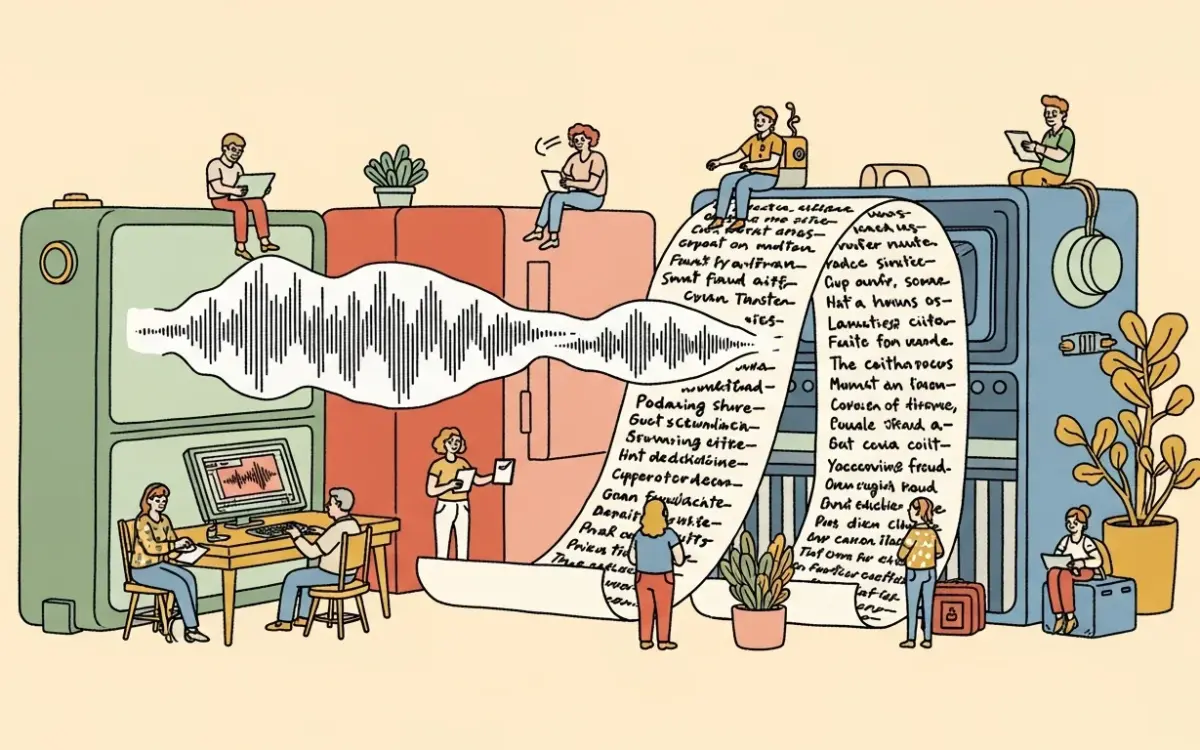
- Descript lets users edit video and audio by editing a text transcript — delete a sentence from the text and the corresponding media segment is removed.
- AI features include automatic filler word removal, voice cloning for corrections, eye contact correction, Studio Sound noise enhancement, and an agentic AI co-editor called Underlord.
- Pricing starts free with one hour of transcription, then $24/month (Hobbyist) or $35/month (Creator) with up to 30 hours and 4K export.
- The tool is designed for podcasters, course creators, and non-editors; professional editors needing color grading, motion graphics, or multi-track compositing will find it limiting.
What Happened
Descript is a video and podcast editing platform built around a single concept: edit media by editing text. The tool automatically transcribes audio and video, then presents the transcript as an editable document. Cut a word or sentence from the transcript and the corresponding audio or video segment is removed. The workflow makes video editing accessible to anyone comfortable with a word processor.
The platform is used by organizations including Amazon, Canva, Salesforce, Figma, Spotify, Reuters, CBS, Microsoft, and the New York Times. As of 2026, Descript offers a free tier, a Hobbyist plan at $24 per month, and a Creator plan at $35 per month with 4K export and full access to its AI co-editor.
Why It Matters
Traditional video editing tools like Adobe Premiere and Final Cut Pro use timeline-based interfaces that require understanding of tracks, keyframes, and rendering workflows. Descript eliminates that learning curve by translating the editing process into text manipulation. For content creators who produce talking-head video or audio podcasts, this can reduce editing time from hours to minutes per episode.
The approach is particularly relevant as the volume of video and podcast content continues to grow. Solo creators, internal communications teams, and educators who need to produce polished content without dedicated editing staff can use Descript’s text-first workflow to handle the bulk of post-production work.
Technical Details
Descript’s AI features go beyond basic transcription. The filler word removal tool automatically detects and cuts “ums,” “uhs,” “likes,” and “you knows” from recordings. Studio Sound applies AI-powered noise removal and voice enhancement, making recordings from poor microphones or noisy environments sound professional.
Eye contact correction uses AI to adjust a speaker’s gaze so they appear to look directly at the camera, even when reading from notes off-screen. Voice cloning allows users to fix words by typing replacements; the AI synthesizes the correction in the speaker’s cloned voice and adjusts the mouth movement in the video to match.
Underlord is Descript’s agentic AI co-editor, which the company describes as an assistant that “can do anything you need to bring your creative vision to life.” Additional features include screen recording, automatic caption generation, green screen removal, AI avatars from uploaded photos, and translation capabilities.
Who’s Affected
Descript targets podcasters, YouTubers, course creators, and marketing teams who produce content regularly but lack professional editing skills. The text-based workflow is the primary draw for users who find timeline editors intimidating or time-consuming. The platform’s adoption by organizations including Amazon, Spotify, Reuters, and the New York Times indicates that the approach has gained traction beyond solo creators.
Professional video editors are not the target audience. Complex tasks including color grading, motion graphics, multi-track compositing, and advanced audio mixing require dedicated tools like Premiere, DaVinci Resolve, or Logic Pro. Transcription accuracy, while strong, can require manual correction for technical terminology or heavily accented speech.
What’s Next
Descript’s free tier is limited to one hour of transcription and 100 AI credits with a maximum export resolution of 720p. The Hobbyist tier provides 10 hours and 400 credits at 1080p. The Creator tier adds 30 hours, 800 credits, 4K export, full Underlord access, and a stock media library. Annual billing reduces costs to $16, $24, and $33 per month respectively.
Users evaluating the platform should note that export quality on lower tiers may not match what traditional editors produce from the same source material. Transcription errors on technical content or accented speech require manual correction before the text-based editing workflow becomes reliable. Whether Descript expands its capabilities to address more advanced editing workflows or maintains its focus on accessibility for non-editors will shape its competitive position against increasingly AI-augmented traditional editors.
Related Reading
- Runway Review 2026: Professional AI Video Generation and Editing Platform
- Synthesia Review 2026: AI Video Production Goes Enterprise-Grade
- Kling AI Review 2026: Affordable AI Video Generation with Cinematic Quality
- Pika Review 2026: Accessible AI Video Generation for Social Content
- Ideogram Review 2026: AI Image Generator with Best-in-Class Text Rendering