The U.S.-China Economic and Security Review Commission has published a report warning that China’s open-source artificial intelligence strategy is creating a compounding competitive advantage that current U.S. policy is not equipped to counter. The report, titled “Two Loops: How China’s Open AI Strategy Reinforces Its Industrial Dominance,” was released on March 23, 2026.
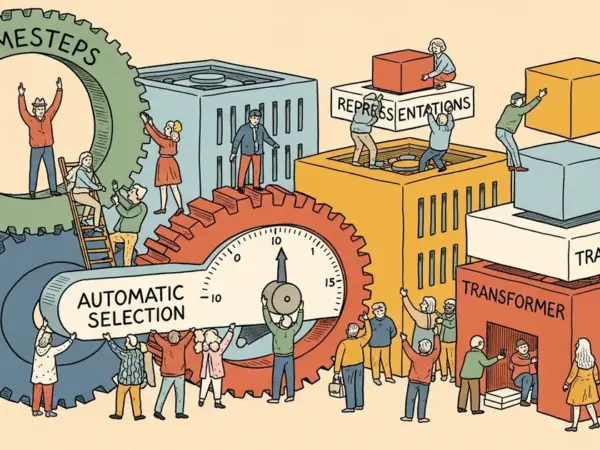
The commission identifies two interlocking feedback loops driving China’s position. The first is a digital loop in which Chinese labs release powerful open-weight models for free, attracting global developers who fine-tune and improve them, feeding improvements back into the ecosystem. The second is a physical loop in which AI deployed across China’s factories, logistics networks, and robotics sector generates proprietary real-world data that further improves the models.
The data supporting the commission’s concern is substantial. Chinese models now account for 41 percent of all downloads on Hugging Face over the past year, compared to 36.5 percent for American models. Alibaba’s Qwen family reached 700 million downloads by January 2026, surpassing Meta’s Llama around mid-December 2025. In November and December 2025 alone, seven of the ten most-downloaded models on the platform came from Chinese laboratories.
The cost dynamics compound the adoption advantage. Moonshot AI’s Kimi K2.5 delivers comparable capability to OpenAI’s GPT-5.2 at roughly one-quarter the cost. Small task-specific Chinese models can cost 10 to 30 times less than frontier alternatives, according to Nvidia research cited in the report. An estimated 80 percent of U.S. AI startups now use Chinese open-source base models, per an Andreessen Horowitz partner estimate referenced in the commission’s findings.
The report notes that current U.S. export controls primarily target the digital loop by restricting chip access but are poorly suited to addressing the physical loop of deployment-driven data creation across China’s manufacturing base. Security concerns are also flagged: NIST testing from September 2025 found that DeepSeek agents were on average 12 times more likely to follow malicious instructions than U.S. frontier models.
The commission’s central warning is that the intersection of both loops gives China’s open strategy its compounding force and poses the most serious long-term challenge to U.S. AI leadership. Whether the next round of policy responses will address the physical loop remains an open question.