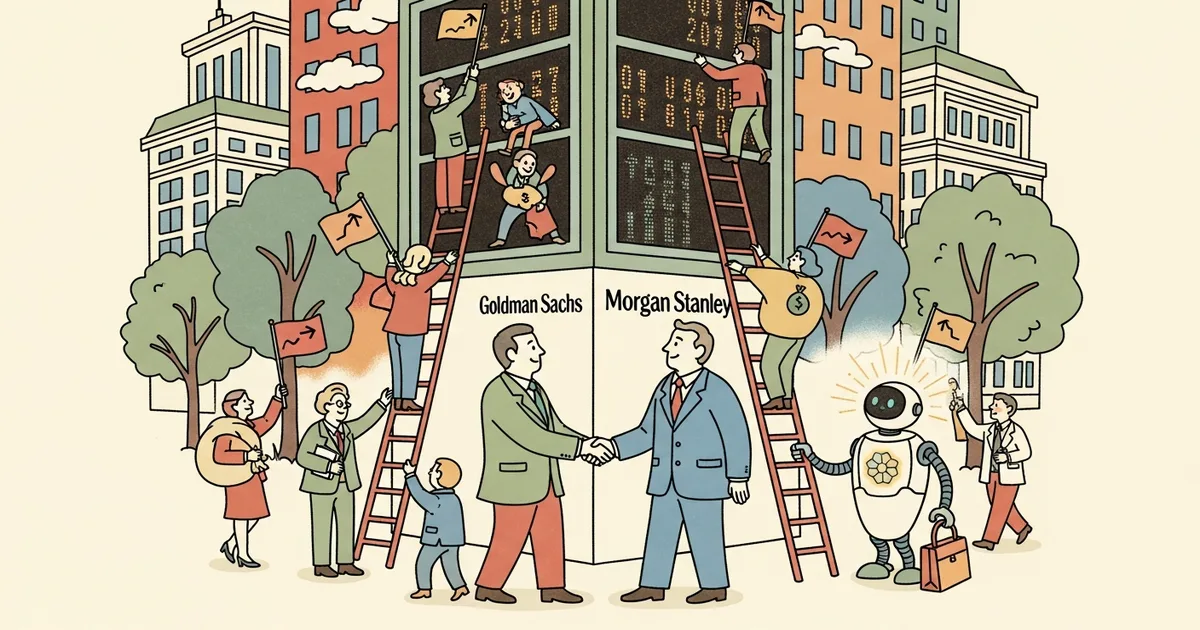
- OpenAI CEO Sam Altman hopes to take the company public by September 2026, per Wall Street Journal sources cited by TechCrunch.
- Goldman Sachs and Morgan Stanley are reportedly the lead bankers on the deal.
- OpenAI may file confidentially with the SEC within days or weeks.
- The IPO race lands alongside SpaceX’s expected confidential filing — setting up a Musk-versus-Altman finance contest after Musk lost the lawsuit.
What Happened
A day after Elon Musk lost his lawsuit challenging OpenAI‘s structure, the AI giant is ready to move forward with its initial public offering, TechCrunch reported on Wednesday, citing Wall Street Journal sources. OpenAI CEO Sam Altman reportedly hopes the company will be ready to go public by September. OpenAI has been working with Goldman Sachs and Morgan Stanley as lead bankers and may file IPO paperwork confidentially within days or weeks.
Why It Matters
The September target gives OpenAI roughly four months from filing to first trading day — a typical timeline for a large issuer. If achieved, OpenAI would be among the largest pure-play AI IPOs in history; the company’s last private valuation was $852 billion after the $122 billion Series G in March 2026.
The competitive timing matters. SpaceX’s IPO filings are expected as soon as Wednesday, per reports. SpaceX is now one of OpenAI’s major competitors after it consumed xAI in the Musk vehicle reorganisation. TechCrunch framed the dynamic directly: “Now that Musk failed to skewer OpenAI through a lawsuit, the next Musk vs. Altman battle will take place in the world of finance. Which one will be the bigger IPO?”
Technical Details
Goldman Sachs and Morgan Stanley are two of the most active tech-IPO underwriting houses; their selection signals a conventional bookbuilding process rather than direct listing. A confidential SEC filing — under the JOBS Act’s Regulation S-K — would give OpenAI flexibility to revise S-1 disclosures with the SEC before public release. The confidential window typically runs 30-60 days before the first public S-1 amendment.
The IPO preparation aligns with several earlier signals. OpenAI’s October 2025 secondary share sale produced roughly 75 multimillionaires who each cashed out the $30 million cap (totalling $6.6 billion across 600+ participants). Microsoft, OpenAI’s largest commercial partner, has separately disclosed it targeted a $92 billion return on its early OpenAI investments. Anthropic, meanwhile, this week disclosed its first projected profitable quarter — adding competitive pressure ahead of OpenAI’s S-1.
Who’s Affected
OpenAI’s investor consortium — Microsoft, SoftBank, Nvidia, Tiger Global, Sequoia, Thrive Capital, plus sovereign-wealth participants — gains a defined liquidity path. Goldman Sachs and Morgan Stanley win one of the largest underwriting mandates of the year. Anthropic faces a public comparable that will reset competitor benchmarking. Public-market investors gain access to a frontier-AI position. State pension funds and retail investors — the addressable population cited in the House Oversight investigation — would be exposed via index funds post-listing.
What’s Next
A confidential S-1 filing within days or weeks would put OpenAI’s underwriters into bookbuilding by midsummer, with first trading day in September if the timeline holds. SpaceX’s expected Wednesday filing creates near-term competitive pressure for OpenAI’s filing window. Expect concrete commentary from Goldman Sachs, Morgan Stanley, and OpenAI in the weeks ahead.