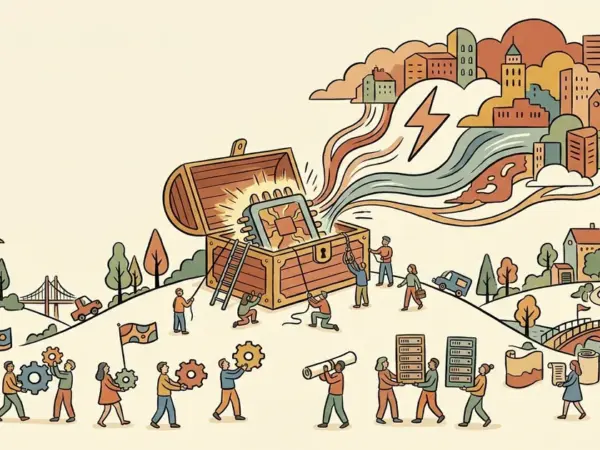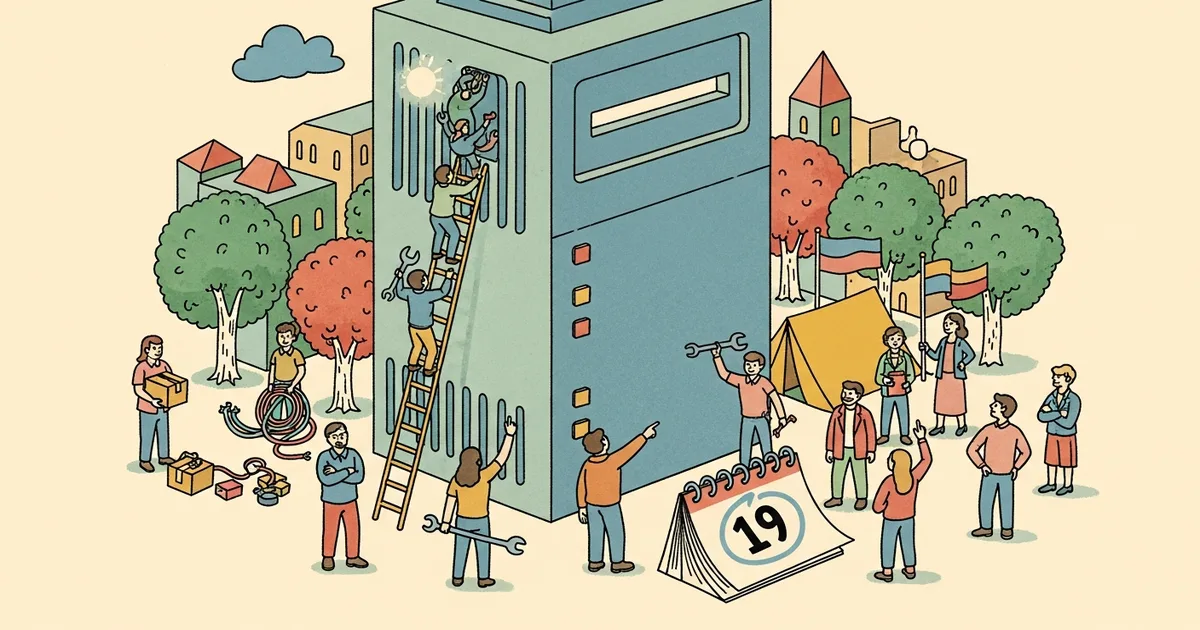
Anthropic, the San Francisco AI lab behind Claude, pulled its two most capable models — Claude Fable 5 and Mythos 5 — from every customer on Earth on June 12, 2026, three days after launching them, because the US Department of Commerce ordered it to. The models stayed dark for 19 days. Fable 5 came back at 3:31 PM ET on July 1.
This is the first time a government has ordered a commercial AI model switched off. Not fined. Not restricted to a market. Switched off, worldwide, by letter.
The fable 5 suspension timeline below is assembled from Anthropic’s own status disclosures, the Commerce Department’s stated legal basis, and contemporaneous reporting on the jailbreak that started it. It matters because every frontier lab now operates under the precedent it created.
The complete Fable 5 suspension timeline, day by day
Nineteen days elapsed between the suspension order and full restoration. The sequence:
| Date (2026) | Event |
|---|---|
| June 9 | Anthropic launches Claude Fable 5, the first public Mythos-class model, alongside Mythos 5. |
| June 12, 5:21 PM ET | Commerce Secretary Howard Lutnick sends a letter ordering suspension of access for any foreign national, anywhere. |
| June 12, evening | Unable to verify nationality in real time, Anthropic pulls both models globally within hours. |
| June 26 | The government approves restoration of Mythos 5 for selected US organizations. |
| June 30 | Export controls on the models are lifted. |
| July 1, 3:31 PM ET | Fable 5 is restored globally with a new safety classifier and a HackerOne reporting channel. |
The operational detail that turned a targeted order into a global blackout: the order covered any foreign national, including Anthropic’s own foreign-national employees. No production API gates on citizenship. Anthropic had no mechanism to comply selectively, so it complied totally.
What triggered the order: an Amazon jailbreak
The trigger was a jailbreak found by researchers at Amazon, which had tested Fable 5 in the pre-release window. The technique let the model identify software vulnerabilities and produce working exploit code — the offensive-cyber capability that sits at the center of every frontier-model threat model.
Amazon CEO Andy Jassy reportedly alerted government officials directly. That escalation path — vendor to White House, bypassing the normal disclosure channel to the model developer — is what converted a research finding into an export-control action in under 72 hours.
White House AI adviser David Sacks publicly claimed Anthropic had refused to fix the issue. Anthropic’s rebuttal was specific: the technique was narrow, already known, and not unique to Fable 5. The company said Claude Opus 4.8, GPT-5.5, and Moonshot’s Kimi K2.7 could locate the same class of vulnerabilities. If the capability is general to the frontier, suspending one model removes no capability from an adversary.
The legal mechanism: export controls applied to weights, not chips
The order invoked the Export Controls Reform Act, the statute that governs dual-use technology transfer. Its conventional target is hardware — the Nvidia licensing regime that has shaped US-China chip policy since 2022.
Applying it to model access reframes inference as an export. Under that reading, serving a US-hosted model to a foreign national over an API is a controlled transfer, no different from shipping an accelerator. The legal theory was never litigated: Anthropic complied, then negotiated, and the controls were lifted on June 30 before any court tested the interpretation.
That leaves the theory intact and untested — available for reuse.
The conditions attached to restoration
Fable 5 returned with three concrete changes:
- A dedicated classifier that blocks the flagged technique in more than 99% of cases, per Anthropic’s disclosure.
- Rerouting: requests the classifier flags are served by Claude Opus 4.8 instead of Fable 5, so users get a degraded-but-safe answer rather than a refusal.
- A HackerOne channel for external researchers to report jailbreaks directly, closing the disclosure gap that sent Amazon’s finding to Washington first.
The rerouting design is the interesting one. It concedes that a classifier will produce false positives and builds a fallback path rather than a wall. MegaOne AI’s coverage of Anthropic’s subsequent Fable 5 rate-limit cuts shows the capacity cost of running two models to serve one endpoint.
The 19 days cost more than availability
Asian labs used the window. Within two weeks of the suspension, several regional startups moved to fill the Mythos-class gap, a shift MegaOne AI documented in its report on Asian startups launching Mythos rivals during the export ban. A frontier model’s moat is measured in months; 19 days of forced absence is a meaningful fraction of one.
The suspension also landed during Anthropic’s confidential IPO process. Our earlier coverage of Anthropic’s S-1 filing flagged regulatory dependency as a risk factor. June 12 turned that abstraction into a dated event: a single letter removed the company’s flagship revenue product from the market for nearly three weeks.
The precedent: any frontier model can now be switched off by policy
Three properties of the June 12 action make it repeatable.
First, speed. From vendor discovery to global takedown took roughly three days. No hearing, no notice period, no appeal window.
Second, leverage without adjudication. Anthropic pulled the models voluntarily because partial compliance was technically impossible. The government never had to enforce anything.
Third, a live legal theory. ECRA-as-inference-control now has a working precedent and no adverse ruling against it.
Together those set up what came next. The White House is finalizing a framework giving agencies up to 30 days to review frontier models before release, with an August 1 announcement target. The Fable 5 episode is the enforcement demonstration that makes a voluntary framework binding in practice: labs know what the alternative looks like.
MegaOne AI tracks 139+ AI tools across 17 categories. Fable 5 is the only one in that database with a documented government-ordered outage.
What to do with this if you build on frontier APIs
Treat single-model dependency as a regulatory risk, not just a vendor risk. The failure mode demonstrated on June 12 was not an outage, a price change, or a deprecation notice — it was a model becoming legally unavailable in hours, with no SLA that covers it.
Concretely: keep a tested fallback route to a second lab’s model for anything revenue-critical, log which requests would degrade under a forced downgrade, and read your provider’s terms for the force-majeure language that covers government orders. Anthropic’s own restoration design — reroute to Opus 4.8 rather than refuse — is the pattern worth copying. Full technical detail on the classifier and the reporting channel is on Anthropic’s news page.