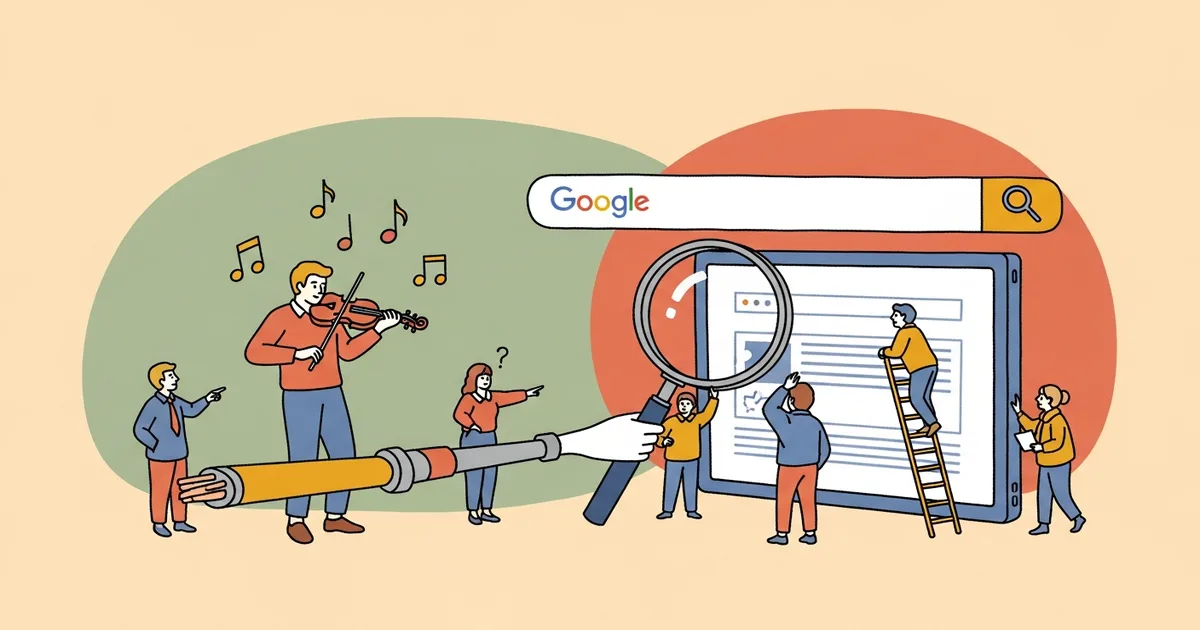
- Three-time Juno-winning Canadian fiddle player Ashley MacIsaac filed a $1.5 million civil lawsuit against Google in Ontario Superior Court, alleging the AI Overview defamed him by falsely identifying him as a convicted sex offender.
- The Sipekne’katik First Nation cancelled MacIsaac’s December 19 concert based on the AI-generated misinformation; the band later issued a public apology acknowledging the AI-related cause of the cancellation.
- The suit seeks $500,000 each in general, aggravated, and punitive damages, alleging Google “knew, or ought to have known, that the AI overview was imperfect and could return information that was untrue.”
- Google‘s AI Overview about MacIsaac now includes the statement: “In late 2025 and 2026, he made headlines for taking legal action against Google.”
What Happened
Ashley MacIsaac, a three-time Juno-winning Canadian fiddler, filed a $1.5 million civil lawsuit against Google in Ontario Superior Court, The Guardian reported on May 5, 2026. MacIsaac alleges the Google AI Overview falsely stated he had been convicted of multiple criminal offences, including sexual assault of a woman, internet luring involving a child with intent to sexually assault that child, and assault causing bodily harm. The AI Overview also wrongly stated that MacIsaac had been listed on the national sex offender registry for life.
Why It Matters
This is one of the highest-profile defamation lawsuits filed against a generative AI product to date and the most concrete public test of liability for AI Overview-generated falsehoods. The legal theory MacIsaac’s lawsuit advances — “Google is also liable for injuries and losses arising from the AI overview’s defective design” — frames AI Overviews as a product subject to product-liability principles rather than purely as automated speech protected by intermediary safe harbors. If MacIsaac’s case proceeds to trial and finds for the plaintiff, similar suits would likely follow against other AI search products including ChatGPT search, Perplexity, and Bing Copilot. The $1.5 million claim — broken across $500K each in general, aggravated, and punitive damages — also establishes a quantitative reference for AI-generated defamation claims.
Technical Details
The lawsuit’s framing on Google’s design liability: “As the creator and operator of the AI overview, Google is also liable for injuries and losses arising from the AI overview’s defective design. Google knew, or ought to have known, that the AI overview was imperfect and could return information that was untrue.” The argument explicitly extends product-liability theory to generative AI features.
The damage claim breakdown: $500,000 in general damages (compensatory for harm), $500,000 in aggravated damages (for malicious or oppressive conduct), and $500,000 in punitive damages (to deter Google from future similar conduct). The “Google’s cavalier and indifferent response” framing is the basis for aggravated and punitive damages: “If a human spokesperson made these false allegations on Google’s behalf, a significant award of punitive damages would be warranted. Google should not have lesser liability because the defamatory statements were published by software that Google created and controls.”
The concrete harm: the Sipekne’katik First Nation cancelled MacIsaac’s December 19 concert appearance after public complaints citing the AI-generated misinformation. The band later issued a public apology to MacIsaac: “Decisions were based on incorrect information generated through an AI-assisted search, which mistakenly associated you with offenses unrelated to you. We deeply regret the harm this caused to your reputation and livelihood.” MacIsaac told Canadian Press the misinformation left him with a “tangible fear” about performing: “I feared for my own safety going on stage because of what I was labelled as. And I don’t know how long this will follow me.”
MacIsaac’s lawsuit alleges Google had never contacted him or offered an apology. A Google spokesperson previously said in December: “AI Overviews frequently improve to show the most helpful information, and we invest significantly in the quality of responses. When issues arise – like if our features misinterpret web content or miss some context – we use those examples to improve our systems and may take action under our policies.” Google’s AI Overview about MacIsaac now includes: “In late 2025 and 2026, he made headlines for taking legal action against Google.”
Who’s Affected
Google faces concrete legal exposure on AI Overviews for the first time at this scale. The Ontario Superior Court process will produce a public discovery record of how Google’s AI Overview generated the false statements, a document trail other plaintiffs could cite. Other AI search products — Perplexity, ChatGPT search, Bing Copilot, and the major Chinese open-weight model deployments — face implicit precedent risk if MacIsaac’s case advances. Defamation lawyers and AI ethics researchers gain a high-profile test case for “AI overview as product” liability theory. AI Overview’s broader user base — particularly people whose names appear in search results that AI Overview may misattribute — gain a clearer legal framework for response. Search-product designers face new pressure to implement provenance, fact-checking, and rapid-correction mechanisms specifically for human-name queries.
What’s Next
Ontario Superior Court process typically takes 18-30 months from filing to trial. Google’s response to the suit — particularly whether the company files for summary dismissal on intermediary-liability grounds — will be the first material legal-strategy signal. Watch for similar suits in other jurisdictions: Australia, the UK, EU member states, and U.S. states all have defamation regimes that could host comparable claims. Google may also adjust AI Overview design before the case concludes — adding stronger fact-checking on human-name queries, prominent provenance for negative claims, or limiting AI Overview entirely for criminal-record queries.