- OpenAI released GPT-5.5 Instant on May 5, 2026 as the new default model in ChatGPT, available to all users.
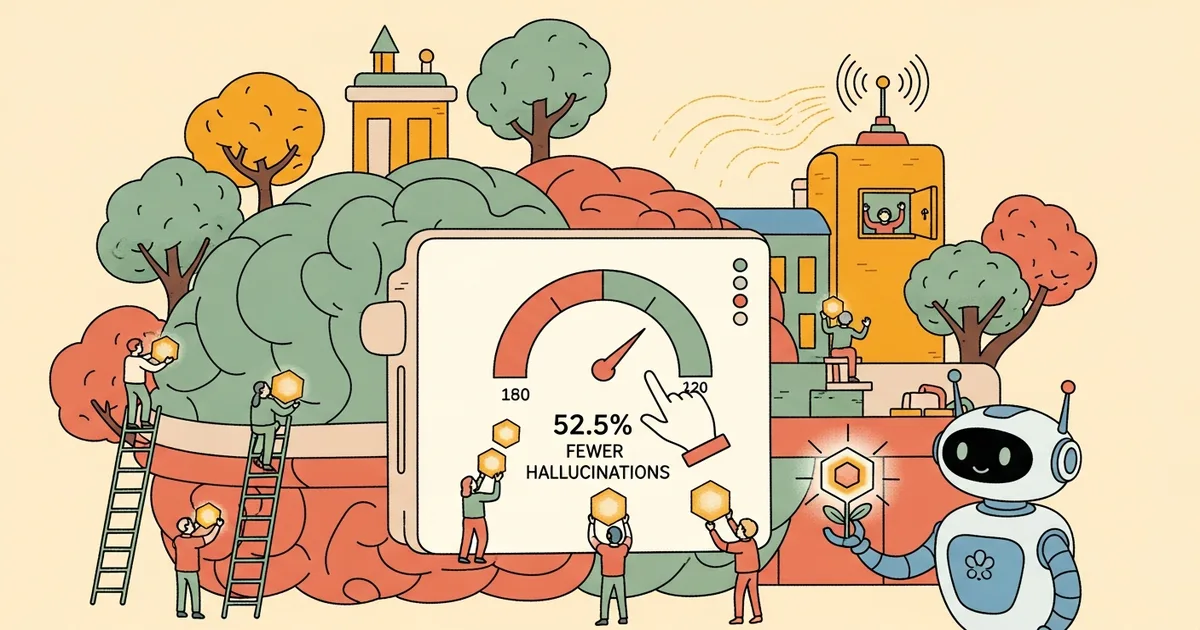
- Internal evaluations report 52.5% fewer hallucinated claims than GPT-5.3 Instant on high-stakes prompts in medicine, law, and finance.
- On especially challenging conversations users had flagged for factual errors, GPT-5.5 Instant reduces inaccurate claims by 37.3%.
- Improvements span photo and image analysis, STEM Q&A, and the model’s decision on when to invoke web search.
What Happened
OpenAI released GPT-5.5 Instant on May 5, 2026 as ChatGPT’s new default model, replacing GPT-5.3 Instant. The release positions Instant — described by OpenAI as the “daily driver for hundreds of millions of people” — as a safer and more useful default rather than as a top-tier reasoning model. The release follows the broader GPT-5.5 launch covered in our prior coverage; Instant is the latency-optimized variant tuned for the consumer ChatGPT experience.
Why It Matters
Default-model upgrades affect more users than any single frontier-model release because they ship to the entire ChatGPT free and paid base simultaneously. The hallucination-reduction figures OpenAI publishes — 52.5% fewer on high-stakes prompts and 37.3% fewer on user-flagged hard cases — are the most directly comparable safety metrics OpenAI has shared on a default-model release. The framing matters: rather than competing on benchmark capability, OpenAI is positioning Instant on factuality and reliability for everyday use.
Technical Details
OpenAI’s announcement reports “significant improvements in factuality across the board” with the largest gains in domains where accuracy matters most — medicine, law, and finance. On internal evaluations of high-stakes prompts in those domains, GPT-5.5 Instant produced 52.5% fewer hallucinated claims than GPT-5.3 Instant. On a separate evaluation set drawn from “especially challenging conversations users had flagged for factual errors,” inaccurate claims dropped 37.3%.
Beyond factuality, OpenAI lists several specific capability upgrades: stronger photo and image upload analysis, improved STEM-related question answering, and better decisions about when to invoke web search to provide a more useful answer. The model also produces “clearer, more concise answers” with “a more natural conversational tone” and “better use of the context you’ve already shared when personalization can help.”
OpenAI illustrated the upgrade with a side-by-side example: a math problem on which GPT-5.3 Instant initially confirmed the user’s answer, then walked through a verification step that revealed the algebra error and reversed the conclusion. GPT-5.5 Instant in the same example flagged the algebra mistake more directly, though the published comparison shows both models eventually arriving at the correct “no real solution” outcome through different reasoning paths.
Who’s Affected
The most direct beneficiaries are the hundreds of millions of free-tier and paid ChatGPT users who use the default Instant model rather than manually selecting a reasoning model. Anthropic, Google’s Gemini, and the broader Chinese open-weight cohort face renewed competitive pressure on the consumer-default tier where most everyday AI usage happens. Enterprise developers building on OpenAI’s API gain a new default for cost-sensitive routine workloads where GPT-5.5 reasoning would be overkill. Healthcare, legal, and financial-services applications — the three domains OpenAI specifically called out for hallucination reduction — gain a measurable safety improvement worth re-benchmarking against.
What’s Next
Watch for independent evaluations of the 52.5% and 37.3% hallucination-reduction figures from third parties — these are vendor-published numbers that have not yet been validated externally. The release also positions OpenAI for the broader “super app” trajectory that TechCrunch’s coverage flagged when GPT-5.5 itself launched: Instant as the always-on default, with reasoning models invoked when complexity warrants. Expect OpenAI to publish the GPT-5.5 Instant System Card alongside the announcement to provide the safety-evaluation methodology.