Key Takeaways
- Google announced a Gemini-powered personal health coach for Pixel Watch and Fitbit devices at The Check Up 2026 event.
- The AI coach combines wearable sensor data with medical records to deliver personalized fitness, sleep, and wellness guidance.
- Google committed $10 million to clinician AI training and revealed partnerships with Taiwan’s health system and Nigeria’s OnTIME Consortium.
- The feature launches in public preview in the U.S. through a redesigned Fitbit app, with a full rollout planned alongside new Fitbit hardware later in 2026.
What Happened
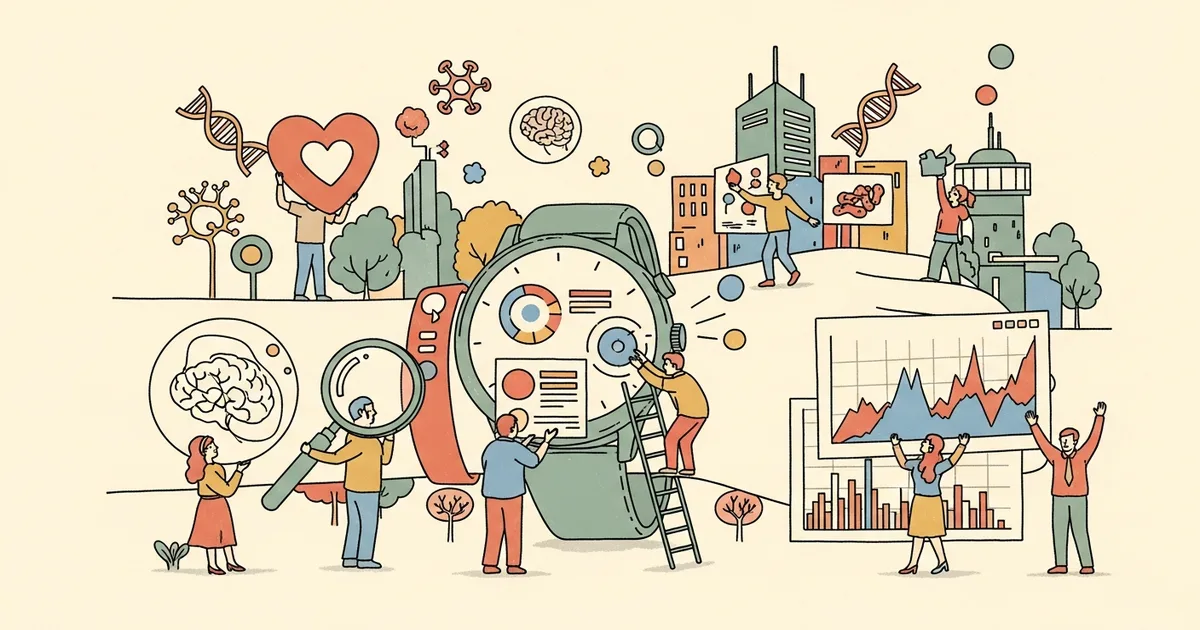
Google used its annual The Check Up 2026 health event to unveil an AI-powered personal health coach built on its Gemini model. The feature, arriving on Pixel Watch and Fitbit devices, functions as a combined fitness trainer, sleep coach, and wellness advisor. Dr. Karen DeSalvo, Google’s Chief Health Officer, introduced the updates, describing Google’s goal as “helping everyone, everywhere live a longer, healthier life.”
Alongside the health coach, Google announced a $10 million investment in clinician AI training and new global health partnerships using Gemini-powered AI agents in healthcare systems.
Why It Matters
Wearable health coaching has historically relied on static thresholds and pre-written tips. Apple’s watchOS and Samsung Health have offered basic nudges — move reminders, breathing exercises — but none have attempted to unify wearable biometrics with a user’s medical records inside a single conversational interface. Google’s approach represents a shift from reactive health tracking to proactive, personalized guidance.
The move also positions Google against Apple in the health wearable space. Apple announced its own health features for watchOS 12 in late 2025, but did not integrate medical record data directly into an AI coaching layer. Google’s decision to pull in medical records through the Fitbit app raises the stakes — and the privacy expectations.
Technical Details
The personal health coach is built on a health-specific large language model developed jointly by Fitbit and Google Research. This health LLM is fine-tuned on top of Gemini to deliver coaching that factors in a user’s real-time sensor data — heart rate, sleep stages, activity levels, stress indicators — alongside stated fitness goals and personal constraints like available equipment or time.
The system uses a multi-signal approach. Rather than analyzing a single metric, it cross-references sleep quality with recovery data, activity trends, and (when connected) clinical records to generate actionable guidance. Workout suggestions include specific metrics targets based on weekly progression, adjusting difficulty and volume based on recovery indicators.
Users can optionally connect their medical records to the Fitbit app, enabling the AI coach to factor in clinical data when providing recommendations. Google has stated that medical record data is processed on-device where possible and governed by existing Fitbit privacy policies, though privacy researchers have raised questions about the scope of data integration.
Who’s Affected
The immediate user base includes Pixel Watch owners and Fitbit device users in the United States, where the public preview launches first through a redesigned Fitbit app. Google confirmed that any Fitbit device — not just the latest models — will support the AI coach feature, broadening the addressable audience significantly.
Healthcare providers may also feel downstream effects. Google’s $10 million clinician AI training initiative, paired with partnerships like the Taiwan diabetes prediction program (which uses 20 years of population health data with Gemini) and the OnTIME Consortium’s work on emergency obstetric care access in Nigeria, signals that Google is positioning its health AI for both consumer and clinical settings.
What’s Next
The personal health coach enters public preview in the U.S. first, with a full launch expected later in 2026 alongside new Fitbit hardware. Google has indicated that a successor to the Fitbit Charge 6 and a potential Inspire 3 update are in development, featuring improved sensors and battery life optimized for continuous AI coaching workloads.
Expanded coaching domains — including cycle health tracking, mental wellbeing assessments, and nutrition logging — are planned for subsequent updates. Whether users will trust a wrist-worn AI with their medical records alongside their step counts remains an open question that Google will need to answer with transparent data handling practices as the feature scales beyond preview.
Related Reading
- 75% of Americans Now Search With AI Every Week — And Most Trust It as Much as Google [Survey Data]
- 80% of Pages Cited by ChatGPT Have Zero Google Rankings — SEO and AI Search Are Officially Divorced [Ahrefs Data]
- Google’s Circle to Search Can Now Identify Every Piece of Clothing in a Photo
- Lightfeed Open-Sources TypeScript Library for LLM-Driven Web Extraction