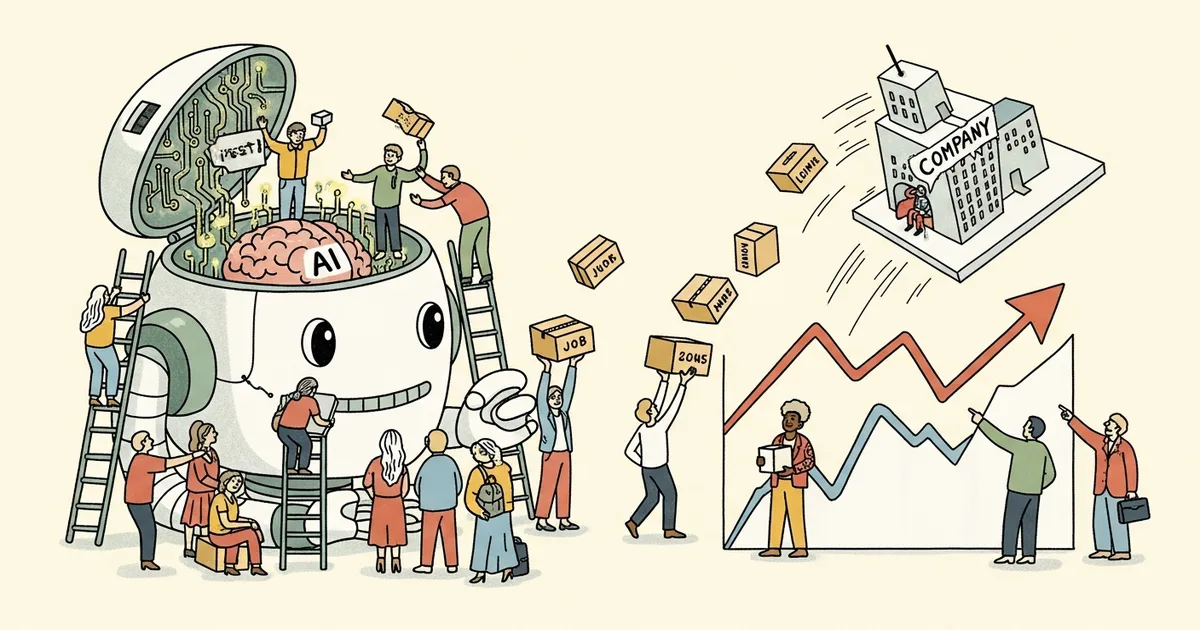
Tech companies announced 52,000+ job cuts in Q1 2026, with March alone accounting for 18,720 — a 24% increase year-over-year, according to Bloomberg. Tech led all US industries in layoffs. The common thread across nearly every announcement: companies are replacing human roles with AI to fund data center expansion.
The Biggest Cuts
The companies citing AI directly in their layoff announcements:
- Oracle: 25,000 positions — the largest single tech layoff of 2026 so far, explicitly tied to AI infrastructure investment
- Block (Square): 4,000 positions — CEO Jack Dorsey stated the company is “reorganizing around AI-first workflows”
- Atlassian: 1,600 positions — citing AI automation of internal support and documentation roles
- Baker McKenzie: Undisclosed number — one of the first major law firms to cite AI as a direct replacement factor
Month-by-Month Breakdown
Q1 2026 accelerated through each month:
- January: ~14,000 cuts — post-holiday restructuring, some AI-related
- February: ~19,000 cuts — mid-quarter acceleration as annual budgets locked in AI spending
- March: 18,720 cuts — 24% above March 2025, concentrated in engineering and operations roles
The pattern is consistent: companies cut headcount in traditional functions and redirect the savings into GPU clusters, data center leases, and AI engineering hires.
Which Roles Are Most Vulnerable
The cuts concentrate in specific functions:
- Customer support: AI chatbots replacing Tier 1 and Tier 2 support staff
- QA/Testing: AI-powered test automation reducing manual testing teams
- Internal IT: AI agents handling helpdesk, provisioning, and documentation
- Mid-level management: AI analytics reducing the need for reporting layers
Meanwhile, AI-specific roles are growing: AI governance, safety engineering, data labeling management, and prompt engineering positions increased 34% quarter-over-quarter, according to LinkedIn’s March 2026 Workforce Report.
The AI Investment Tradeoff
This isn’t traditional restructuring — it’s a capital reallocation. Companies are explicitly saying: we’re firing people to buy GPUs. New MLPerf benchmarks show inference hardware costs dropping, but the demand for AI infrastructure is growing faster than costs are falling.
The 52,000 figure also understates the impact. Many companies are achieving the same result through hiring freezes and natural attrition — not filling roles when people leave, rather than formal layoffs. The actual AI-driven workforce reduction is likely 2-3x the announced number.
What Happens Next
Q2 2026 is expected to continue the trend. Microsoft, Amazon, and Google all have AI infrastructure expansion plans that will pressure headcount in non-AI functions. The labor market shift isn’t temporary — companies that have replaced roles with AI are unlikely to re-hire for those positions even if AI budgets stabilize. The structural change is permanent.