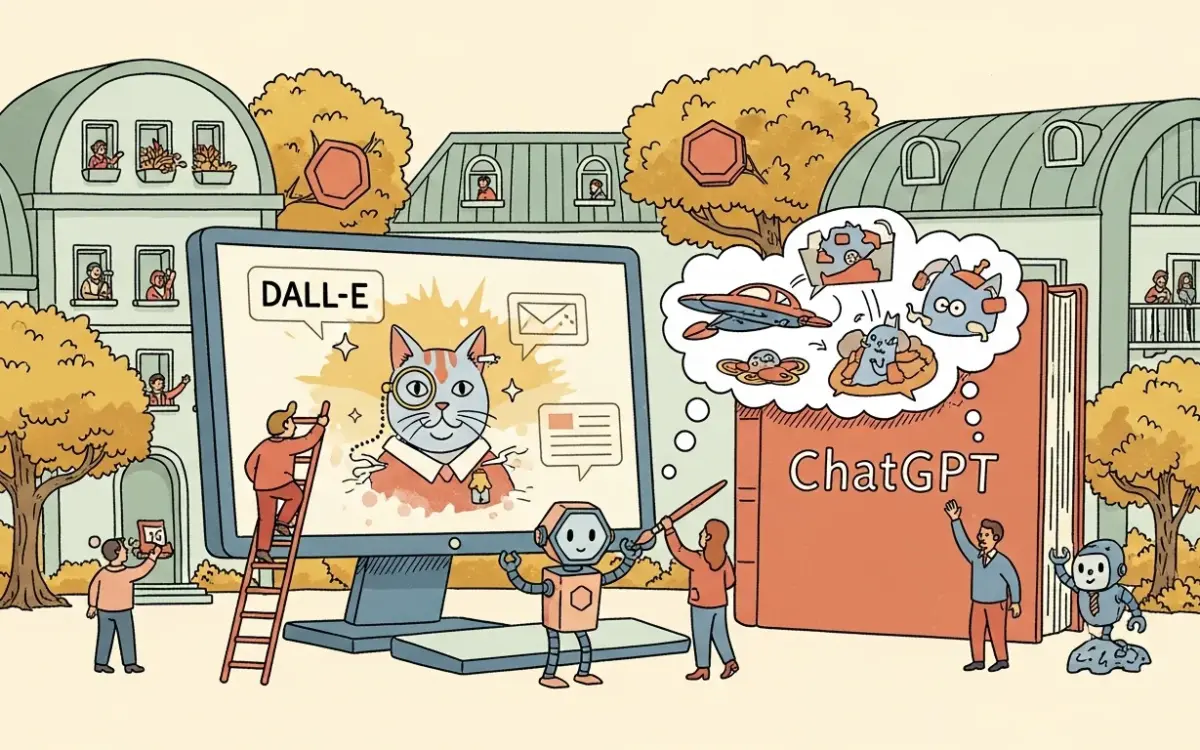
- OpenAI has replaced DALL-E 3 with GPT-4o native image generation inside ChatGPT, making image creation a built-in capability rather than a bolted-on tool.
- DALL-E 3 is scheduled for full deprecation on May 12, 2026, with GPT Image 1.5 serving as the API replacement offering 4x faster generation speeds.
- Text rendering inside generated images has improved substantially, producing readable typography and multi-line text passages.
- Pricing remains tied to ChatGPT subscription tiers: Free (limited), Plus ($20/month), and Pro ($200/month), with separate API charges for developers.
What Happened
OpenAI has fundamentally restructured its image generation offering. In March 2026, the company replaced DALL-E 3 as ChatGPT’s default image generator with GPT-4o’s native image generation capabilities. Rather than calling a separate model to handle image requests, image creation is now embedded directly into the GPT-4o architecture. The change rolled out to Plus, Pro, Team, and Free users, with Enterprise and Edu access following shortly after.
DALL-E 3 itself is scheduled for full deprecation on May 12, 2026. Developers using the API will transition to GPT Image 1.5, which OpenAI says delivers 4x faster generation speeds and improved text rendering compared to its predecessor. The move marks the end of DALL-E as a distinct product line within OpenAI’s portfolio.
Why It Matters
The shift from DALL-E as a standalone model to native image generation inside GPT-4o represents a significant architectural change in how AI handles visual content. Instead of routing requests to a separate image model, GPT-4o generates images as part of the same conversation flow that handles text. This means the model retains full context from the conversation when creating images, enabling a more coherent creative workflow.
For users, the practical difference is iterative refinement through natural conversation. A request like “make the sky more dramatic” or “remove the person on the left” works through follow-up messages rather than requiring a complete prompt rewrite. The model understands what it already generated and can modify specific elements while maintaining consistency across the rest of the image.
The integration also simplifies OpenAI’s product offering. Instead of maintaining separate models for text and image generation, the company now delivers both capabilities through a single unified model, reducing complexity for developers and end users alike.
Technical Details
GPT-4o’s native image generation addresses one of the most persistent problems in AI-generated images: text rendering. The model now produces readable typography, proper formatting, and multi-line text passages within images. This eliminates the garbled, distorted text that made DALL-E 3 outputs immediately identifiable as AI-generated — a limitation that restricted the technology’s usefulness for marketing materials, social media graphics, and presentation visuals.
The trade-off is speed. Because GPT-4o creates more detailed images through its unified architecture, generation times often reach up to one minute per image. The API-level replacement, GPT Image 1.5, addresses this latency issue with faster processing optimized for production workflows where throughput matters.
Rate limits remain a notable constraint across all tiers. Free-tier users face restrictive generation caps that limit practical utility for anything beyond occasional use. Plus subscribers at $20/month get a substantially larger allocation but will still encounter limits during heavy creative sessions. Pro subscribers at $200/month receive the most generous allocation. API pricing runs between $0.040 and $0.120 per image depending on resolution and quality settings.
Who’s Affected
ChatGPT’s existing user base gains image generation without needing a separate tool, subscription, or learning curve. The conversational interface makes iterative refinement accessible to users who would struggle with the prompt engineering required by Midjourney or the technical setup needed for Stable Diffusion.
Developers and businesses that built workflows around the DALL-E 3 API face a mandatory migration before the May 12 deprecation deadline. The transition to GPT Image 1.5 requires API call updates, and output characteristics may differ enough to require testing and adjustment in production pipelines.
Professional users requiring precise control over style transfer, inpainting, outpainting, or batch generation will still find dedicated platforms more capable. OpenAI’s approach prioritizes accessibility and conversational workflow over the granular creative controls that professional illustrators and designers typically need.
What’s Next
Developers using the DALL-E 3 API have until May 12, 2026, to complete their transition to GPT Image 1.5. OpenAI has not announced whether future GPT models will continue expanding native image capabilities or whether a standalone successor to the DALL-E line is in development. The current trajectory suggests image generation will remain integrated into the core conversational model rather than existing as a separate product, but the company has not committed to a long-term product roadmap publicly.