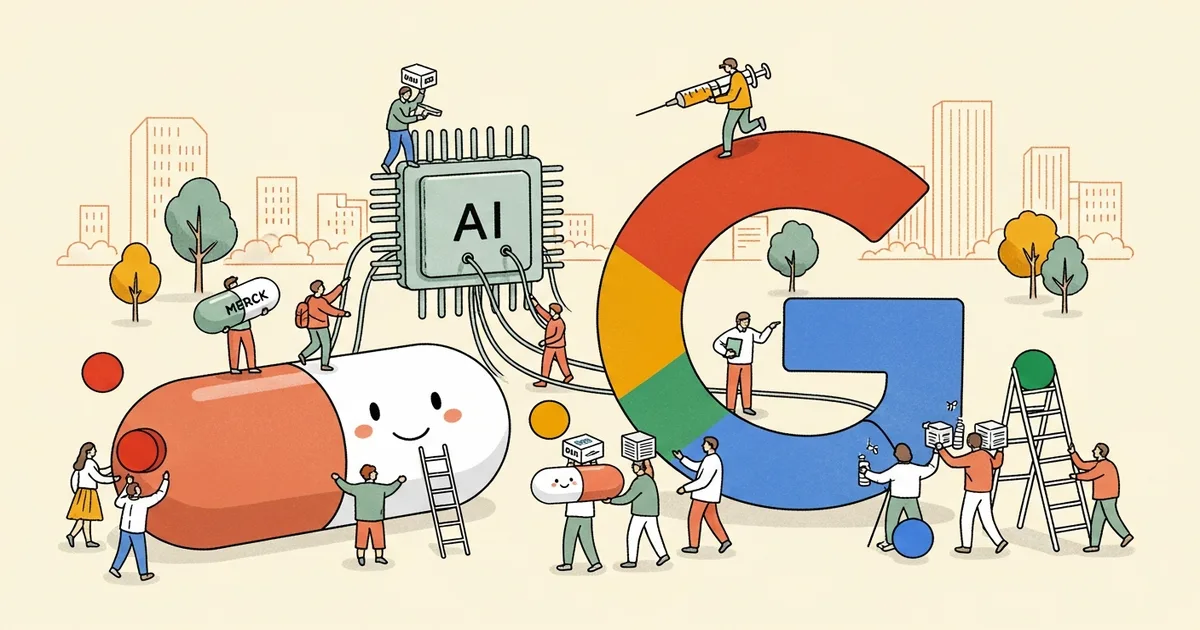
- Merck has agreed to an enterprise AI partnership with Google valued at up to $1 billion, according to a report by Fierce Pharma published in April 2026.
- The “up to” framing indicates a milestone-based deal structure, meaning the full value is contingent on adoption and performance targets being met.
- The partnership positions Google Cloud as Merck’s primary AI infrastructure vendor, a significant win in the competitive pharma cloud market.
- Enterprise AI deals of this scale in pharmaceuticals typically span drug discovery, clinical operations, and manufacturing — though specific workloads have not been publicly detailed in available reporting.
What Happened
Merck has struck an enterprise AI partnership with Google valued at up to $1 billion, Fierce Pharma reported in April 2026. The agreement makes Google a core AI infrastructure partner for Merck, one of the largest pharmaceutical companies in the world by revenue. The deal’s ceiling of $1 billion places it among the largest disclosed pharma-cloud AI commitments to date.
The “up to” qualifier signals that the full contract value is contingent on Merck meeting adoption milestones or expanding workloads over the partnership’s term — a common structure in enterprise cloud agreements of this size.
Why It Matters
The agreement extends a pattern of Big Pharma consolidating AI infrastructure around a small number of hyperscaler platforms. In 2024 and 2025, Google Cloud signed major AI deals with AstraZeneca, Sanofi, and Pfizer, building a portfolio of pharmaceutical clients on its Vertex AI platform. Microsoft Azure and AWS have pursued similar partnerships, making pharma one of the most actively contested verticals in enterprise AI.
For Google, a Merck agreement at this scale validates its Gemini-powered cloud offerings as capable of meeting the regulatory, data-security, and scientific-computing demands of a top-ten global drugmaker.
Technical Details
Google Cloud’s pharma AI stack — centered on Vertex AI and specialized tools such as Med-Gemini and its genomics-focused pipelines — has been positioned for use cases including molecular property prediction, clinical-trial data analysis, and automated regulatory document generation. Large pharmaceutical partners have previously reported using Google’s infrastructure for real-world evidence analysis and patient-cohort modeling at scale.
Deals of this architecture typically run workloads across Google Cloud’s high-performance computing clusters, with sensitive patient data handled under Business Associate Agreements and within designated regulatory compliance frameworks such as HIPAA-eligible services and GxP-validated environments. Specific workloads covered under the Merck agreement had not been publicly detailed in available reporting at the time of publication.
Who’s Affected
The agreement directly affects Merck’s internal research, clinical, and manufacturing technology teams, which will migrate or expand AI workloads onto Google Cloud infrastructure. Competing cloud providers — Amazon Web Services and Microsoft Azure — both have existing pharma AI programs and will face increased competitive pressure in future enterprise negotiations with Merck and similarly sized drugmakers watching this deal closely.
Contract research organizations and AI drug-discovery startups that partner with Merck may also be pulled into the Google Cloud ecosystem as data-sharing and interoperability requirements standardize around the chosen platform.
What’s Next
Enterprise cloud partnerships at this scale typically unfold over multi-year terms, with workload migration beginning in the months following signing and milestone reviews determining whether spend reaches the disclosed ceiling. Merck and Google are expected to disclose additional details — including specific therapeutic areas and AI applications — as individual programs go live.
The deal will be closely watched by other top-20 pharma companies still evaluating which hyperscaler to designate as their primary AI partner, a decision that carries long-term infrastructure lock-in implications.