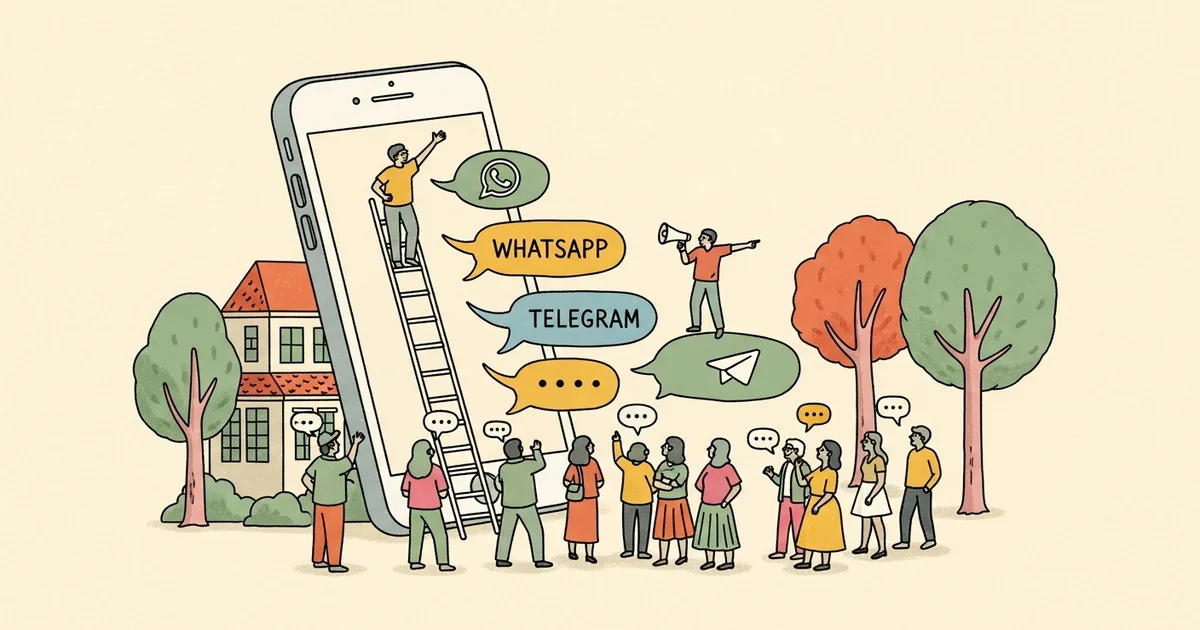
- Bengaluru-based startup Emergent launched Wingman on April 15, 2026, an autonomous AI agent designed to operate through WhatsApp, Telegram, and Apple iMessage.
- Emergent, founded in 2025, raised $70 million in January 2026 at a $300 million valuation backed by SoftBank, Khosla Ventures, and Lightspeed Venture Partners.
- Wingman uses a “trust boundaries” model that allows the agent to handle routine tasks autonomously while requiring human approval for higher-consequence actions.
- Co-founder and CEO Mukund Jha acknowledged that Wingman currently struggles with ambiguous goals, edge cases, and workflows requiring significant human judgment.
What Happened
Emergent, a Bengaluru-based startup, launched Wingman on April 15, 2026 — a messaging-first autonomous AI agent that runs across WhatsApp, Telegram, and Apple iMessage. The product extends Emergent’s existing vibe-coding platform, which allows non-technical users to build full-stack applications through natural-language prompts, into the domain of automated task execution.
Mukund Jha, co-founder and CEO of Emergent, framed the expansion as a direct extension of the company’s original mission. “You move from software that supports the business to software that can actively help run it,” Jha said.
Why It Matters
Autonomous AI agents have become a focus of competition across the industry. Tools like OpenClaw — previously known as Clawdbot and Moltbot — have attracted early adopters, and both Anthropic and Microsoft are developing agent-based systems. Emergent’s decision to embed Wingman inside existing messaging interfaces, rather than requiring users to adopt a new application, represents a distinct approach to distribution.
Emergent is also among a small number of Indian AI startups competing directly in the autonomous agent category at this funding scale, having closed a $70 million raise in January 2026 at a $300 million valuation with backing from SoftBank, Khosla Ventures, and Lightspeed Venture Partners.
Technical Details
Wingman connects to external tools — including email, calendars, and workplace software — and executes tasks in the background while users assign and monitor work through chat. The system implements what Emergent calls “trust boundaries”: a tiered permission structure that enables autonomous handling of routine tasks while requiring explicit user approval before the agent takes higher-consequence actions.
The agent’s current limitations are defined by its own CEO. Jha told TechCrunch the system struggles “around consistency in really ambiguous situations, messy edge cases, unclear goals, or workflows where a lot of human judgment is needed.” Wingman is launching with a limited free trial; continued access will require a paid subscription, with existing Emergent users able to access the agent through their current accounts.
Who’s Affected
The immediate addressable audience is Emergent’s existing user base: more than 8 million builders have used its vibe-coding platform to date, with 1.5 million monthly active users as of the April 15 launch. Those users can access Wingman directly through their existing accounts without a separate sign-up.
Competitors building standalone agent interfaces — platforms that require users to adopt new dashboards or workflows — face a distribution challenge that Wingman’s messaging-native design sidesteps by operating inside tools users already rely on for daily communication.
What’s Next
Emergent has not provided a specific timeline for expanding Wingman’s availability beyond the current limited free trial. Jha indicated the company views chat, voice, and email as the primary interfaces through which users will coordinate with AI agents going forward. “A lot of real work already happens through chat, voice, and email — asking for something, following up, sharing context, making a decision,” Jha said. “Increasingly, they’ll be the main ways we work with agents too.”
Related Reading
- The AI That Replaced 7 Apps on Andrej Karpathy’s Phone — Dobby Does Everything From One Chat
- Anthropic Bans All OpenClaw Users From Claude — Open-Source Backlash Builds
- GLM 5.1 Rivals Claude Opus 4.6 on Agentic Tasks at One-Third the Cost
- Your AI Agent Now Dreams About You — OpenClaw’s ‘Dreaming’ Feature