- Canva AI 2.0 generates fully editable design elements built on the Canva Design Model, a proprietary foundation model trained on the edit sequences of its 265 million monthly users.
- Canva uses perturbation training — deliberately degrading designs — to teach the model to detect spacing and hierarchy errors before they reach users.
- Generated elements are produced by technology from Leonardo.ai, which Canva acquired in 2024, and are delivered as individually adjustable components rather than flat images.
- Canva has embedded its platform within ChatGPT, Claude, Copilot, and Google Gemini, positioning its canvas as the execution layer for AI-generated creative work.
What Happened
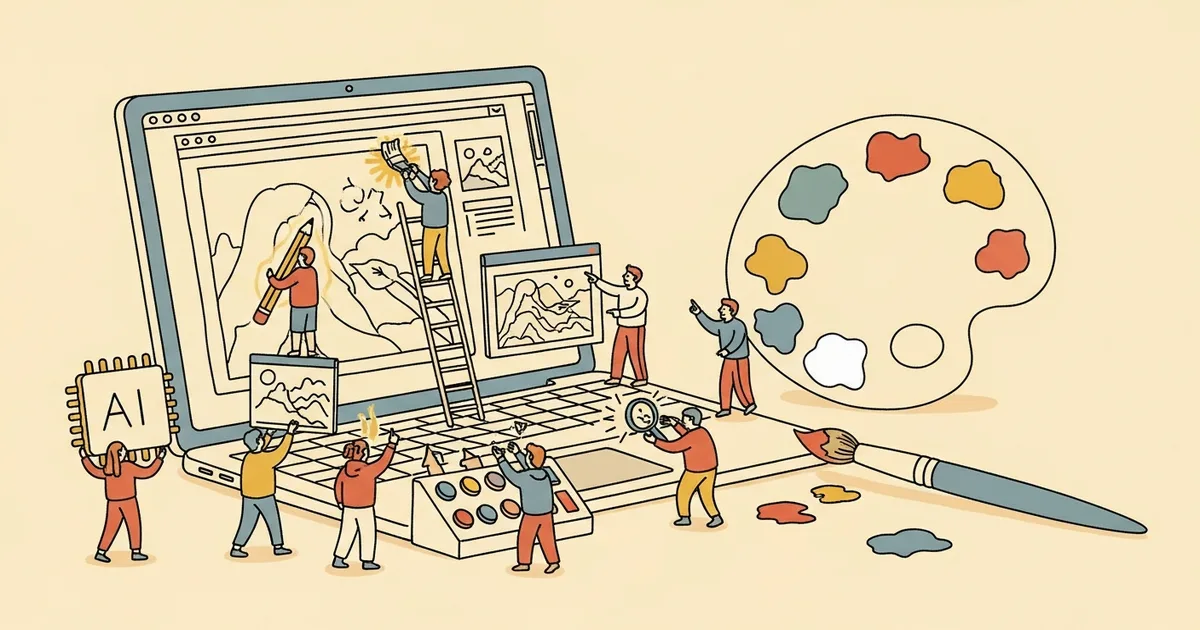
Canva launched Canva AI 2.0, an update the company says converts its platform into an AI-native design environment where generated outputs are fully editable layers rather than static images. Co-founder and Chief Product Officer Cameron Adams detailed the platform’s architecture and training methodology in an exclusive interview with The Rundown AI published April 19, 2026. The release centers on the Canva Design Model, a proprietary foundation model trained on millions of designs and the edit sequences that produced them.
Why It Matters
Most AI image generation tools deliver a finished output and require users to re-prompt repeatedly to make incremental changes, creating iterative loops that slow production. Canva’s stated approach retains generated elements inside its editor as individually adjustable components, allowing real-time refinement rather than repeated generation cycles. The update also arrives as competing platforms including Adobe Firefly and Microsoft Designer have pursued comparable AI-native design workflows.
Technical Details
According to Adams, the Canva Design Model was trained on “structured data, millions of designs, and the actual sequence of edits used to build them” — not only finished outputs. This training methodology gives the model exposure to intermediate design states including revisions, corrections, and layout pivots drawn from Canva’s 265 million monthly active users.
To improve output accuracy, Canva applies what Adams described as perturbation testing: “We ‘perturb’ designs, purposely breaking the spacing or hierarchy, to train the model to recognize and score those errors.” The system evaluates against real-world usage patterns covering alignment, readability, and brand consistency. Adams also reported that the model demonstrated an ability to convert ASCII diagrams into polished visual designs with high accuracy — a behavior Adams said the team had not explicitly trained or optimized for.
Generated elements originate from technology developed by Leonardo.ai, which Canva acquired in 2024. Adams described the system as combining a language model reasoning layer for interpreting prompts with the design-specific training layer for execution, producing components that can be individually selected and modified within the editor. The platform surfaces its reasoning process to users as it interprets a prompt, rather than returning a result silently.
Who’s Affected
Adams framed Canva AI 2.0 as serving non-designers — marketers assembling campaign materials, event planners producing printed assets, students working on school projects — as much as trained designers. By embedding the platform within ChatGPT, Claude, Copilot, and Google Gemini, Canva is positioning its canvas as what Adams called “the definitive visual layer for the AI ecosystem,” capturing users at the moment they need to move from AI-generated concepts to finished, brand-consistent materials.
Professional designers are also directly affected. Adams argued that as AI reduces the execution gap between skilled and unskilled users, “judgement and empathy become more important: the strength of the idea, the sensitivity to context, the instinct about what will resonate.” The interview does not provide data measuring how the gap between professional and non-professional outputs has changed since the model’s deployment.
What’s Next
Adams indicated Canva will continue developing what the company terms agentic editing — an error-detection and refinement system designed to catch design inconsistencies as users work, rather than after a generation cycle completes. The company’s stated integration strategy with major AI assistants points to continued API and plugin development as a near-term priority. No specific feature roadmap or release schedule was disclosed in the interview.