- Anthropic CEO Dario Amodei told the Financial Times he sees no ceiling to AI model scaling, saying “there’s no end to the rainbow.”
- Amodei has previously projected AI could eliminate 50 percent of entry-level office jobs within five years.
- He warned the AI industry has accumulated warnings without yet delivering on its positive promises.
- Amodei argues the sector must make AI’s upside large enough to function as a tool for managing displacement.
What Happened
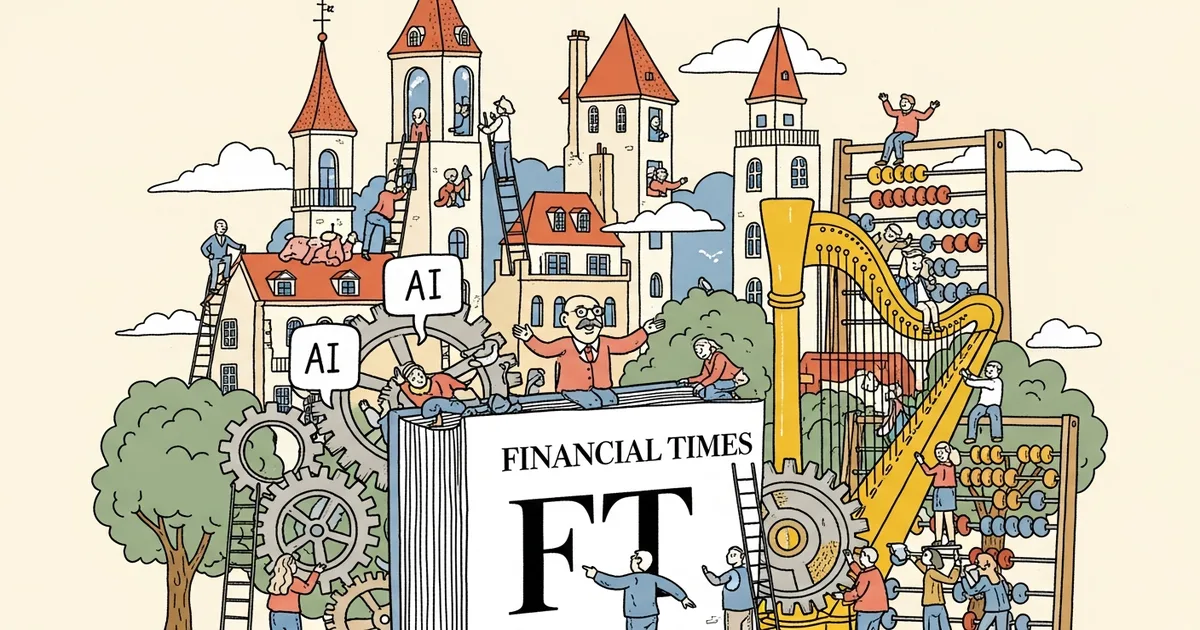
Anthropic CEO Dario Amodei told the Financial Times that AI scaling still has substantial room to run, dismissing the idea that progress is plateauing. “There’s no end to the rainbow. There’s just the rainbow,” Amodei said, adding: “We don’t see anything slowing down.” The remarks, reported by The Decoder in April 2026, represent Amodei’s most direct public statement against the narrative of diminishing scaling returns.
Why It Matters
Amodei’s comments land in the middle of an active industry dispute about whether large language model pre-training still yields proportional gains as compute budgets increase. Several researchers and labs have publicly suggested scaling returns are flattening, and some investors have begun asking harder questions about the economics of frontier training runs.
By going on record with the Financial Times, Amodei is staking Anthropic’s strategic positioning directly on the scaling-continues thesis — a signal with downstream implications for the company’s capital deployment and model roadmap.
Technical Details
Amodei described the resource being scaled as “the big blob of compute” — a shorthand for the aggregate training compute applied to frontier models — and gave no indication that Anthropic sees architectural or data constraints becoming binding in the near term. He did not specify which metrics or internal benchmarks inform that assessment.
On the deployment side, Amodei identified a separate bottleneck: societal trust. He said AI can only “diffuse at the speed of trust,” framing adoption velocity as an independent variable from raw capability. This separates what models can do from how quickly those capabilities are absorbed into the economy.
Amodei also reiterated his prior projection that AI could wipe out 50 percent of entry-level office jobs within a five-year window — a figure he has cited in earlier public statements and which remains unverified against observed labor market data.
Who’s Affected
The most direct near-term exposure, by Amodei’s own framing, falls on entry-level white-collar workers — roles in data processing, basic analysis, customer correspondence, and junior software development where large language models already operate with limited human oversight.
For other frontier AI labs and their investors, Amodei’s public stance carries strategic weight. It signals Anthropic’s continued commitment to capital-intensive training runs at a moment when institutions are scrutinizing the return profile of large compute investments.
What’s Next
Amodei framed the challenge as one of industry credibility: the sector must deliver on positive economic outcomes to justify the disruption it is already predicting. “Is that just propaganda? Is that just vaporware that’s not going to happen? We actually have to make it happen,” he said. No specific timeline for Anthropic’s next model release was mentioned in the interview.