Key Takeaways
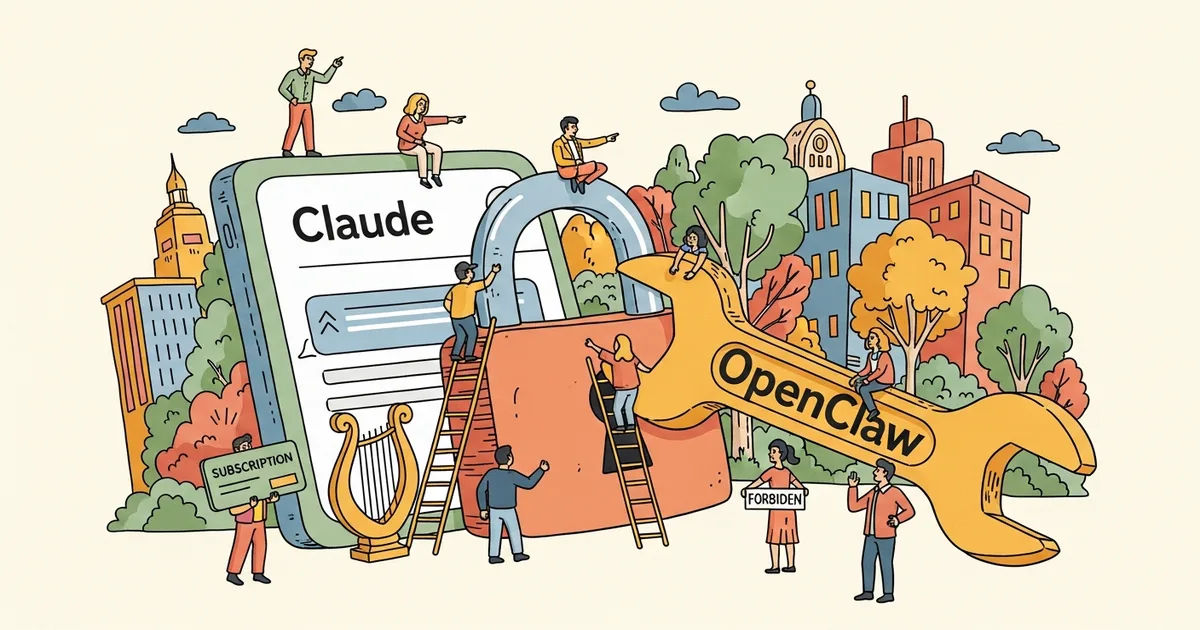
- Starting April 5, 2026, Anthropic will block third-party tools like OpenClaw from accessing Claude through subscription plans, requiring users to purchase additional usage packages or use an API key.
- Affected subscribers will receive a one-time credit equal to their monthly subscription price as a goodwill gesture.
- Claude Code creator Boris Cherny cited unsustainable demand from agent-driven third-party tools as the reason for the change.
- The decision highlights a core problem in the AI industry: flat-rate subscription pricing is incompatible with continuous, automated agent usage.
What Happened
Anthropic, the AI safety company behind Claude, announced on April 4, 2026, that it will cut off Claude access through third-party tools like OpenClaw for subscription customers. The restriction takes effect on April 5, 2026, at 12pm PT.
Boris Cherny, creator of Claude Code at Anthropic, made the announcement on X. Users who currently access Claude through third-party tools can still log in with their Claude credentials, but they will need to either buy additional usage packages or switch to a Claude API key to continue.
“We’ve been working hard to meet the increase in demand for Claude, and our subscriptions weren’t built for the usage patterns of these third-party tools,” Cherny wrote. Anthropic will offer affected subscribers a one-time credit equal to their monthly subscription price to offset the transition.
Why It Matters
This decision exposes a structural problem that every AI company offering flat-rate subscriptions will eventually face. Third-party tools like OpenClaw act as agents that can run Claude continuously and autonomously, consuming far more tokens than a human user typing prompts manually. Flat-rate pricing models assume intermittent, human-paced usage. Agent-driven tools break that assumption entirely.
The economics are straightforward. A Pro subscription at $20 per month gives a user a fixed allocation of Claude usage. An agent tool running continuously can burn through that allocation in hours rather than weeks. At scale, the cost to Anthropic of serving these automated workloads through subscription plans far exceeds the subscription revenue.
Anthropic is not the first AI company to grapple with this. The tension between offering generous access to attract users and managing compute costs as usage scales is a defining challenge for the industry in 2026.
Technical Details
The restriction specifically targets third-party tools that authenticate through Claude subscription credentials rather than API keys. Tools like OpenClaw allow users to connect their Claude subscription and run the model through alternative interfaces, often with agent-like automation capabilities that generate far more requests than manual usage.
After April 5, these tools will still function, but users must provide a Claude API key and pay for usage at API rates, or purchase dedicated usage packages from Anthropic. The API pricing model charges per token, which directly aligns Anthropic’s revenue with its compute costs.
The one-time credit offered to affected subscribers matches their monthly subscription price. For a Pro subscriber paying $20 per month, that means $20 in credit toward additional usage packages or API consumption.
Who’s Affected
The most directly affected users are Claude subscribers who rely on third-party tools like OpenClaw as their primary interface for Claude. These users must now choose between paying API rates, purchasing usage packages, or returning to Anthropic’s native interfaces.
Developers of third-party Claude tools face a significant business challenge. Their tools become less attractive if users must pay separately for Claude access on top of whatever the tool itself charges. OpenClaw and similar projects may need to rethink their business models or pivot to API-based integrations.
Enterprise customers using Claude through official API channels are unaffected. The change targets only subscription-based access routed through unauthorized third-party tools.
What’s Next
The broader trend points toward usage-based pricing becoming the industry standard for AI coding and agent tools. OpenAI recently shifted Codex to usage-based pricing in its business plans, and the flat-rate subscription model looks increasingly unsustainable as AI agents consume tokens at machine speed rather than human speed.
Anthropic will likely continue tightening controls on how subscription access is used, while expanding its own first-party tools like Claude Code to capture the agent-driven workflow market directly. Third-party tool developers will need to build on top of the API rather than piggybacking on consumer subscriptions.