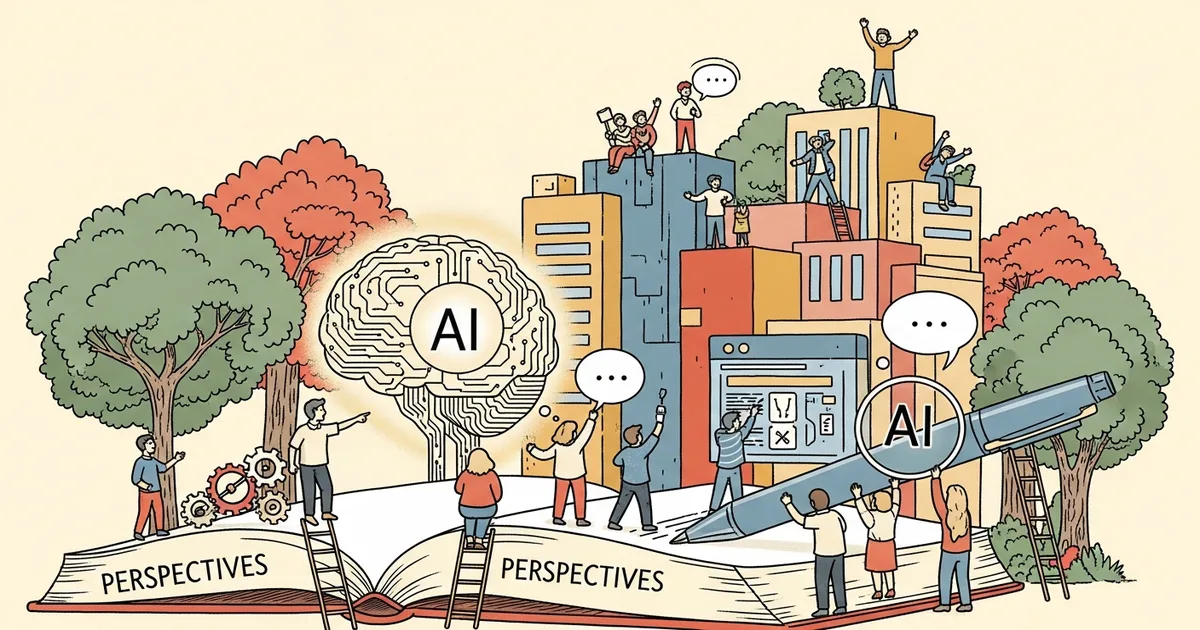
The Rust Project has published a summary of contributor perspectives on artificial intelligence, compiled by core team member Niko Matsakis from a discussion that began in early February 2026. The document captures a range of views from Rust maintainers on how AI tools should intersect with the language’s development, community standards, and codebase — topics that have become increasingly urgent as AI-generated code submissions grow across open-source projects.
The perspectives reveal a community that is neither uniformly enthusiastic nor hostile toward AI. Several contributors expressed concern about AI-generated pull requests that lack the contextual understanding Rust’s complex ownership and type system demands. Rust’s borrow checker enforces memory safety guarantees at compile time, and contributors noted that AI-generated code frequently produces submissions that compile but violate the project’s design principles or introduce subtle correctness issues that automated checks miss.
Other contributors see AI tools as valuable for specific tasks: generating documentation, writing test cases, and automating repetitive refactoring across Rust’s large codebase. The distinction being drawn is between AI as an author of new code — where contributors expressed skepticism — and AI as an assistant for maintenance tasks — where the consensus is more positive. This mirrors debates in other major open-source projects, including the Node.js community’s recent petition against AI-generated contributions.
The discussion takes on additional significance given Rust’s growing strategic importance. Microsoft has publicly stated a goal to eliminate C and C++ from its codebase by 2030, with Rust as the primary replacement. Google, Amazon, and the Linux kernel project have all expanded their Rust adoption. As AI coding assistants generate more Rust code — both in corporate codebases and open-source contributions — the Rust Project’s stance on quality standards for AI-assisted submissions will influence how the language evolves.
Matsakis emphasized that the summary reflects individual views rather than an official project position. No policy changes have been announced. The document serves as a baseline for future governance decisions about AI tooling, contribution guidelines, and the project’s relationship with an ecosystem where an increasing share of the code touching Rust’s compiler and standard library will be written or modified by AI assistants.