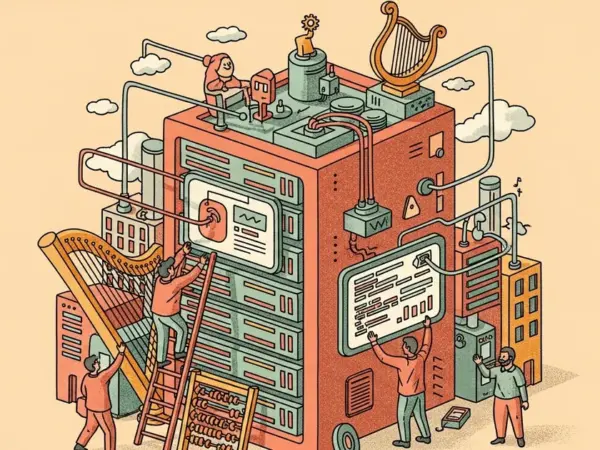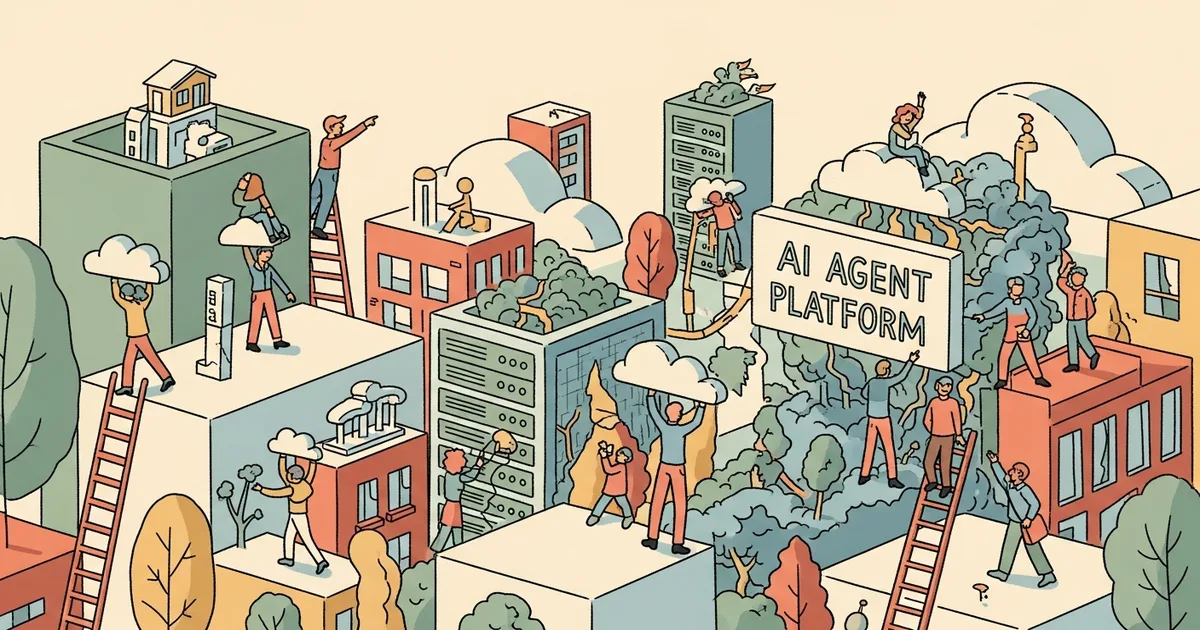
Cloudflare, Inc. expanded its Agent Cloud platform in April 2026 with a new suite of developer primitives — native Model Context Protocol (MCP) server hosting, agent-to-agent communication protocols, and enhanced Durable Objects for persistent agent memory — positioning itself as a direct infrastructure competitor to AWS Bedrock Agents and Google Vertex AI Agent Builder. The expansion targets the fastest-growing segment of enterprise AI spend: autonomous agent workflows that need to run at scale without unpredictable latency or compounding per-token billing.
The platform runs on Cloudflare’s global network of 330+ data centers across 120+ countries. Agents built on Workers infrastructure execute within 50 milliseconds of virtually any end user on the planet — a structural latency advantage no hyperscaler regional topology can replicate at equivalent price.
What Cloudflare Agent Cloud Actually Is
Agent Cloud is not a single product — it is a composable stack of six infrastructure primitives that give developers everything needed to build production AI agents without managing a single server.
- Workers AI — Serverless inference across 40+ models including Llama 3.3, Mistral, Qwen, and FLUX, running at edge nodes globally with no GPU provisioning required.
- AI Gateway — A unified routing and observability layer supporting 25+ AI providers, with built-in caching, rate limiting, and cost tracking. Cloudflare reports AI Gateway now processes over 100 billion tokens monthly.
- Vectorize — A distributed vector database for retrieval-augmented generation (RAG) integrated directly into the Workers runtime, eliminating round-trips to separate storage services.
- Durable Objects — Stateful serverless primitives that give agents persistent memory across invocations without external databases for most use cases.
- Workflows — A durable execution engine for multi-step agent pipelines with automatic retries, state checkpointing, and parallel step execution.
- Browser Rendering — Headless Chromium instances for agents that need to navigate web applications, extract structured data, or interact with JavaScript-heavy interfaces.
The April 2026 expansion adds two capabilities missing from the original stack: a hosted MCP server registry where developers publish and discover tool integrations, and a standardized inter-agent communication protocol built on Durable Objects and Cloudflare Queues.
The MCP Server Hosting Play
Cloudflare’s native MCP server hosting is the most strategically significant addition to Agent Cloud. The Model Context Protocol, originally developed by Anthropic, has emerged as the de facto standard for connecting AI agents to external tools and data sources — the architecture that Anthropic’s leaked agent source code revealed as central to how Claude interfaces with external systems.
Cloudflare now lets developers deploy MCP servers as Workers with zero additional infrastructure. An MCP server for querying a CRM, reading a database, or calling a payment API becomes a globally distributed service running within 50ms of every user. Developers publish these servers to a shared registry, enabling tool composition across teams without duplicated infrastructure.
The operational implication is significant: enterprise teams no longer need dedicated MCP server infrastructure on AWS or GCP. The servers live on Cloudflare’s network, inherit its DDoS protection and authentication layer via Cloudflare Access, and scale automatically. For companies already running web infrastructure on Cloudflare, the marginal cost of adding agent tooling approaches zero.
Edge Deployment: Why Latency Defines Agent Quality
AI agent performance is fundamentally a latency problem. An agent running five sequential tool calls — each round-tripping to a central AWS region — accumulates 500 to 2,000 milliseconds of network overhead before a single line of business logic executes. At Cloudflare’s edge, that same sequence executes locally with round-trip times under 10ms per hop.
AWS Lambda cold starts average 100 to 800ms depending on runtime and memory allocation, according to AWS performance benchmarks. Cloudflare Workers cold starts average under 5ms because Workers run on V8 isolates rather than containerized processes — a fundamental architectural difference with compounding effects in multi-step agent pipelines.
MegaOne AI tracks 139+ AI tools across 17 categories, and reliability complaints in agent categories consistently cluster around cold start variability and region-specific outages. An agent running on Cloudflare Workers doesn’t degrade because us-east-1 has a service event — it fails over to the next closest edge node automatically, in milliseconds.
Cloudflare vs. AWS Bedrock vs. Google Vertex AI: The Numbers
The enterprise AI agent infrastructure market now has three serious contenders. Here is how they compare on the dimensions that determine platform selection in 2026:
| Dimension | Cloudflare Agent Cloud | AWS Bedrock Agents | Google Vertex AI Agents |
|---|---|---|---|
| Cold Start Latency | <5ms (V8 isolates) | 100–800ms (Lambda) | 50–300ms (Cloud Run) |
| Global Presence | 330+ PoPs, 120 countries | 33 AWS regions | 40+ Google Cloud regions |
| Model Selection | 40+ open-source models | Claude, Titan, Llama, Mistral, Nova | Gemini, Claude, Llama, and others |
| Persistent State | Durable Objects (native, edge) | DynamoDB (separate service) | Firestore / Spanner (separate) |
| MCP Support | Native hosted server registry | Lambda-hosted (no native registry) | Extensions model (not MCP-native) |
| Entry Pricing | Free: 100K req/day; Paid: $5/mo | Pay-per-use, no free agent tier | Limited free tier, per-node charges |
| Vendor Lock-In | Low — standard JS/WASM runtime | High — proprietary SDK required | Medium — Vertex SDK dependency |
AWS Bedrock’s durable advantage is model breadth and tight integration with existing AWS infrastructure. For enterprises already running workloads in AWS, adding a separate AI agent vendor introduces real operational overhead that procurement teams will resist. Google Vertex AI benefits similarly for GCP-native organizations. Cloudflare wins on latency, pricing transparency, and zero-commitment onboarding.
Pricing: Where the Math Breaks in Cloudflare’s Favor
Cloudflare’s pricing structure for agent workloads is substantially cheaper than managed agent services from AWS and Google at comparable scale. The Workers Paid plan at $5 per month includes 10 million requests, 30 million CPU milliseconds, and 1GB of Durable Object storage. Bedrock Agents bills per Knowledge Base API call, per token processed by the underlying model, and separately for Lambda executions — costs that compound as pipeline complexity grows.
A concrete example: a customer support agent handling 100,000 sessions per month with five tool calls each generates 500,000 agent steps. On Cloudflare Workers, that workload fits within the $5 Paid tier plus Workers AI inference at approximately $0.011 per 1,000 tokens for Llama 3.1 8B. The equivalent workload on AWS Bedrock — Claude Haiku for inference plus Bedrock Agents for orchestration — runs $40 to $80 per month at similar volumes, based on published AWS pricing calculators. The gap widens at enterprise scale.
The pricing gap in Cloudflare’s story: frontier model access. Workers AI runs only open-source models. Agents requiring GPT-4o, Claude Opus, or Gemini Pro must route through AI Gateway to external providers at those providers’ standard rates. Cloudflare’s AI Gateway caching can reduce token spend by 15 to 40% on repeated queries, but only partially offsets the cost differential for quality-sensitive workloads.
Multi-Agent Orchestration: The New Competitive Frontier
The April 2026 expansion adds a standardized protocol for agents to spawn and communicate with other agents — upgrading Agent Cloud from a runtime for individual agents to a platform for running agent networks. An orchestrator agent can spawn specialized sub-agents for research, code generation, and verification, coordinate their outputs through shared Durable Object state, and distribute tasks through Queues — all within the same network boundary, with sub-millisecond inter-agent communication.
This multi-agent architecture is where enterprise AI is heading. Single-purpose agents doing one narrow task are already commoditized. The 2026 differentiation is coordinating multiple specialized models on complex, long-horizon tasks — the kind that replaces entire workflows rather than individual steps. Cloudflare’s infrastructure, with native shared state and low-latency inter-service communication, is architected for exactly this pattern.
The closest AWS equivalent requires multiple Lambda functions orchestrated through Step Functions, SQS queues for inter-agent messaging, and DynamoDB for shared state — three separate services with three billing meters and three sets of IAM policies. The infrastructure race is playing out at every layer simultaneously: while hyperscalers compete on raw compute, new entrants like Nebius are committing $10 billion to purpose-built AI data centers, and Cloudflare is claiming the application infrastructure layer above all of them.
Where Agent Cloud Falls Short
Agent Cloud has three concrete gaps that will deter specific enterprise buyers.
Compliance certifications. AWS Bedrock holds FedRAMP High, HIPAA BAA, SOC 2 Type II, and financial services certifications accumulated over a decade. Cloudflare’s compliance portfolio is strong for web infrastructure but thinner on AI-specific workload attestations. Healthcare and financial services teams should verify current certification status before committing agent workloads.
Execution time limits. Standard Workers cap CPU execution at 30 seconds per invocation. Workflows extend this ceiling but add orchestration complexity. Multi-hour autonomous agent runs — the kind replacing enterprise RPA workflows — require architectural workarounds that add friction and negate some of the simplicity advantage.
Frontier model availability. Open-source models on Workers AI are competitive for many tasks but trail GPT-4o and Claude Opus on complex reasoning benchmarks. Teams with quality-sensitive workloads route to external APIs and lose a portion of the cost advantage that makes Agent Cloud attractive in the first place. The platform wins on infrastructure economics, not on model quality.
The Competitive Moment
Cloudflare enters this expansion with a differentiated story that neither AWS nor Google can replicate without rebuilding their network topology from scratch: globally distributed edge execution at hyperscaler-beating price points, with a developer experience that eliminates the IAM friction, cold-start variability, and multi-service complexity that make Bedrock and Vertex painful to prototype on.
Enterprise spending on AI agent infrastructure is growing at approximately 180% year-over-year across major cloud providers. The fight for where agents run is the infrastructure battle of this decade — and the companies making platform decisions today are choosing systems they will be locked into for years. As enterprise automation expands, the infrastructure layer beneath it becomes correspondingly more valuable.
For engineering teams evaluating AI agent infrastructure now: build on Cloudflare Agent Cloud if you prioritize developer velocity, global latency, and open-source model workloads. Choose AWS Bedrock if compliance certifications, frontier model integration, or existing AWS estate leverage are non-negotiable. The decision should be driven by model requirements and regulatory constraints — not by which cloud vendor you already pay.