- The Trump administration on April 23, 2026 announced measures to prevent Chinese developers from using American AI model outputs to build competing systems.
- The action is the first formal US government response to complaints from Silicon Valley companies that Chinese rivals exploit model distillation to replicate frontier AI capabilities.
- Model distillation—training a smaller model on outputs from a larger one via API access—can be difficult to enforce through software-layer controls alone.
- The restrictions extend US-China technology competition beyond chip export controls into the AI software and access layer.
What Happened
The Trump administration announced measures on April 23, 2026 aimed at preventing Chinese developers from accessing and exploiting leading American AI models to build competing systems, Bloomberg reported. The action represents the first significant US government response to a sustained campaign by US AI companies arguing that Chinese rivals are piggybacking on American frontier model capabilities rather than developing them independently. The specific regulatory instruments—whether executive action, Commerce Department rulemaking, or guidance to US AI providers—had not been fully detailed in reporting available at publication.
Why It Matters
Concerns over model distillation moved to the center of US-China AI competition in January 2025, when OpenAI publicly alleged that Chinese AI startup DeepSeek may have trained its R1 reasoning model on GPT-4 outputs in violation of OpenAI’s terms of service—an allegation DeepSeek disputed. Until now, enforcement relied entirely on private companies’ terms of service rather than government-level restrictions, a gap that US AI developers have argued left them without adequate protection. By formalizing restrictions at the policy level, the administration is signaling that access controls on AI software outputs will become part of the broader US technology competition toolkit alongside existing chip export controls.
Technical Details
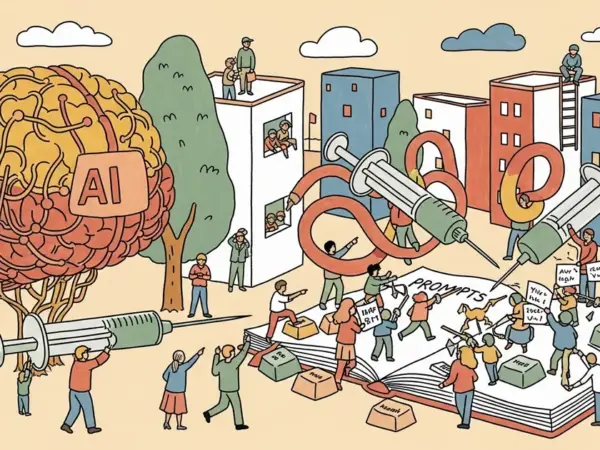
Model distillation is a technique in which a smaller, cheaper model is trained on the input-output pairs generated by a larger, more capable model, effectively transferring significant capability without requiring access to the original model’s weights or training data. Standard API access is sufficient to conduct large-scale distillation, which is why chip export controls—applied to Nvidia H100 and A100 GPUs since October 2022—do not address this vector. Enforcement of software-layer restrictions presents distinct challenges: API calls can be routed through cloud infrastructure or intermediaries in third countries, obscuring the nationality or identity of the end user conducting the distillation. Open-weight models, which can be downloaded and run locally without any API dependency, represent a further enforcement gap that the reported measures would not directly address.
Who’s Affected
US frontier AI developers—including OpenAI, Google DeepMind, Anthropic, and Meta, whose models have been cited in public discussions of potential distillation by Chinese competitors—stand to benefit from enforcement mechanisms that supplement their existing terms of service. Chinese AI companies that have relied on access to US model APIs for benchmarking, synthetic data generation, or direct distillation training would face tightened operational constraints if restrictions are implemented through provider-level access controls. Multinational enterprises operating AI infrastructure across both US and Chinese jurisdictions may face compliance complexity if the measures impose restrictions based on corporate nationality or end-user location.
What’s Next
The legal mechanism and implementation timeline for the measures were not specified in reporting available at publication; formal regulatory language is expected to clarify which entities and use cases are covered. US AI companies that have lobbied for government-level protections will likely engage in any rulemaking or comment process to shape technical definitions of prohibited access. Chinese AI developers have demonstrated rapid capability development independent of US model access—DeepSeek’s V3 and R1 models were built on domestic compute—suggesting that restrictions may constrain but are unlikely to halt Chinese AI progress.