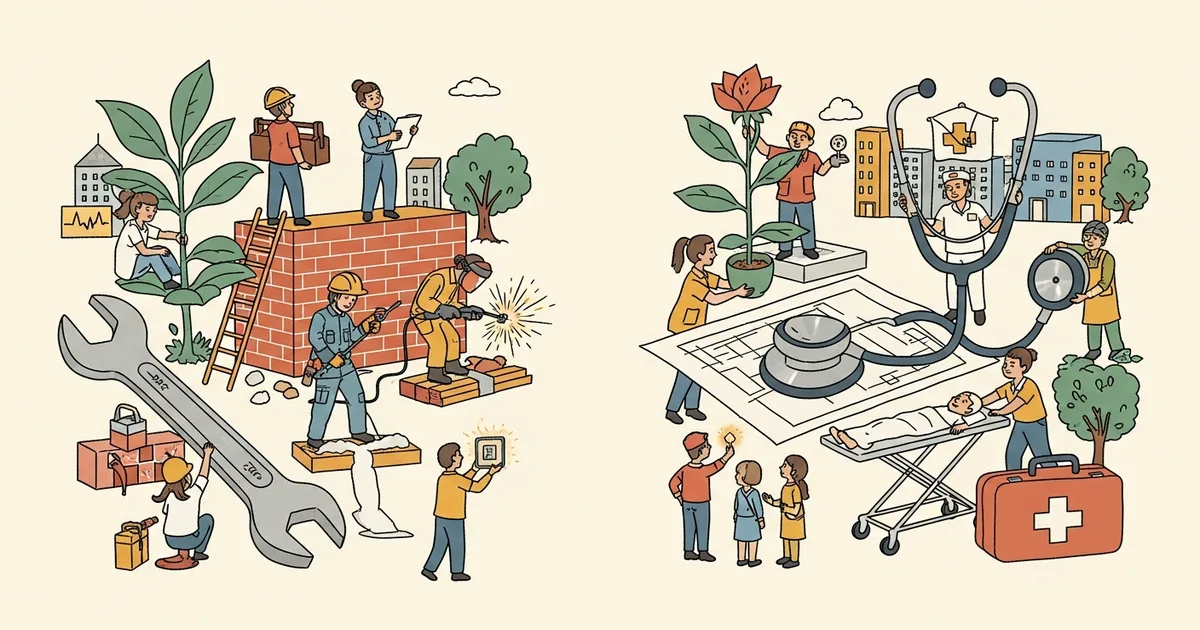
A growing number of young workers are abandoning traditional white-collar career paths in favor of skilled trades, healthcare, and education — fields they perceive as more resistant to AI-driven automation. The shift, reported by The Wall Street Journal, reflects mounting anxiety among recent graduates facing a job market where entry-level positions are simultaneously shrinking and attracting more applicants.
The numbers support the concern. Unemployment among college graduates one year after earning a bachelor’s degree rose from 3.8 percent to 4.9 percent between 2018-2019 and 2023-2025. The overall unemployment rate for recent graduates now exceeds 6.6 percent, well above the national average of approximately 4 percent. On job search platform Handshake, listings dropped 15 percent year-over-year while applications per job rose roughly 30 percent — a compression that makes entry-level white-collar roles more competitive than at any point in the past decade.
Seventy percent of Gen Z workers report that AI at work has made them question their job security, according to survey data cited in the report. The response is pragmatic rather than ideological: young workers are not rejecting technology but redirecting their careers toward roles where physical presence, human judgment, and interpersonal skills provide defensible advantages. Electricians, plumbers, nurses, and teachers face labor shortages rather than surpluses, and their work requires embodied skills that current AI systems cannot replicate.
The trend has implications for the technology industry itself. If the pipeline of young professionals entering software development, data analysis, and business operations narrows, companies may face talent shortages in exactly the roles they need humans to oversee AI systems. The paradox is that widespread AI adoption increases demand for people who can manage, audit, and correct automated processes — but the generation entering the workforce is increasingly skeptical that those roles will remain available long-term.
Universities are responding with curriculum changes, adding AI literacy requirements across disciplines and expanding programs in trades and healthcare. Whether this represents a temporary market correction or a permanent structural shift depends largely on how quickly AI capabilities advance into the physical and interpersonal domains that currently serve as refuges from automation.