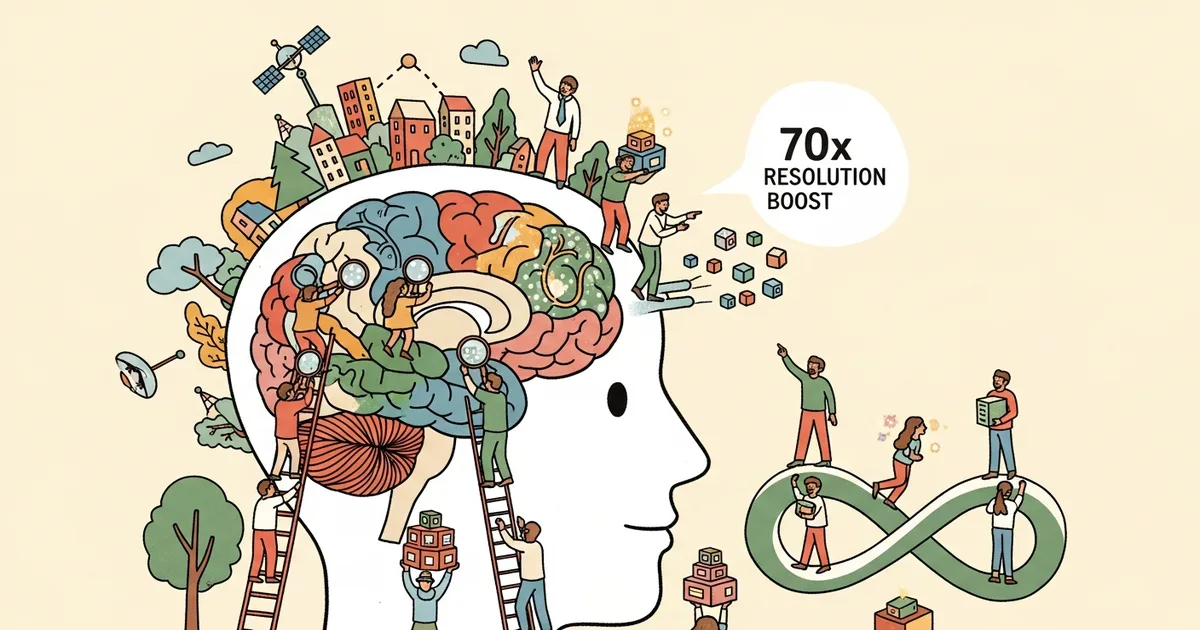
Meta has released TRIBE v2, a foundation model designed to predict human neural activity in response to visual and auditory stimuli. The model, announced March 26, 2026, offers what the company describes as “unprecedented speed, accuracy, and a 70x resolution increase as compared to similar models.”
TRIBE v2 functions as a “digital twin of human neural activity,” allowing researchers to simulate brain responses to various stimuli without requiring human subjects. The model can predict “how the brain responds to almost any sight or sound,” according to Meta’s announcement.
The release includes multiple components for researchers: the trained model hosted on Hugging Face, a complete codebase on GitHub, an accompanying research paper, and an interactive demonstration platform. Meta has made all these resources publicly available to support neuroscience research applications.
The 70x resolution improvement represents a significant technical advancement over existing brain prediction models, though Meta did not specify the baseline comparison or provide detailed performance metrics in the blog post. The model is positioned to enable computational simulation studies that would otherwise require extensive human subject testing.
Meta states the release aims to “help researchers push the boundaries of neuroscience, apply brain insights to build better AI systems, and use computational simulation” for research purposes. The company frames TRIBE v2 as a tool for both advancing neuroscientific understanding and informing AI system development through brain-inspired approaches.