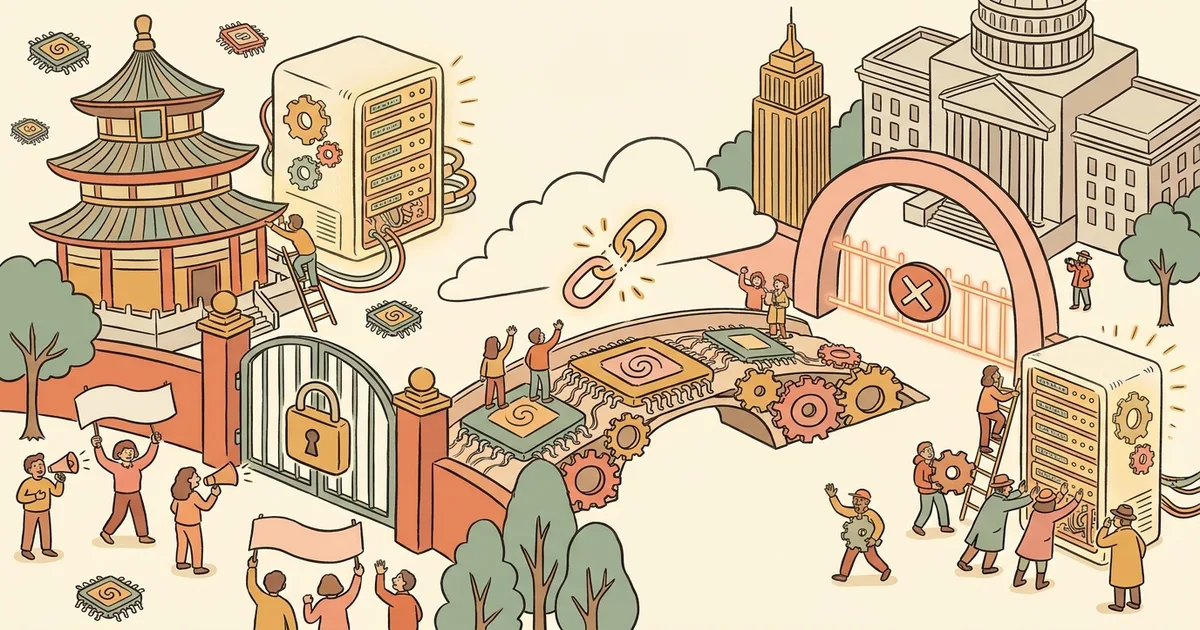
- China’s government criticized the US Department of Homeland Security’s order banning DeepSeek software from civilian federal agencies, calling it discriminatory.
- The US ban also covers software built on DeepSeek’s open-source models and prohibits future purchases, citing concerns about sensitive data reaching Beijing.
- China blocks ChatGPT, Claude, and Gemini domestically and requires AI services to pass Cyberspace Administration review since 2023, a stricter standard than the US measure.
- China reportedly proposed its own export and licensing controls on AI technology last week, according to The New York Times.
What Happened
The US Department of Homeland Security ordered civilian federal agencies to remove all DeepSeek products from their IT systems and barred future purchases, prompting China’s Foreign Ministry and Commerce Ministry to demand the ban be lifted and vow “resolute countermeasures,” The Decoder reported on October 21, 2026.
Why It Matters
The dispute follows the original US ban on DeepSeek in federal systems and adds to the broader pattern of US-China tech decoupling, with both governments citing national security to justify restrictions on each other’s AI products.
Technical Details
China’s Cyberspace Administration has required review of AI services since 2023, a rule that applies market-wide, not just to government agencies, and state bodies are directed to gradually replace foreign hardware and software with domestic alternatives. Washington’s stated concern centers on China’s 2017 National Intelligence Law, which requires companies and citizens to support state intelligence work. US agencies have separately accused Chinese firms of copying top US models at scale, which Beijing denies.
Who’s Affected
US federal agencies must now remove DeepSeek-based software from their systems, while Chinese AI companies face continued exclusion from the US government market. Beijing’s countermeasures, not yet detailed, could affect US AI firms operating in or selling into China.
What’s Next
China has not specified what its promised countermeasures will involve. The dispute adds to existing friction over chip export controls, with Beijing reportedly preparing its own licensing framework for AI exports in response.