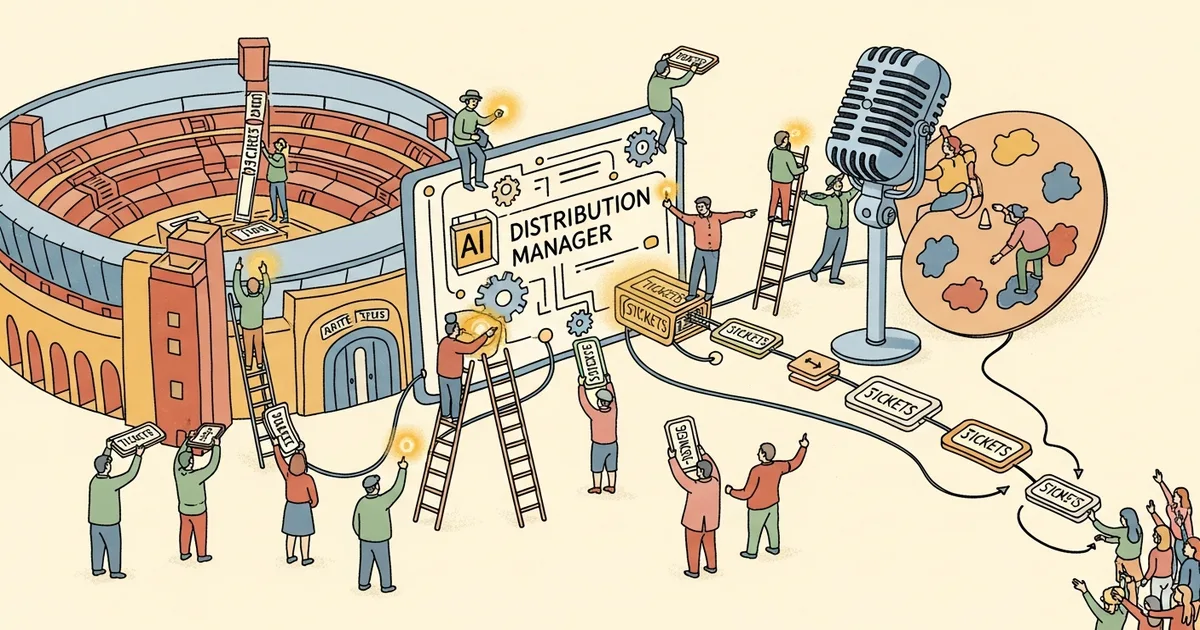
StubHub on March 18 launched the StubHub Distribution Manager, an AI-powered self-serve tool that lets artists, sports teams, and venues list and manage official tickets directly on StubHub’s global marketplace. The tool is the first product built on StubHub’s Open Distribution model, an infrastructure initiative the company has developed over the past 18 months with more than 35 partners already onboard.
The Distribution Manager uses machine learning for dynamic pricing recommendations, demand forecasting, and inventory optimization. Rights holders — the artists and teams who control ticket allocation — can set their own prices, choose which events to list, and access real-time analytics on sell-through rates and buyer demographics. The system eliminates the need for intermediary ticket distributors, allowing sellers to retain a larger share of revenue from each transaction.
StubHub reports that directly integrated sales through its Open Distribution model have increased 84 percent year-over-year, suggesting meaningful demand from rights holders for tools that reduce their dependence on traditional distribution channels. The launch follows an industry-wide shift away from exclusive distribution agreements, which historically locked venues and artists into single-platform deals with limited pricing transparency.
The AI component handles three primary functions: predicting demand curves for specific events based on historical data and real-time signals, recommending price points that maximize revenue without pricing out fans, and automating inventory reallocation when events sell at different rates across markets. StubHub says the pricing model draws on transaction data from its marketplace, which processes millions of ticket sales annually across 40 countries.
For the live events industry, the tool represents a broader trend of AI enabling direct-to-consumer sales infrastructure in markets that have traditionally relied on layered intermediaries. Whether the Distribution Manager shifts meaningful ticket volume away from incumbent distribution platforms will depend on adoption by major venues and touring artists — a process that typically moves slowly in an industry built on long-term contractual relationships.