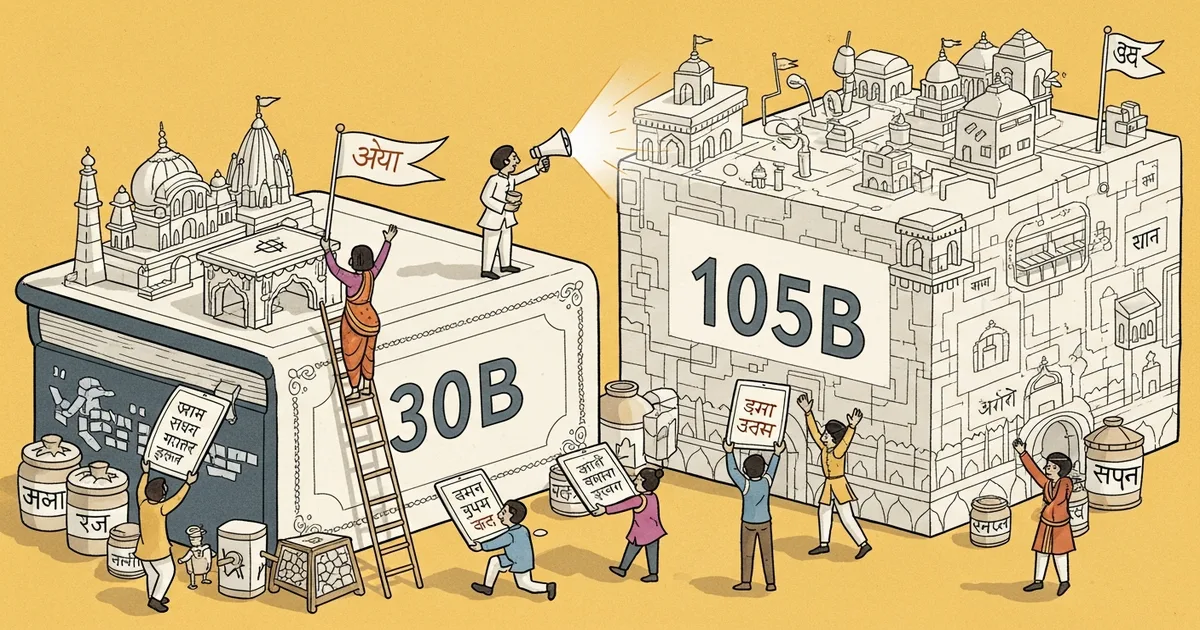
Indian AI lab Sarvam introduced new large language models at the India AI Impact Summit in New Delhi, including 30-billion and 105-billion parameter variants designed specifically for India’s linguistic diversity. The models support 22 official Indian languages with native fluency rather than translation-based approximation, representing a significant investment in multilingual AI that serves over a billion people whose primary language is not English.
Sarvam’s approach differs from Western multilingual models that add Indian languages as an afterthought to English-centric training. The company trains on large-scale Indian language corpora from the start, including Hindi, Tamil, Telugu, Bengali, Marathi, Gujarati, and 16 other official languages. This produces models that understand cultural context, idiomatic expressions, and domain-specific terminology — healthcare, agriculture, government services — that generic multilingual models handle poorly.
The 105-billion parameter model is among the largest specifically trained for Indian languages. At this scale, the model handles complex reasoning, document analysis, and multi-turn conversation in regional languages with quality approaching English-language frontier models. The 30-billion variant targets deployment on more accessible infrastructure, making it viable for startups and government agencies with limited compute budgets.
India’s AI strategy positions domestic models as essential infrastructure for delivering public services across 22 languages. Government initiatives like the iGOT Karmayogi training platform and the AIKosha resource hub depend on AI that works natively in regional languages — a requirement that imported models from OpenAI, Anthropic, or Google cannot fully satisfy. Sarvam’s models fill this gap.
The release comes as India invests over 38,000 GPUs in its national AI mission with 20,000 more planned. Sarvam, along with BharatGen and Gnani, represents India’s emerging sovereign AI ecosystem — companies building foundation models for a market where English-first products leave the majority of the population underserved.