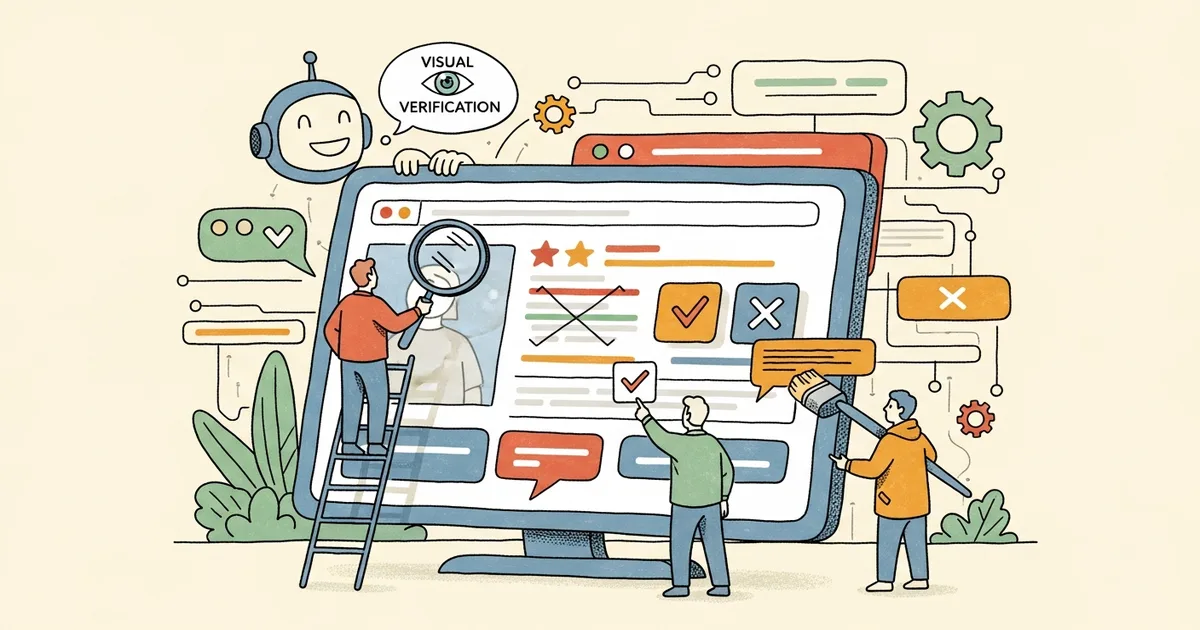
ProofShot, an open-source CLI tool launched on Hacker News on March 24, addresses a fundamental gap in AI coding agents: they can write frontend code but cannot see what it looks like. ProofShot takes screenshots of the running application and feeds them back to the AI agent, creating a visual feedback loop that lets the agent verify its UI work matches the intended design.
The tool integrates with existing AI coding workflows by capturing browser screenshots at specified breakpoints, comparing them against reference designs or previous states, and providing the visual context as input for the next iteration. This closes the loop that currently requires a human developer to check whether AI-generated CSS actually produces the correct layout, spacing, and visual hierarchy.
AI coding agents like Claude Code, Cursor, and Windsurf generate frontend code effectively but operate blind — they produce HTML and CSS without seeing the rendered result. ProofShot bridges this gap using headless browser automation to capture what the code actually renders, then passes that image back to the agent for comparison and correction. The result is fewer iteration cycles between human and AI, since the agent can self-correct visual issues before requesting human review.
The tool supports multiple viewport sizes for responsive design verification, diff highlighting to show what changed between iterations, and configurable screenshot regions for testing specific components rather than full pages. It runs locally with no cloud dependency, using Puppeteer for browser automation.
ProofShot represents an emerging category of tools that give AI agents sensory capabilities beyond text. As coding agents handle more frontend work, the inability to see rendered output has been a consistent quality bottleneck. Whether ProofShot or similar visual verification tools become standard components of AI coding workflows depends on how effectively they reduce the human review burden without introducing false confidence in AI-generated interfaces.