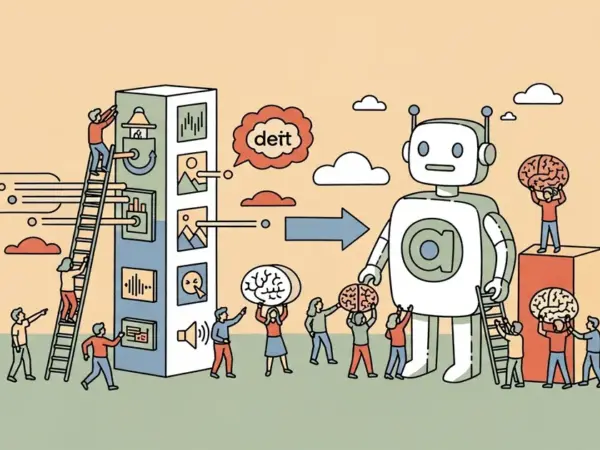
- Axios reported on May 3, 2026 that Meta plans to open-source versions of its next-generation AI models, surfaced via Google News.
- The reporting is consistent with Meta’s prior Llama strategy of releasing open-weight versions of its frontier work, though specifics on which models and what licensing apply have not been publicly verified.
- The move would extend Meta’s open-weight footprint at a moment when Chinese labs (DeepSeek V4, Xiaomi MiMo-V2.5-Pro, Moonshot Kimi K2.6, Zhipu GLM 5.1) are dominating the open-weight frontier.
- The Axios article was paywalled via Google News during research; details should be confirmed against the original Axios report.
What Happened
Axios published a scoop on May 3, 2026 reporting that Meta plans to open-source versions of its upcoming AI models. The story surfaced via Google News on the morning of May 3. The Google News redirect to the Axios article was paywalled during research, so the specific details — which models, what timeline, and what licensing — should be confirmed against the original Axios report.
Why It Matters
Meta’s Llama family has been the largest open-weight AI program at any U.S. lab since 2023. Llama 3.x deployments anchor a substantial portion of the open-source AI ecosystem and Meta’s research papers tied to those releases have shaped the field broadly. The “next AI models” framing matters because the open-weight frontier in 2026 has shifted decisively toward Chinese labs — DeepSeek V4 (1.6T parameters, MIT license), Xiaomi MiMo-V2.5-Pro (1.02T, also released this week), Moonshot Kimi K2.6, and Zhipu’s GLM 5.1 are all open-weight at the frontier scale. Meta open-sourcing its next generation would be the most significant U.S. open-weight release of 2026.
Technical Details
Public details are limited to the Axios scoop framing as it appeared in the Google News surface and via secondary coverage. Open questions for verification against the Axios article include: which specific models in Meta’s pipeline (Llama 4 successors, multimodal extensions like the Llama Vision family, the rumored MoE-style flagship); whether “open source” means full open weights with permissive licensing (as previous Llama releases have used Meta’s custom community license), or genuinely OSI-approved open source; the timing of release relative to internal deployment; and whether smaller “Scout” or “Maverick” variants will accompany the flagship as in the Llama 3 release pattern.
The reporting follows several recent Meta moves consistent with a strong open-weight push: the Autodata agentic-data-generation framework released May 1, the Assured Robot Intelligence acquisition for humanoid AI announced May 1, and continued Llama-related research output through 2026. Meta’s projected 2026 capex of up to $145 billion (per Financial Times reporting) suggests the resources are available to pursue both proprietary and open-weight tracks simultaneously.
Who’s Affected
The open-source AI community gains a major U.S.-based open-weight option that has been increasingly absent at the frontier scale. Inference providers — Together, Fireworks, Hugging Face, Anyscale — gain a new flagship to host on terms that may be more permissive than recent Chinese open-weight releases. Anthropic and OpenAI face renewed pressure on the closed-vs-open positioning, particularly with Meta as the named alternative for U.S. customers concerned about Chinese-origin open-weight models. Government and regulated industries that have been blocked from using DeepSeek and other Chinese open-weight models for compliance reasons gain a U.S.-aligned alternative.
What’s Next
Confirmation of timing and specifics from Meta’s official channels — likely a Meta AI Blog post or a Mark Zuckerberg announcement — is the next material event. Watch for whether the release matches the Llama 3 pattern (multiple sizes released simultaneously) or focuses on a single flagship. Independent benchmark coverage comparing the open-sourced Meta model against DeepSeek V4-Pro, Xiaomi MiMo-V2.5-Pro, and Kimi K2.6 will be the cleanest external test. We will update with a deeper article once Meta’s official details are public.