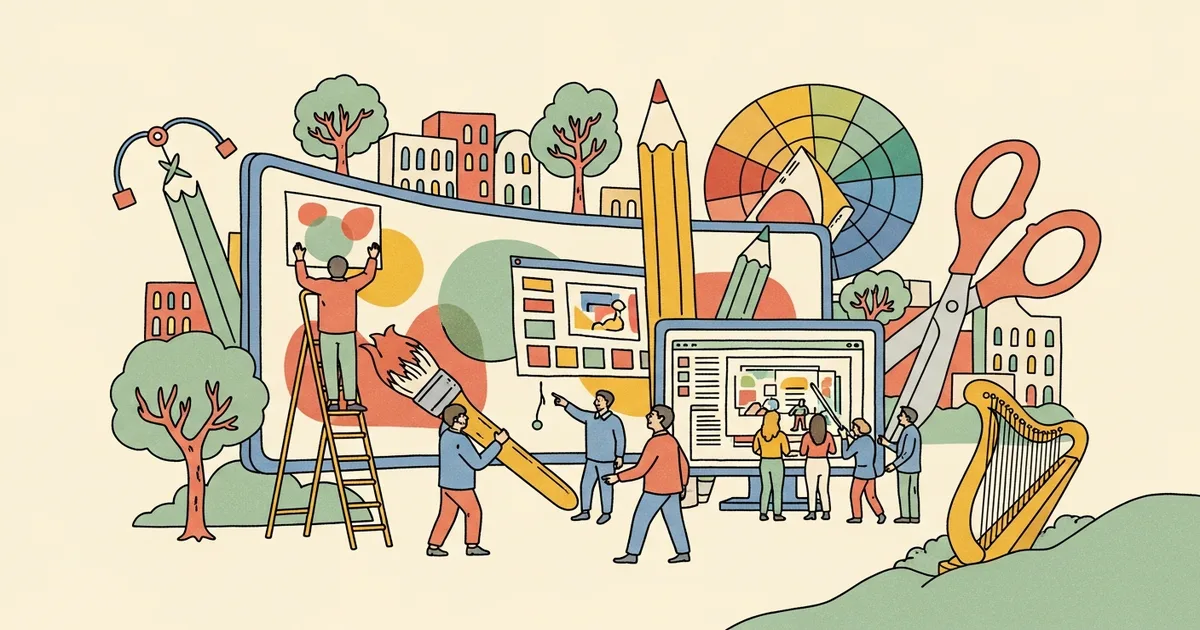
- Anthropic launched Claude Design, a visual collaboration product from Anthropic Labs, on April 30, 2026.
- Claude Design is powered by Claude Opus 4.7, the company’s most capable vision model, and is available in research preview to Claude Pro, Max, Team, and Enterprise subscribers.
- The product targets visual outputs — designs, prototypes, slides, one-pagers — created by collaboration between user and model rather than from blank-canvas tools.
- Teams that grant access can have Claude apply their existing design system across all generated outputs automatically.
What Happened
Anthropic released Claude Design on April 30, 2026, introducing it as a new product from Anthropic Labs that lets users collaborate with Claude on polished visual work — designs, prototypes, slides, one-pagers, and similar artifacts. The product runs on Claude Opus 4.7 and is rolling out gradually to Claude Pro, Max, Team, and Enterprise subscribers throughout the day. Anthropic says the goal is to give designers room to explore widely and non-designers a way to produce visual work without specialist tools.
Why It Matters
Anthropic has spent 2025 and 2026 expanding Claude beyond text generation: Claude Code shipped to general availability for software engineering, and Anthropic Labs has been releasing focused products that pair Claude with task-specific affordances. Claude Design extends that pattern into visual workflows — a category currently dominated by Figma, Adobe Express, and a wave of AI design tools like Recraft and Galileo. By bundling visual creation into a Claude subscription, Anthropic positions itself directly against horizontal AI design products and against Figma’s Make.
Technical Details
Claude Design uses Claude Opus 4.7, which Anthropic identifies as its most capable vision model. The interaction model is conversational rather than canvas-first: a user describes what they need, Claude builds an initial version, and refinement happens through chat, inline comments, direct edits, and “custom sliders” that Claude itself constructs to expose the parameters most relevant to a given design. When a team grants access, Claude reads the team’s existing design system during onboarding and applies it across subsequent outputs automatically.
Anthropic positions Claude Design as a research preview, meaning interfaces and capabilities are expected to evolve. The product enters general availability through paid Claude tiers — Pro, Max, Team, and Enterprise — and is not currently available on the free tier or via API.
Who’s Affected
The most direct audience is product managers, founders, and marketers who lack a design background but still need to ship visual artifacts. The second audience is professional designers who currently ration their exploration time and could use Claude to prototype dozens of directions before committing. Existing Anthropic enterprise customers — including Anthropic’s own internal teams — are likely early users. Competitors include Figma’s AI-first features (Make, FigJam AI), Adobe’s Firefly-driven workflows, and standalone tools like Recraft, Galileo, and Uizard.
What’s Next
Anthropic Labs has shipped a series of preview products in 2025–2026, with general availability typically following two to four months after launch. Expect rapid iteration on Claude Design’s editing affordances and design-system import, deeper Figma and Sketch interop, and a likely API surface for Enterprise customers wanting to integrate generated designs into existing workflows. Anthropic has not disclosed pricing changes or usage limits specific to Claude Design at launch.