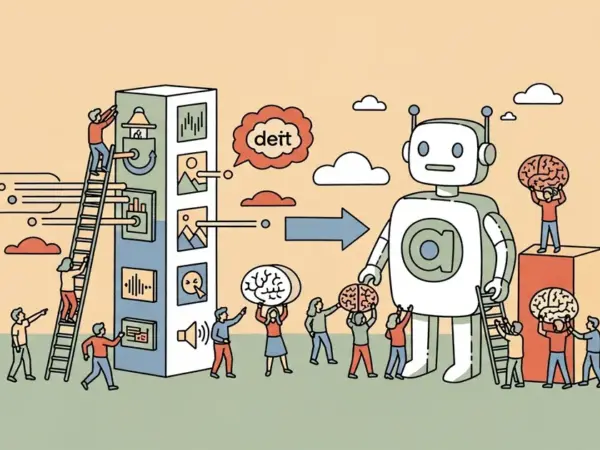
- AI Roundtable by Opper AI lets users pose questions to over 200 AI models simultaneously, with options for independent voting or structured multi-round debate.
- In poll mode, up to 50 models answer independently under identical conditions; in debate mode, six models challenge each other’s reasoning across multiple rounds.
- The platform is free, requires no signup, and has processed approximately 5,000 questions since launching on Hacker News on March 25, 2026.
- Early users found that Claude Opus 4.6 was cited most frequently by other models when they changed positions during debates.
What Happened
Opper AI, a Swedish AI startup, launched AI Roundtable on March 25, 2026, as a platform that poses user questions to over 200 AI models simultaneously. Built by founder Felix (known as Felix089 on Hacker News), the tool lets users choose between two modes: a poll where up to 50 models answer independently, and a structured debate where six models challenge each other’s reasoning across multiple rounds.
The platform launched on Hacker News as a Show HN post and has processed approximately 5,000 questions since going live. It requires no signup and is free to use. Opper routes all model queries through its own API infrastructure, handling orchestration, response formatting, and consensus calculation behind the scenes. The platform is also available at a custom domain, askroundtable.ai, alongside its primary home on opper.ai.
Why It Matters
A single AI model’s confidence score is an unreliable indicator of answer quality. When one model says it is 95% confident, there is no external reference point to validate that claim. AI Roundtable addresses this by turning model diversity into a signal: when 180 of 200 models independently reach the same conclusion, the probability of a systematic error is substantially lower than for any individual response.
The debate mode adds a second layer of information. Models see each other’s reasoning and can change positions — or refuse to. The resulting transcript reveals which arguments are persuasive across model architectures and which positions are robust under cross-examination. This meta-signal about model agreement and disagreement is something no single model can provide about its own output.
Technical Details
In poll mode, all selected models receive the same question with no system prompt, ensuring identical conditions. Users define answer options, select up to 50 models from the pool of 200+, and see a distribution of responses with confidence scores. Models span providers including OpenAI (GPT-4o, GPT-5, GPT-5.4), Anthropic (Claude Haiku, Sonnet, Opus 4.6), Google (Gemini 2.0 through 3.1), xAI (Grok 4, 4.1), Mistral, Perplexity, Cerebras, and dozens of open-source variants.
In debate mode, six models present arguments, critique each other’s positions, and iterate across multiple rounds. A reviewer model summarizes the transcript. Users observed that models sometimes “shuffle the phrasing around instead of actually changing” their reasoning — measuring persuasion performance rather than accuracy. Early testing found Claude Opus 4.6 was cited most frequently by other models when updating their positions.
The platform also supports open-ended questions without predefined answer options, a feature added after launch based on user feedback. Featured models on the platform include Claude Opus 4.6, GPT-5.4, Gemini 3.1 Pro Preview, Grok 4.1 Fast Reasoning, GLM 5, and Kimi K2.5 — representing the current frontier of commercially available AI systems.
Who’s Affected
Professionals who use AI for research, analysis, or decision support gain the most from the consensus signal. Researchers can identify questions where model agreement is high versus low, flagging areas that require human judgment. Developers evaluating which model to use for a specific task can compare outputs side by side under controlled conditions.
The platform also revealed unexpected model biases. Hacker News users discovered that Grok consistently defended Elon Musk in debates where other models took different stances on billionaire-related questions — a pattern that would be invisible when using Grok in isolation.
What’s Next
Opper AI plans to add human participation in debates, allowing users to argue alongside AI models and test whether human reasoning can shift model consensus. The platform currently measures persuasion dynamics between models, but whether model consensus correlates with factual accuracy remains an open question. A model that is wrong but articulate could sway others, making the debate transcript informative but not a substitute for verification against primary sources.
The bigger limitation is cost sustainability. Running 50 to 200 model API calls per question is expensive, and Opper has not disclosed how it funds free access at scale. Whether the platform remains free, introduces a paid tier, or adds advertising will likely determine whether it grows beyond its initial Hacker News audience into a mainstream research tool.
Related Reading
- Sarvam Unveils 30B and 105B Models for India’s 22 Official Languages
- OpenCode Releases Desktop Beta, Expands AI Coding Agent to macOS, Windows, Linux
- Revise Launches AI-Powered Document Editor with Visual Revision History
- FDA Deploys Agentic AI Across All Employees, Reports 70 Percent Voluntary Adoption